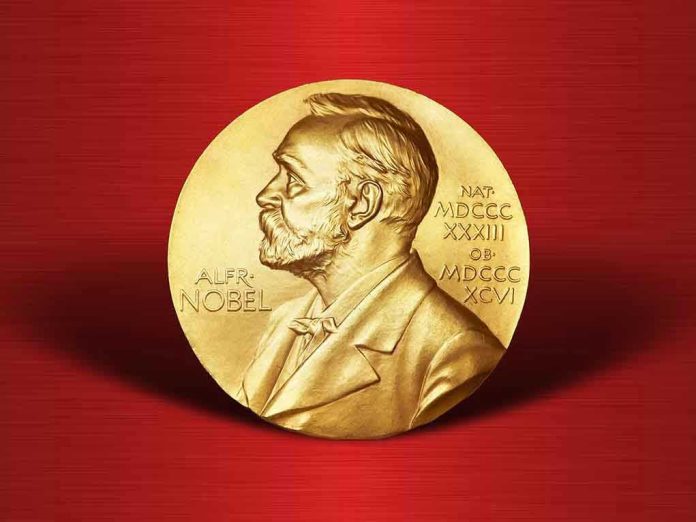
Seven nations have upended global expectations by nominating Donald Trump for the 2025 Nobel Peace Prize, igniting fierce debate about the credibility of international institutions and the true meaning of “peace.”
Story Snapshot
- Seven countries credit Trump with brokering peace in multiple regional conflicts and formally nominate him for the Nobel Peace Prize.
- The coordinated nominations mark an unprecedented show of global support for a U.S. conservative leader.
- Media and expert debate intensifies over the Nobel Peace Prize’s legitimacy and susceptibility to political influence.
- The Nobel Committee maintains secrecy, fueling speculation and controversy ahead of the October 2025 announcement.
Global Leaders Nominate Trump, Citing Major Diplomatic Breakthroughs
In a move rarely seen in the Nobel Peace Prize’s 124-year history, seven countries—Armenia, Azerbaijan, Cambodia, Gabon, Israel, Pakistan, and Rwanda—have publicly nominated President Donald Trump for the 2025 award. These nations credit Trump’s direct intervention for peace deals in flashpoints like Nagorno-Karabakh, the Cambodia-Thailand border, and Central Africa. Supporters say these nominations reflect gratitude for American leadership at a time when the world craved stability and strength from the United States.
Such coordinated endorsements from diverse geopolitical regions signal not only appreciation for Trump’s approach but also a potential shift in how global actors perceive U.S. influence under conservative stewardship. Israeli Prime Minister Benjamin Netanyahu called Trump’s leadership “pivotal” after renewed tension with Iran, while Armenian and Azerbaijani leaders credited him with breaking a deadlock few believed could be resolved. These actions stand in stark contrast to the diplomatic paralysis and indecision that characterized recent years under progressive, globalist agendas.
Nobel Peace Prize Faces Scrutiny Over Political Neutrality
The Nobel Peace Prize has long been shrouded in secrecy and controversy, with the Norwegian Nobel Committee keeping the nominee list confidential for 50 years. Public nominations, announced by the nations themselves, have drawn intense scrutiny this year. Previous controversial awards—such as Barack Obama’s in 2009 and Ethiopian Prime Minister Abiy Ahmed’s in 2019—sparked criticism over whether the prize rewards genuine achievement or political theater. Trump’s nomination has reignited this debate, with critics questioning the motivations of nominating countries and the durability of negotiated peace agreements.
Media coverage has become a battleground between those who applaud Trump’s “peace through strength” strategy and those who dismiss the nominations as politically motivated. Some analysts argue that the mere act of forging ceasefires and ending decades-long hostilities justifies recognition, while others claim that real peace depends on sustained implementation, not just headline-grabbing agreements. The Committee’s refusal to confirm or deny specific nominees only deepens the mystery and feeds speculation about the institution’s integrity.
Implications for U.S. Leadership and International Institutions
The public support for Trump from seven nations—many of which have historically aligned with different geopolitical blocs—signals a renewed respect for American assertiveness. The nominations may also provide diplomatic leverage for these countries in their future dealings with the U.S. and its allies. For American conservatives, this recognition is a rebuke of the “woke” foreign policy and globalist dithering that defined previous administrations, underscoring the enduring value of common sense, direct engagement, and putting America’s interests first.
The broader fallout could reshape perceptions of the Nobel institution itself. Some experts warn that the Peace Prize risks being seen as a tool for international political maneuvering rather than a symbol of substantive peacebuilding. Yet, for millions living in the affected regions—Armenia, Azerbaijan, Cambodia, Thailand, Rwanda, and the DRC—these agreements offer a path to greater stability, security, and economic opportunity. Whether or not Trump secures the Nobel, the intense debate surrounding his nomination highlights the ongoing struggle over who gets to define peace and what role America should play on the world stage.
As the world awaits the Nobel Committee’s decision on October 10, 2025, the coordinated nominations and global reaction underscore a larger truth: strong, unapologetic American leadership can still command respect—and spark controversy—across the world. In the end, the debate over Trump’s nomination becomes a referendum not just on one man, but on the principles and priorities that will shape the future of international diplomacy.
Sources:
The Hilltop Online: What Trump’s Nobel Nominations Say About the Peace Prize
Le Monde: Donald Trump’s obsession with the Nobel Peace Prize
Nobel Prize official site: Nomination and Selection of Peace Prize Laureates
Nobel Peace Prize official press release: Nominations for the Nobel Peace Prize 2025
Wikipedia: 2025 Nobel Peace Prize