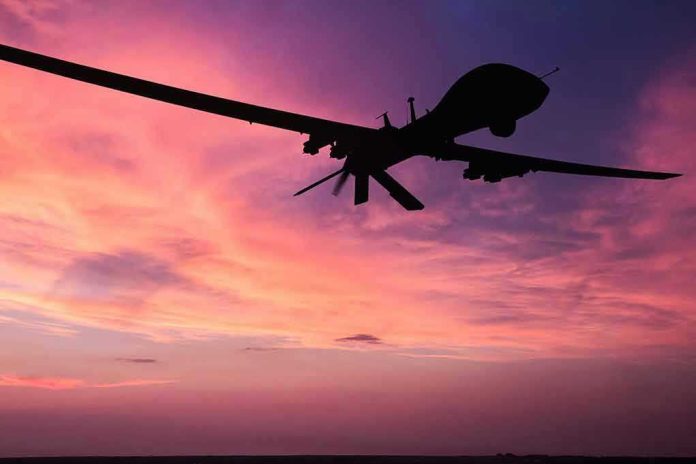
School districts in Florida are testing armed drones designed to neutralize school shooters within seconds, raising both hope and controversy.
Story Highlights
- Florida districts are piloting armed drones to address school safety concerns.
- The initiative aims to provide rapid response to potential school shootings.
- Concerns over costs and privacy issues accompany the program.
- The project reflects broader debates on security and technology in schools.
Florida Schools Implement Drone Safety Measures
Several school districts in Florida have embarked on a new project involving armed drones, designed to respond to school shooter threats within seconds. The initiative, which aims to bolster school security, is seen as a potential game-changer in addressing the rising concerns over school safety. While the introduction of such advanced technology is welcomed by many as a proactive measure, it also raises questions about cost, privacy, and the implications of using drones in educational settings.
These drones are equipped with technology to identify and neutralize threats, offering a rapid response mechanism that could potentially save lives. Proponents argue that this technology could deter potential shooters and provide peace of mind to parents, students, and educators. However, the financial commitment required to maintain such a program is significant, with ongoing costs possibly stretching school budgets already strained by other educational needs.
Financial and Privacy Concerns
The cost structure for deploying these drones involves both significant upfront investments and substantial recurring expenses. Each school must weigh the benefits against the financial strain, particularly as budgets are already under pressure from various educational priorities. Furthermore, there are concerns about the privacy implications of deploying surveillance technology in schools. Parents and privacy advocates worry about the potential for misuse or overreach, emphasizing the need for clear guidelines and oversight.
Additionally, the program’s expansion could lead to debates about the broader societal implications of normalizing surveillance technology in public spaces, especially in environments meant for learning and growth. Ensuring that these technologies are used responsibly and ethically will be crucial to their acceptance and success.
Impact on School Security and Policy
While the implementation of armed drones in schools is still in its early stages, initial feedback from pilot programs suggests a positive impact on the perception of safety among students and staff. The program could set a precedent for similar initiatives across the country, influencing national debates on school safety policies. However, this development also underscores the need for a broader discussion on how best to balance safety with the educational mission of schools.
Armed drones designed to neutralize school shooters in seconds are being tested in several Florida districts https://t.co/8AcLo205Qr pic.twitter.com/6cmRuY03XN
— New York Post (@nypost) August 25, 2025
As these programs continue to evolve, it will be important for stakeholders, including educators, parents, and policymakers, to engage in ongoing dialogue about the role of technology in education. The goal should be to enhance safety without compromising the educational environment or infringing on individual rights.
Sources:
Case study of drone program implementation in a K-12 charter school.
Middle school after-school drone program and its educational outcomes.
“Take Flight” project targeting rural girls in STEM through drone education.