When a sitting U.S. president tells a foreign leader not to “fuck around” with America, it’s not just international relations—it’s a raw, high-stakes game of power, ego, and brinkmanship that could reshape hemispheric politics overnight.
Story Snapshot
- President Trump’s explicit warning to Venezuela’s Maduro signals a dramatic escalation in U.S.-Venezuela tensions.
- The remark reveals a shift from diplomatic language to direct, streetwise threats on the world stage.
- Maduro’s response—public or private—could determine Venezuela’s next chapter and the fate of U.S. influence in Latin America.
- This blunt approach tests the boundaries of presidential rhetoric and American conservative values.
Trump’s Blunt Warning and the Art of Power Signaling
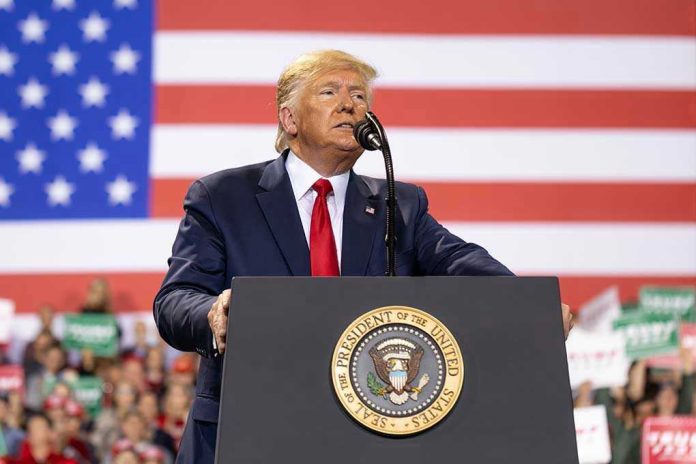
Donald Trump did not mince words on October 17. Addressing a crowd and the world, he declared that Venezuelan President Nicolás Maduro “doesn’t want to fuck around” with the United States. Gone are the days of carefully massaged diplomatic statements. The leader of the free world stared down a hostile regime and used language more common to backroom negotiations than official press conferences. This is not just bluster. Such phrasing carries a history of intent, recalling moments when presidents decided that ambiguity was no longer useful. For audiences at home and abroad, Trump’s message was unmistakable: the U.S. is prepared to escalate, and it will not be cowed by Latin American strongmen.
Maduro, who has long relied on a mixture of populist rhetoric and military loyalty to maintain control, now faces a public challenge more severe than sanctions or diplomatic isolation. The explicit nature of Trump’s warning leaves little room for misinterpretation. It is a dare, wrapped in the kind of language that, for better or worse, resonates with a certain American sensibility—one that values strength, clarity, and, above all, resolve.
Escalation or Posturing? The Calculus Behind the Words
Presidential threats, especially when delivered so bluntly, are rarely random. Trump’s choice of words signals a shift from traditional diplomatic engagement to a doctrine of public intimidation. The move aligns with conservative values that prize American sovereignty, deterrence, and an aversion to appeasement. The message: the United States will not tolerate perceived threats or disrespect from adversarial regimes in its own hemisphere. Supporters see this as a necessary correction to years of ineffective diplomacy; critics worry such rhetoric risks unintended consequences, from emboldening hardliners to justifying crackdowns within Venezuela itself.
Maduro’s options are now limited. He can back down, risking internal backlash and loss of face, or he can test Trump’s resolve—potentially inviting military, economic, or cyber reprisals. The world watches for any sign of how Venezuela’s leader interprets the threat. The U.S. administration, for its part, has made its red line crystal clear. The next move belongs to Caracas, but the consequences will ripple far beyond Venezuela’s borders.
The End of Diplomatic Niceties: Rhetoric in the Age of Disruption
Trump’s statement marks a watershed in presidential communication. No longer content with diplomatic euphemisms, he has ushered in an era where the language of the street collides with the gravitas of the Oval Office. This approach both delights and disturbs. For many Americans—especially those who feel the country’s global standing has diminished—such directness is long overdue. It projects confidence, instills fear in adversaries, and signals an end to what some see as an era of weakness. For others, it raises uncomfortable questions about the costs of abandoning centuries-old norms and the unpredictability it invites on the world stage.
Some analysts argue that, when dealing with autocrats who thrive on ambiguity and propaganda, only the clearest, most forceful language will do. Others counter that public threats can backfire, hardening an enemy’s resolve or boxing leaders into corners where compromise becomes impossible. The jury is out on whether Trump’s approach will yield the desired results, but one thing is certain: the tone of American foreign policy has changed, perhaps permanently, and the world is adjusting to the new rules as they are written, one unscripted remark at a time.
Sources:
President Donald Trump drops the F-bomb before the cameras. It wasn’t the first time