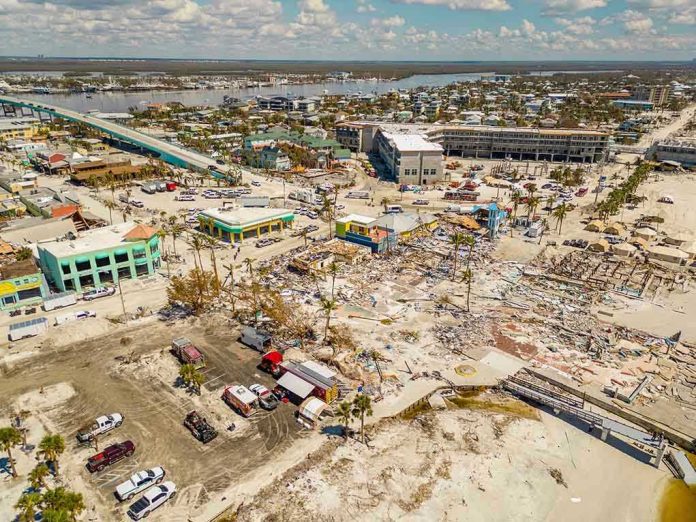
Black River’s landscape has been transformed into a haunting tableau of ruin, its streets nearly erased by the unrelenting wrath of Hurricane Melissa—leaving behind a mystery of what remains and what may never return.
Story Highlights
- Aerial footage reveals catastrophic destruction in Black River, Jamaica
- Hurricane Melissa made landfall as a Category 5 storm in October 2025
- Homes, infrastructure, and livelihoods have been decimated
- The scale of devastation raises urgent questions about Jamaica’s future resilience
Aerial Evidence: The Monster Storm’s Signature
Helicopters sweep over Black River, their cameras capturing scenes that defy belief: roofs ripped away, streets transformed into rivers, entire neighborhoods barely recognizable. The magnitude of destruction is not merely anecdotal. Category 5 hurricanes represent the zenith of atmospheric fury, and Melissa’s arrival in Jamaica fits the pattern of rapid intensification seen in recent Atlantic storms. Black River’s low-lying geography made it especially vulnerable; now, images show waterlogged foundations and a patchwork of splintered wood where homes once stood.
Emergency response teams face a daunting task as they navigate flooded roads and unstable structures. The storm surge, a wall of water pushed ashore by hurricane winds, inundated the area with little warning, overwhelming drainage systems and isolating communities. Reports from aerial surveys suggest the devastation is not isolated: outlying villages in St. Elizabeth Parish have suffered similar fates. As the winds recede, the true extent of the damage begins to emerge—entire blocks rendered uninhabitable, bridges washed out, and residents left searching for loved ones amid the debris.
Historical Context and Modern Vulnerability
Jamaica’s hurricane history is marked by infamous storms—Gilbert in 1988, Ivan in 2004—but Hurricane Melissa’s impact on Black River sets a new benchmark in the annals of disaster. Decades of development along the coast have increased exposure, and despite improvements in building codes, many structures could not withstand the combined force of wind and water. The disaster exposes gaps in preparedness, echoing calls for stronger mitigation measures and climate adaptation. Residents who recall previous hurricanes now face an unprecedented crisis, with food, water, and medical supplies in dangerously short supply.
Local authorities mobilize shelters and coordinate with national agencies, but resources are stretched thin. International humanitarian organizations arrive, bringing emergency relief and technical expertise, yet the logistical challenges of reaching remote areas slow progress. The destruction of farms and fisheries signals a looming threat to food security; Jamaica’s economy, already fragile, braces for aftershocks that could last for years. Political leaders confront difficult questions: Can infrastructure be rebuilt to withstand future storms? What lessons must be learned from Melissa’s path of devastation?
Human Toll and the Road to Recovery
Behind every collapsed building lies a personal story of loss and resilience. Families sift through the wreckage, salvaging what little remains. Children wander streets now littered with debris, their routines shattered. The immediate priorities are clear: rescue operations, medical care, and restoring basic services. Yet the emotional toll is profound, with survivors grappling with trauma and uncertainty about the future. Community bonds, often a source of strength in crisis, are tested as the scale of displacement grows.
The long-term implications reach far beyond Black River. Migration may follow as some residents seek safer ground, while others commit to rebuilding despite daunting odds. Insurance claims mount, and the financial sector faces unprecedented payouts. As international aid arrives, questions about sustainable recovery and climate resilience come to the forefront. Will reconstruction efforts prioritize stronger, safer homes? Can local leaders marshal the political will to overhaul disaster management systems? The answers remain elusive, but the urgency is undeniable. Jamaica stands at a crossroads, forced to reckon with both the immediate aftermath and the specter of future storms.
Sources:
Drone footage shows devastation after Hurricane Melissa hit Jamaica