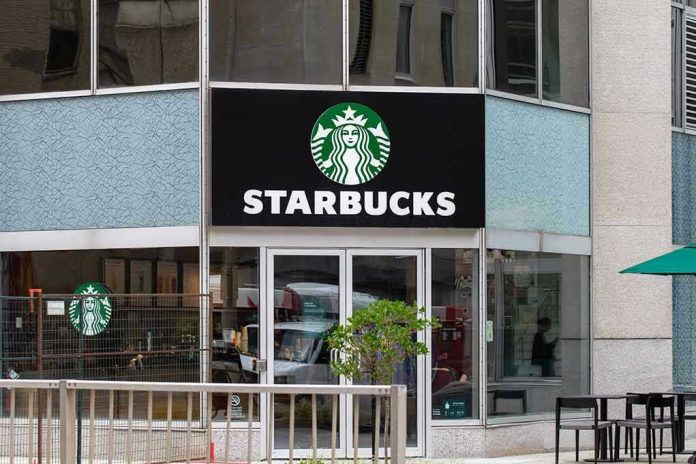
The Starbucks Red Cup Rebellion is not just about coffee—it’s a seismic labor standoff timed to upend one of America’s most beloved holiday sales traditions, with consequences rippling far beyond the espresso counter.
Story Snapshot
- Unionized Starbucks baristas launched a nationwide, open-ended strike on Red Cup Day, a pivotal holiday sales event.
- Over 12,000 workers across 65+ stores are demanding a fair contract, better pay, and resolution of hundreds of unfair labor practice charges.
- The strike exposes deep, unresolved disputes between Starbucks and its unionized workforce, with negotiations stalled for months.
- The outcome could transform labor activism tactics for the entire U.S. retail sector.
Starbucks Faces Red Cup Rebellion on Peak Holiday Sales Day
On November 13, 2025, Starbucks witnessed a coordinated walkout by thousands of unionized baristas, striking in tandem with the company’s iconic Red Cup Day. This annual event, which usually marks a surge in holiday sales, became the stage for one of the most visible labor actions in recent retail history. Organized by Starbucks Workers United, the “Red Cup Rebellion” was anything but symbolic: baristas in over 40 cities shuttered locations, leaving lines empty and customers facing picket signs instead of peppermint mochas.
The timing was no accident. Red Cup Day is a cultural phenomenon for Starbucks and its loyalists—a moment when festive drinks and collectible cups drive crowds and profits. By leveraging this high-profile sales day, union leaders aimed to maximize pressure on Starbucks executives, betting that disruption at peak season would force the company back to the bargaining table. As the strike unfolded, union members echoed their rallying cry: “No contract, no coffee.” The impact was immediate, with dozens of stores closed and thousands of workers off the clock, signaling a new phase in the battle for workplace rights.
Union Demands: Contract, Pay, and Justice
The roots of the rebellion trace back to years of simmering disputes. Starbucks Workers United began organizing in 2021, quickly spreading to over 600 stores and representing more than 12,000 baristas nationwide. The union’s grievances are multifaceted: calls for higher wages, improved staffing, and safer working conditions are intertwined with accusations of union busting and retaliatory firings. More than 1,000 unfair labor practice charges have been filed against Starbucks, amplifying the urgency for resolution. Despite some tentative agreements, most remain noneconomic, leaving core issues unresolved and fueling worker frustration.
Baristas and union leaders argue that the company’s contract offers fall short, particularly on pay and scheduling flexibility. The latest strike authorization vote saw a resounding 92% approval, reflecting widespread discontent and resolve among the workforce. For many, this action is not just about economics—it’s about dignity, security, and the right to organize without fear. Starbucks, meanwhile, maintains that it offers industry-leading jobs and claims the union is unwilling to bargain in good faith. The standoff has become a test of wills, with both sides entrenched and little sign of compromise.
Holiday Disruption: Economic and Reputational Stakes
Red Cup Day is more than a marketing gimmick; it’s a crucial driver of Starbucks’ holiday revenue. By striking at this moment, workers threaten not just daily operations but the brand’s seasonal momentum. Starbucks executives have downplayed the disruption, but union sources report substantial closures, lost sales, and heightened media attention. Customers—some sympathetic, some frustrated—must navigate picket lines and altered routines, while the company faces mounting reputational risks in a market increasingly attuned to labor rights.
The implications extend beyond immediate financial loss. Labor experts suggest the Red Cup Rebellion could set a precedent for future union strategies, encouraging retail workers nationwide to leverage key sales events for collective action. The strike also spotlights the slow pace of contract negotiations: Bloomberg Law notes it typically takes 409 days to secure a first union contract, but Starbucks negotiations have already exceeded that mark. With over 700 unfair labor practice charges still unresolved, the pressure for settlement is intensifying, and the stakes for both sides are growing.
Power, Public Opinion, and the Road Ahead
The power dynamics at play are complex. Starbucks retains control over its operations and messaging, but faces a mobilized workforce and increasingly vocal public allies. Customers and labor advocates have joined picket lines, pledging not to cross. Meanwhile, union leaders like Lynne Fox and Michelle Eisen have become prominent voices, framing the strike as a battle not just for better pay, but for the soul of corporate America’s labor relations. The adversarial relationship between the two camps remains bitter, with legal disputes and public campaigns shaping the narrative.
Long-term, the Red Cup Rebellion could catalyze broader changes in the retail sector, emboldening workers elsewhere to organize and strike during high-stakes moments. The outcome may hinge on whether Starbucks returns to negotiations and addresses union demands, or whether the impasse deepens, fueling further unrest. For now, the story remains unfinished—a dramatic open loop that invites every stakeholder, from workers to executives to customers, to wonder: who will blink first, and what will that mean for the future of American labor?