Pete Buttigieg’s candid response at the Texas Tribune Festival ignited a fierce debate about political identity and opportunism.
Story Snapshot
- Pete Buttigieg criticized JD Vance’s political identity at a public forum.
- He suggested Vance’s political alignment is opportunistic.
- The remarks have sparked a debate about the use of extreme political labels.
- Buttigieg’s comments highlight tensions in U.S. political discourse.
Buttigieg’s Bold Critique
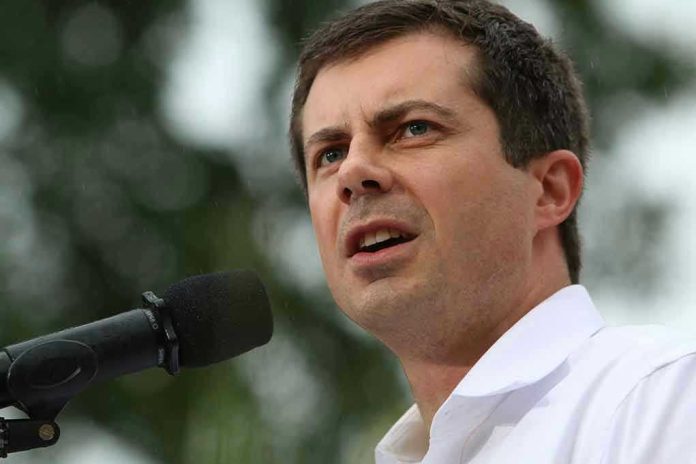
At the Texas Tribune Festival, Pete Buttigieg did not hold back when asked if Vice President JD Vance is a “fascist.” His response was as direct as it was provocative, suggesting that Vance’s political identity is like a chameleon, changing colors based on convenience. Buttigieg’s critique highlighted Vance’s transformation from a Trump critic—once labeling Trump as “Hitler”—to a staunch ally, illustrating a narrative of political opportunism that has captivated media and public discourse.
This live exchange quickly became a focal point for political commentators and media outlets, drawing attention to the fluidity of political identities. Buttigieg’s remarks underscore a larger conversation about the strategic use of political labels and the implications for public trust and political integrity. The event showcased Buttigieg’s rhetorical prowess and willingness to challenge political figures in a public setting.
The Setting and Context
The Texas Tribune Festival provided a platform for this exchange, known for its candid discussions among high-profile political figures. This environment amplified the impact of Buttigieg’s words, allowing them to resonate beyond the immediate audience. The festival is a key event where political leaders and thought influencers converge, making it an ideal stage for Buttigieg’s pointed critique. His comments not only scrutinized Vance’s political journey but also questioned the broader trend of political adaptability for personal gain.
Buttigieg’s history as a sharp critic of Republican figures adds context to his statements. As a prominent Democratic voice, he has often been a counterpoint to the narratives pushed by Republican leaders, and his comments at the festival were consistent with his role as a commentator on political integrity and leadership.
Implications and Reactions
The immediate aftermath of Buttigieg’s comments saw a surge in media coverage and public debate. His willingness to use the term “fascist” in such a public forum raised questions about the boundaries of political discourse and the normalization of extreme labels in political rhetoric. This event highlights the ongoing tension in American politics where strategic labeling becomes a tool for both critique and division.
While Vance has yet to publicly respond, the debate continues to simmer, with media outlets and commentators dissecting the implications of Buttigieg’s words. The exchange not only challenges Vance’s political credibility but also poses broader questions about political authenticity and the consequences of perceived opportunism. These discussions are likely to influence voter perceptions and the framing of future electoral narratives.
Broader Impact on Political Discourse
The story illustrates the volatility of political identities in the current era and the strategic use of rhetoric in partisan conflicts. Buttigieg’s remarks serve as a reminder of the deepening polarization in U.S. politics and the challenges of maintaining political integrity amidst shifting allegiances. While some view Buttigieg’s critique as a necessary confrontation of opportunism, others see it as an escalation of divisive rhetoric, reflecting the complex dynamics in contemporary political discourse.
As the story unfolds, it continues to impact the political landscape, emphasizing the need for clarity and consistency in political leadership. The implications of Buttigieg’s comments extend beyond the immediate controversy, prompting ongoing discussions about the nature of political identity and the ethics of political alignment. These conversations are crucial for understanding the evolving nature of political alliances and the role of rhetoric in shaping public perception.