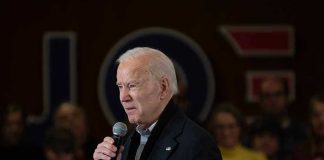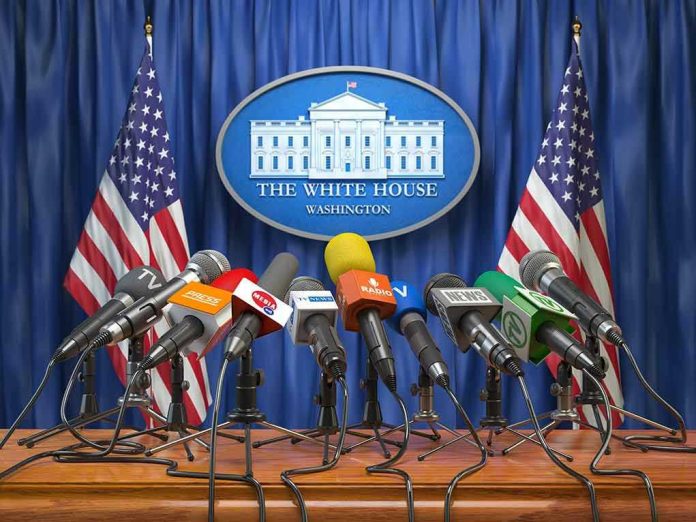
When a sitting president calls a female reporter “piggy” and his press secretary claims the press should be grateful for it, the scandal isn’t just the insult—it’s the normalization of open contempt for accountability.
Story Snapshot
- Trump’s “piggy” insult to a female reporter reignites debate over misogyny and press freedom in the White House.
- Press Secretary Karoline Leavitt frames the insult as a virtue—evidence of transparency and honesty.
- The controversy is intertwined with renewed scrutiny of Trump’s ties to Jeffrey Epstein.
- Expert and public backlash highlights the danger of excusing abusive rhetoric as candor.
Trump’s “Piggy” Remark: A New Low, or Business as Usual?
Donald Trump’s relationship with the media has never been a lesson in charm, but the events aboard Air Force One last week marked a fresh descent. After a Bloomberg reporter pressed him on emails from the House Oversight Committee connecting him to Jeffrey Epstein, Trump shot back with a single, loaded word: “piggy.” The insult, sexist and demeaning, immediately ricocheted through headlines, igniting condemnation from journalists, commentators, and women’s groups. If the moment felt familiar, it’s because it was—Trump has a history of targeting female journalists with personal attacks, from Megyn Kelly to Rosie O’Donnell. But this time, the stakes were heightened by the context: an ongoing investigation into his alleged ties to one of America’s most notorious sex offenders, and a press corps already wary of eroding norms around access and respect.
Six days later, the White House doubled down, not with an apology, but with an explanation. Press Secretary Karoline Leavitt told reporters that Trump’s outburst was actually a sign of his “candor” and “transparency.” According to Leavitt, the press should be grateful: “The president is very frank and honest with everyone in this room… He gets frustrated with reporters when you lie about him… He is also the most transparent president in history.” The defense, delivered with conviction, reframed the insult not as a lapse in decorum but as a model of how a president should engage with the press. The message was clear—bluntness, even when it crosses into bullying, is now a badge of honor.
Press Freedom, Transparency, and the Cost of “Candor”
The White House’s attempt to spin the “piggy” incident as a virtue is not just a PR maneuver; it’s a statement about the administration’s priorities. Under Trump, access for critical journalists has narrowed, and the line between tough questioning and outright antagonism has blurred. Leavitt’s argument that the press should welcome such “frankness” ignores a basic principle: transparency demands truthful answers, not personal attacks. Media analysts have pointed out that conflating “openness” with “abusive rhetoric” risks eroding the standards by which public officials are held accountable. According to political communication scholars, this redefinition of transparency threatens to normalize disrespect, especially toward women in positions of scrutiny.
The political context compounds the damage. Trump’s insult was not random; it was triggered by questions about Jeffrey Epstein, a topic that has dogged him for years. The House Oversight Committee’s release of new Epstein-related emails had already put the administration on the defensive. By lashing out at the reporter, and then doubling down on the insult, the White House signaled both its reluctance to engage with uncomfortable truths and its willingness to punish those who ask the questions. The chilling effect on journalists, particularly women, is real and immediate—silence the messenger, and you soften the scrutiny.
Reactions: Outrage, Justifications, and the Shifting Line of Acceptable Conduct
Condemnation was swift and broad. News outlets, advocacy groups, and members of the press corps called out both the insult and Leavitt’s defense as an unacceptable effort to recast bullying as virtue. MSNBC and The Independent reported that Leavitt’s comments did nothing to quell the uproar, instead fueling a wider debate about misogyny, press freedom, and the meaning of presidential transparency. Critics described the administration’s response as “factually and ethically indefensible,” warning of the risk that such conduct might become normalized if left unchallenged.
The press secretary suggested that Trump was much more respectful than the last administration.https://t.co/Ue2l09QLAv
— The Daily Beast (@thedailybeast) November 20, 2025
Yet, the incident also revealed the deep polarization of American political culture. Some Trump supporters saw the episode as a mark of his authenticity—a leader unafraid to “tell it like it is.” For the broader public, however, the question is not just about one insult, but about the values the country expects from its highest office. If transparency means open hostility to the press, what does accountability look like? The answer remains unsettled, but the precedent is set: the boundaries of presidential conduct are not what they once were.