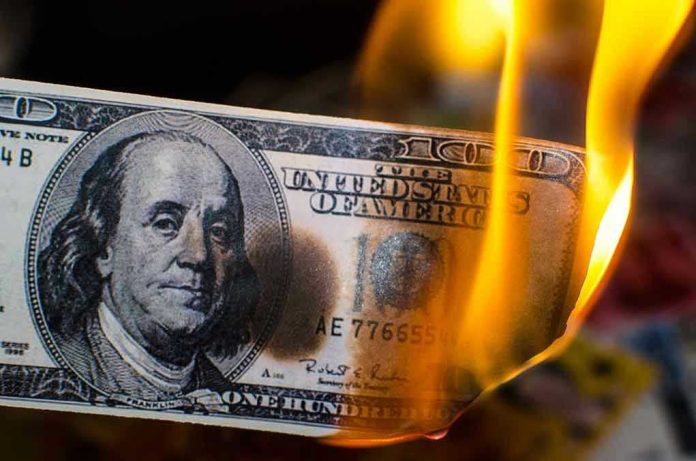
Sensational YouTube claims of an ex-CIA insider warning that elites hide the US Dollar’s total collapse ignore President Trump’s fiscal victories and institutional forecasts showing only temporary weakness.
Story Snapshot
- YouTube videos hype a 2025 dollar drop of ~10% as imminent collapse driven by BRICS and gold, lacking verifiable ex-CIA source.
- Morgan Stanley and JPMorgan predict DXY dip to 94 in Q2 2026 then rebound to 100+ on Fed policy, AI growth, and OBBBA stimulus.
- No structural unraveling; dollar retains 58% global reserve share amid cyclical pressures from rate cuts and deficits.
- Trump’s “One Big Beautiful Bill” boosts economy but risks inflation, reinforcing US dominance against de-dollarization hype.
Debunking the Ex-CIA Collapse Myth
Sensational videos surfaced late 2025 claiming an unnamed ex-CIA source reveals suppressed truth about the dollar’s downfall. These cite a 10% DXY drop that year, worst in a decade, against euro, yen, and yuan. BRICS nations push yuan trade and central banks diversify reserves post-Russia sanctions. Gold surges to $4,000/oz by mid-2026 as a hedge. Yet no named insider or classified intel verifies the “collapse” narrative; it spins public data into conspiracy.
2025 Weakness: Cycle, Not Catastrophe
The dollar weakened in 2025 amid Fed rate cuts to 3-3.25%, slowing US growth, and fiscal deficits. DXY hit its worst week in six months by September, hovering at 99-100 early 2026. Trump’s One Big Beautiful Bill (OBBBA) passed late 2025, injecting stimulus that counters cuts but risks debt spikes. Historical precedents like 2008 show rebounds after dips; dollar share remains stable at 58% since Bretton Woods era.
Expert Forecasts Signal Resilience
Morgan Stanley’s David Adams forecasts a choppy decline ending H2 2026, with DXY rebounding on growth and rates. MarketPulse predicts V-shaped recovery via tariffs and inflation control. EBC warns of trouble below 96 but sees fiscal premiums supporting it. J.P. Morgan notes gradual BRICS efforts lack scale to dethrone dollar liquidity. These institutions dismiss structural breaks, emphasizing US AI and energy edges.
Alarmist views highlight BRICS autonomy and debt crisis risks, but consensus views cycles over collapse. Gareth Soloway and others hedge with gold, yet no evidence of “transition” beyond volatility.
Stakeholder Dynamics Under Trump
Federal Reserve drives short-term DXY via steady cuts to 3.4% by end-2026, balancing inflation at 2.6% and 1.8% H2 growth. US Government via OBBBA fuels expansion, aiding exporters but raising import costs for consumers. BRICS erodes reserves long-term, yet central banks diversify slowly. Investors profit from volatility; multinationals gain from weaker dollar boosting competitiveness.
Implications for Conservative Priorities
Short-term dips aid US manufacturing against globalists, aligning with Trump’s America First agenda limiting foreign reliance. Long-term rebound preserves dollar strength, protecting retirement savings and family finances from inflation mismanagement of past regimes. Political tensions loom over debt ceiling and Fed independence, but no threat to constitutional economic sovereignty. Gold hedging empowers individual liberty over government overreach.
Sources:
Morgan Stanley: US Dollar Decline Continues Through 2026
MarketPulse: 2026 US Dollar Forecast
EBC: Is the US Dollar in Trouble in 2026?
Morningstar: What a Weaker US Dollar Means for Investors