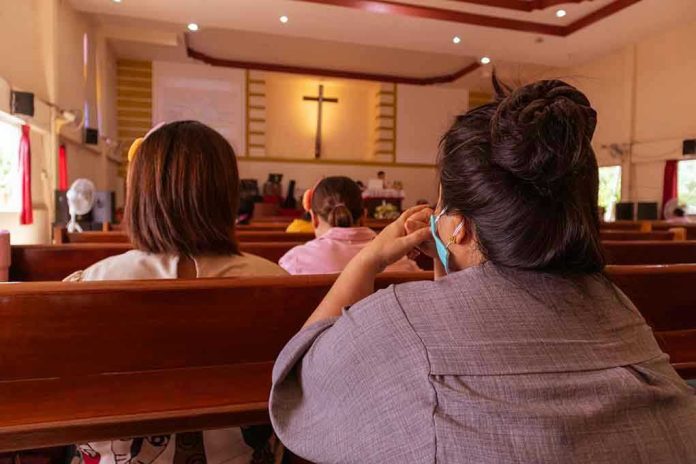
A mob of anti-ICE protesters violated one of America’s most sacred traditions by storming a Minnesota church during Sunday worship, forcing the Department of Justice to launch an investigation into what many are calling an unprecedented attack on religious freedom.
Story Highlights
- Anti-ICE mob storms St. Paul church during active Sunday worship service
- Protesters targeted pastor over alleged ties to Immigration and Customs Enforcement
- Department of Justice initiates federal investigation into the church invasion
- Incident represents escalation in anti-ICE tactics from street protests to sanctuary violation
When Protest Becomes Persecution
The Sunday morning invasion of a St. Paul church represents a dangerous new frontier in protest tactics. Anti-ICE agitators didn’t just cross property lines—they shattered centuries of American tradition that holds houses of worship as sacred spaces immune from political harassment. The congregation, gathered for what should have been a peaceful worship service, found themselves at the center of a political firestorm over their pastor’s alleged connections to federal immigration enforcement.
The disruption sends a chilling message to religious communities nationwide: your faith gatherings are no longer off-limits to political extremists. This calculated violation of religious sanctuary transforms Sunday worship from spiritual refuge into potential battleground, fundamentally altering the relationship between faith and activism in America.
Federal Response Signals Serious Consequences
The Department of Justice’s swift decision to investigate this church storming indicates federal authorities view the incident as more than a simple trespass. By launching a probe into what protesters likely considered justified activism, the DOJ signals that religious freedom violations will face serious federal scrutiny. This investigation could establish crucial legal precedents about the boundaries of protest and the protection of religious spaces.
The federal response also suggests broader implications for anti-ICE movements nationwide. If DOJ prosecutors determine the church invasion violated federal civil rights laws protecting religious exercise, similar protest groups may face enhanced penalties for targeting faith communities. The investigation’s outcome could reshape how activists approach immigration enforcement protests, particularly regarding religious institutions.
The ICE Connection Controversy
While protesters claim the targeted pastor maintains inappropriate ties to ICE operations, the specific nature of these alleged connections remains unclear. The accusation alone proved sufficient to trigger the church invasion, raising troubling questions about mob justice and due process. Whether the pastor actually collaborates with ICE beyond normal community cooperation with law enforcement appears irrelevant to the protesters’ decision to violate his congregation’s worship.
This incident reflects a broader pattern where anti-ICE activists increasingly target individuals rather than institutions, personalizing their opposition to immigration enforcement. The tactic of storming churches based on unverified allegations creates dangerous precedents where accusation becomes justification for sanctuary violation. Such mob mentality threatens not just targeted pastors but entire religious communities who may face similar harassment.
Broader Implications for Religious Freedom
The Minnesota church storming represents more than isolated extremism—it signals a fundamental shift in how political activists view religious institutions. By treating a house of worship as legitimate protest territory, these agitators reject longstanding American principles that protect religious spaces from political interference. This erosion of sanctuary sanctity threatens religious communities across denominational lines, regardless of their immigration policy positions.
The incident also highlights dangerous intersections between immigration policy debates and religious persecution. When activists storm churches over pastors’ alleged government cooperation, they essentially punish religious communities for their leaders’ civic engagement. This chilling effect could discourage faith leaders from participating in community partnerships with law enforcement, undermining both public safety and religious freedom. The DOJ investigation’s outcome will largely determine whether such tactics become normalized or face meaningful legal consequences.
Sources:
DOJ probes church storming as protests escalate in Minnesota
Not offense recognition Lecrae backs
Watch pro ICE demonstrators hit US streets Minneapolis locals speak out against leftist rioters