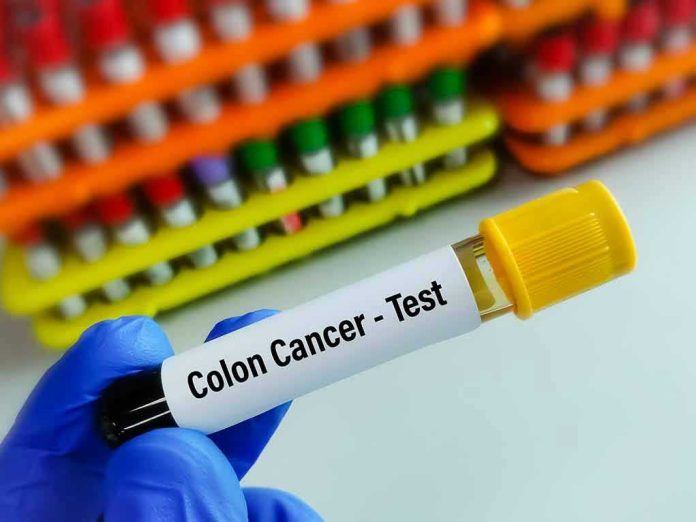
England is shaking up its bowel cancer screening program, a move that could save hundreds of lives every year.
Story Overview
- NHS England will lower the FIT threshold to detect bowel cancer sooner.
- This change aligns England with Scotland and Wales, predicting earlier detection of 600 cases annually.
- The threshold change will lead to 35% more colonoscopies, totaling 34,000 additional procedures yearly.
- Implementation begins in February 2026, with full rollout by March 2028.
NHS England’s Screening Strategy
NHS England announced it will lower the faecal immunochemical test (FIT) threshold for bowel cancer screening from 120µg Hb/g to 80µg Hb/g. This change is crucial for early detection, which greatly enhances treatment outcomes. By aligning with Scotland and Wales, the NHS anticipates detecting 600 additional cancer cases annually, an 11% increase. The shift also means identifying 2,000 more high-risk polyps and conducting 34,000 additional colonoscopies each year.
The program’s pilot phase successfully identified 60 extra cancer cases and nearly 500 high-risk polyps across eight early-adopting services. The full rollout will be phased, with initial implementation set for February 2026 and complete nationwide adoption by March 2028. The change is part of a broader strategy to improve early cancer detection and is supported by digital notifications via the NHS App, enhancing patient engagement and screening uptake.
Implications of the Screening Change
Bowel cancer is the fourth most common cancer in the UK, and early detection is key to reducing mortality rates. Currently, only about 2% of FIT tests require follow-up, but this is expected to rise to 3% with the new threshold. The increased sensitivity and subsequent early detection could lead to a 6% reduction in late-stage diagnoses and deaths, saving the NHS an estimated £32 million annually through less intensive treatments.
While the NHS is prepared for the increase in colonoscopies, there are challenges. The phased rollout is necessary to manage colonoscopy and pathology capacity, and while the optimal threshold is 20µg/g, the current change is a significant step forward. The program also ties into the upcoming Government National Cancer Plan, which aims to transform cancer care by 2035.
Stakeholder Perspectives
Key stakeholders have expressed support for the screening shake-up. Peter Johnson, National Clinical Director for Cancer at NHS England, described the change as a “major step forward” that could save hundreds of lives. Genevieve Edwards, CEO of Bowel Cancer UK, hailed the initiative as “great news,” emphasizing that more cancers will be prevented and detected earlier. Dr. Zubir Ahmed, Health Innovation Minister, underlined the importance of early detection from a frontline perspective, highlighting the role of digital technology in this transformation.
Michelle Mitchell, CEO of Cancer Research UK, stated that this initiative is a vital step in saving lives and improving early detection rates. The UK National Screening Committee supports the phased rollout, balancing the benefits of increased sensitivity with existing service demands. The alignment with Scotland and Wales, while Northern Ireland retains a higher threshold, underscores the coordinated effort across the UK to enhance cancer screening effectiveness.
Sources:
NHS bowel cancer screening shake-up in a bid to catch cases earlier
NHS to detect and prevent thousands more bowel cancers with more sensitive screening
NHS to lower threshold for bowel cancer screening
NHS England to lower FIT test threshold, triggering bowel cancer investigation