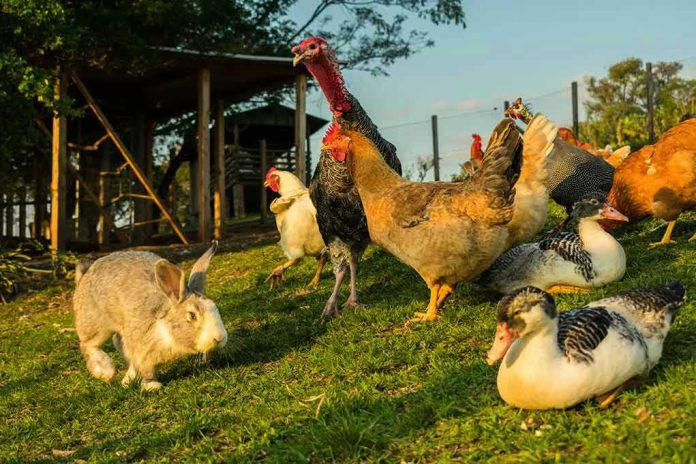
Twenty-seven animals died under horrifying conditions on a remote New Zealand farm during production of The Hobbit trilogy, in deaths that whistleblowers warned were entirely preventable and repeatedly ignored by those with power to stop them.
Story Snapshot
- Up to 27 animals including horses, a pony, goats, sheep, and chickens died on a farm housing livestock for The Hobbit production due to sinkholes, falls, worm infestations, and dog attacks
- Five wranglers reported dangerous conditions to production heads and Warner Bros. multiple times before deaths occurred, but their warnings were dismissed
- Deaths occurred off-set at a farm 200 miles from filming locations, outside the jurisdiction of on-set animal welfare monitors who certified no harm during actual filming
- PETA called for criminal investigations and premiere boycotts while producers defended their use of CGI in 55% of animal shots and blamed off-set housing issues
When Warnings Fall on Deaf Ears
The tragedy unfolded at a farm far from the cameras and craft services tables where Peter Jackson brought Middle Earth to life. Wranglers spotted death traps immediately. Sinkholes dotted the property. Fences sagged and broke. The terrain featured steep embankments where a single misstep could prove fatal for horses. Yet when these professionals raised alarms to the head wrangler, unit production manager, and Warner Bros. representatives, their concerns evaporated into the New Zealand mist. Only after bodies piled up and whistleblowers contacted PETA did the Associated Press expose what insiders had been screaming about for months.
The Grim Inventory of Negligence
The specific incidents read like a catalog of preventable horrors. A horse named Shanghai fell from a precipice and broke her back. Another horse suffered the same fate. A pony joined the death toll. Production staff hobbled horses by tying their legs together for three hours at a stretch, violating basic welfare guidelines. Other horses developed fatal colic from overfeeding. Goats and sheep succumbed to worm infestations that proper veterinary oversight would have caught early. Dogs mauled chickens to death. Each incident represented not an accident but a choice to prioritize convenience and budget over the lives of sentient creatures who had no say in their participation.
The Jurisdiction Loophole Hollywood Exploits
The American Humane Association operates Hollywood’s most recognized animal welfare program, certifying productions with the coveted “No Animals Were Harmed” disclaimer. Their monitors watched every frame shot on The Hobbit sets and found nothing amiss, because legally and logistically they only monitor what happens during filming. The farm where animals lived between their moments on camera sat outside AHA jurisdiction. This gap represents a systemic failure the industry has long exploited. Dr. Robin Ganzert of AHA called The Hobbit situation an “extreme case” that highlighted the need for oversight covering all phases of production, but the association lacked both authority and funding to extend protection beyond set boundaries.
Warner Bros. and Peter Jackson mounted a defense emphasizing their technological achievements rather than their duty of care. They pointed to using computer-generated imagery for 55% of animal shots and keeping live animals out of action sequences. The studio characterized their approach as taking extraordinary measures. This response deflected rather than addressed the core accusation. Nobody claimed animals died during filming. They died in housing the production controlled, under conditions wranglers identified as dangerous, after warnings the production ignored. The defense amounted to arguing their house was clean while the barn collapsed.
Why CGI Expertise Made It Worse
Peter Jackson earned his reputation partly through groundbreaking visual effects work. His mastery of CGI made PETA’s criticism especially pointed. If any director possessed the technical capability to replace live animals entirely with digital creations, Jackson topped that list. PETA argued that using real animals at all represented an indefensible choice given both his expertise and the obvious risks of housing livestock on unsuitable property. The organization demanded Jackson pledge to use only CGI animals in future projects. The juxtaposition stung: a director celebrated for making the impossible look real on screen apparently could not ensure basic safety for actual living creatures off screen.
The Common Sense Test
Strip away the Hollywood glamour and million-dollar effects budgets, and this story reduces to something simple. Workers identified hazards. Management ignored them. Predictable consequences followed. Animals died. Then management blamed circumstances beyond their control. This pattern plays out in every industry where accountability erodes and those at the bottom of power structures lack effective recourse. The wranglers who spoke up demonstrated more integrity than the executives who silenced them. PETA’s demand for criminal investigation by New Zealand authorities represented appropriate escalation when internal channels failed. Whether authorities pursued charges remains unclear from available records, though the American Humane Association did investigate the farm after public exposure and ensured surviving animals received proper care.
The Hobbit controversy pushed industry conversations about expanding animal welfare oversight beyond the narrow confines of what cameras capture. Real reform requires monitoring animals from the moment production acquires them until they return home, with enforcement mechanisms that actually penalize negligence rather than shrugging at jurisdictional gaps. The 27 animals who died on that New Zealand farm deserved handlers who prioritized their welfare over production schedules and executives who listened when experts raised red flags. They deserved the same level of care Jackson’s team devoted to rendering digital creatures that never drew breath. Instead, they got sinkholes, broken fences, and indifference.
Sources:
American Humane Association Faces a Hobbit Problem – Associations Now
Animal Abuse and Neglect During ‘The Hobbit’ Filming – PETA