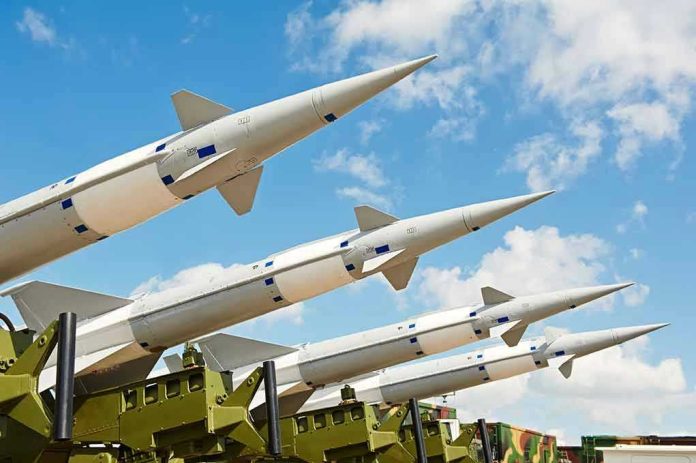
Iran’s “new wave” of missiles and drones didn’t just target Israel—it pushed the fight into Dubai’s civilian life, damaging a major international airport and rattling a global travel and energy hub.
Story Snapshot
- Iranian missile-and-drone attacks on February 28, 2026 sent debris into Dubai’s Palm Jumeirah and damaged Dubai International Airport (DXB), injuring four staff.
- UAE air defenses reported intercepting most of 137 ballistic missiles and 209 drones, limiting broader casualties but not preventing disruption.
- Dubai faced evacuations, beach closures, flight cancellations, and a jolt to investor confidence tied to tourism and real estate.
- The strikes unfolded amid a sharp U.S.-Israel campaign against Iran and a widening regional conflict with immediate risks to oil shipping routes.
Dubai’s Night of Impacts: Debris, Evacuations, and a Hit on DXB
Dubai’s most vivid takeaway from February 28 was how quickly a regional war can reach daily life in a city built around global travel, commerce, and confidence. Reports describe debris falling in Palm Jumeirah around 01:13 local time, followed by an evacuation at Dubai International Airport at 01:32. By 02:52, a DXB terminal was hit, causing structural damage and injuring four staff members.
UAE authorities said air defenses intercepted most incoming threats, but “most” is not “all” when debris and fragments can still fall into dense civilian areas. Later that day, an interception was reported over the UAE around 11:31, with a fire and one fatality reported in Abu Dhabi. By mid-afternoon, a downed drone reportedly struck a Sharjah mall, prompting fire reports as public spaces emptied and restrictions tightened.
What Triggered the Escalation: Strikes on Iran and Retaliation Across the Gulf
The attacks on the UAE were tied to a broader escalation following Israeli and U.S. strikes on Iranian targets. Reporting and compiled timelines describe a major campaign hitting hundreds of sites, followed by Iranian retaliation not only against Israel but also against Gulf states hosting U.S. forces or supporting U.S. regional posture. This matters for Americans because it shows how quickly overseas basing, alliances, and deterrence can become magnets for retaliation.
Key claims in the available reporting include leadership disruption inside Iran and continued follow-on strikes against Iranian missile infrastructure into March 1. Some details—especially around who exactly was killed and when—remain contested across accounts, and readers should treat the fog-of-war factor seriously. What is consistent, though, is the pattern: large strikes, rapid retaliation, and expanding target sets that now include Gulf transit points central to global energy pricing.
Air Defense Success Still Comes With Civilian Costs
The UAE’s reported interception totals—137 ballistic missiles and 209 drones—underscore that modern air defense can blunt mass attacks. But the Dubai timeline illustrates an uncomfortable reality: even successful defenses can produce dangerous debris, secondary fires, and panic-driven disruption. Airport evacuations, terminal damage, and injuries at a premier international hub demonstrate how adversaries can impose costs without “winning” militarily, simply by disrupting normal life.
For a conservative audience that values sovereignty and public order, the lesson is straightforward: national security isn’t abstract when civilians and infrastructure become targets. Limiting casualties is a success, but the public also feels the economic and psychological hit. When streets empty, beaches close, and commercial aviation stutters, ordinary families and workers absorb consequences long before diplomats produce statements or ceasefires.
Economic Shockwaves: Aviation Disruption, Real Estate Jitters, and Energy Risk
Dubai’s vulnerability is structural: its prosperity depends on steady tourism, reliable aviation connections, and investor faith in stability. Reporting linked the attack timeline to real estate market volatility and immediate disruptions like flight cancellations, including Aeroflot canceling Dubai flights. DXB’s operational disruptions, even if temporary, ripple outward through airlines, hospitality, logistics, and insurance—exactly the kind of cascading effect hostile actors seek when they target chokepoints.
At the regional level, the risk to energy markets remains a central concern. Accounts describe disruption pressures tied to the Strait of Hormuz, one of the world’s most critical oil shipping routes. When shipping lanes tighten or close, oil volatility rises, and Americans can feel that pressure quickly through higher fuel and transportation costs. The research does not provide a full price series, so the economic magnitude cannot be precisely quantified here.
What to Watch Next: Continued Strikes and the Risk of Wider Regional Targeting
As of March 1, reporting indicated additional Israeli strikes on Iranian missile infrastructure, including a reported strike north of Qom, alongside continued Iranian launches toward Israel and Gulf states. Debris reportedly struck Abu Dhabi’s Etihad Towers area, injuring civilians, while separate reporting noted casualties in Kuwait. The trajectory is the concern: once civilian hubs are pulled into the conflict, the off-ramp narrows and the incentive to “signal” strength grows.
https://twitter.com/
For Americans watching under President Trump in 2026, the key issue is whether deterrence restores stability or whether escalation continues to spread across allied territory. The available sources highlight operational activity and competing narratives, but they converge on one fact pattern: interception successes did not prevent significant disruption in Dubai. Until launches stop—and until the region’s aviation and shipping lanes normalize—markets and families should expect volatility rather than calm.
Sources:
Attack on Dubai, February 28, 2026: Timeline of Events and Impact on the Real Estate Market
Timeline: Missile fire follows Israeli strikes on Iran, over 100 injured in Israel
2026 Israeli–United States strikes on Iran
Iran strikes: Trump-Israel attack timeline
Iran Update, Morning Special Report, March 1, 2026