OpenAI’s Sam Altman calls President Trump’s adviser Elon Musk’s bold space data center vision “ridiculous,” escalating their feud over America’s AI future at a critical time for U.S. tech dominance.
Story Snapshot
- Altman slams Musk’s orbital data centers as economically unfeasible and logistically impossible, questioning GPU repairs in space.
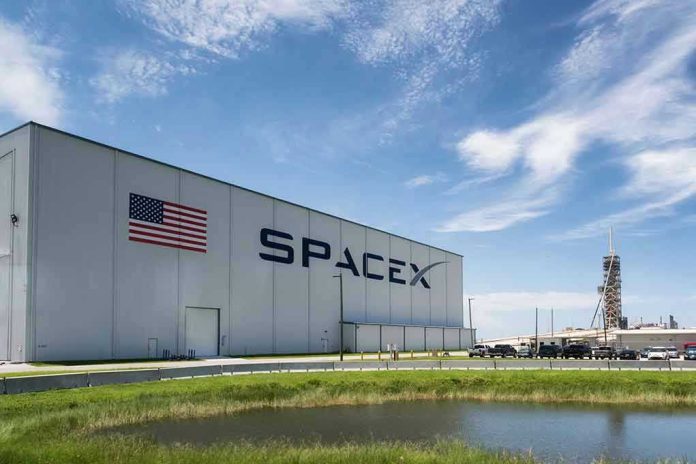
- Musk’s SpaceX proposes 31-mile-long facilities at 310+ miles altitude to harness endless solar power, bypassing Earth grid limits.
- Stargate project—Trump-endorsed $500 billion terrestrial effort by OpenAI, Oracle, SoftBank—directly competes, with Musk doubting their funding.
- Deep rivalry stems from OpenAI founding fallout; Musk sues to block its for-profit shift while building xAI rival.
- AI chip shortage drives debate: space innovation vs. ground-based scaling for American leadership.
Altman’s Direct Critique of Musk’s Orbital Plan
Sam Altman, OpenAI CEO, dismissed Elon Musk’s space data center proposal as “ridiculous for now” on February 20, 2026. Altman highlighted launch costs exceeding Earth power prices and maintenance nightmares, asking how to fix a broken GPU in orbit. SpaceX’s FCC filing details 31-mile structures above 310 miles, tapping constant solar energy to meet AI’s exploding compute needs. This clash underscores competing paths for U.S. infrastructure amid global shortages.
Stargate Project Gains Trump Backing
President Trump announced the $500 billion Stargate venture in February 2026, partnering OpenAI, Oracle, and SoftBank for massive Earth data centers. Construction started nine months earlier in Abilene, Texas, now expanding to 10 buildings with plans for 20. Oracle’s Larry Ellison confirmed progress, while Abilene’s mayor noted scope tripled expectations. OpenAI cut spending forecasts to $600 billion by 2030 from $1.4 trillion, prioritizing viable builds. This terrestrial push challenges Musk’s space ambitions.
Musk Counters with Funding Doubts
Elon Musk, Trump’s key adviser and xAI founder, fired back on X, claiming Stargate partners lack funds—SoftBank under $10 billion secured. Altman invited Musk to Texas sites, calling it “great for the country” to rally patriotism. Musk’s Memphis xAI center and ongoing OpenAI lawsuit highlight stakes. Their OpenAI co-founding turned adversarial over nonprofit roots versus profit pursuits, with Musk seeking court blocks on for-profit conversion. Rivalry shapes AI policy under Trump.
Power dynamics favor Musk politically as Trump ally, but Altman’s Microsoft and Oracle ties secure billions. Legal hearing looms in California February 2026. AI crunch forces choices: Musk’s innovative orbit leap or Altman’s proven ground scale. Conservatives cheer Musk’s American ingenuity against globalist overreliance on foreign partners like SoftBank.
Implications for U.S. AI Leadership
Short-term, the spat rattles investors and Trump policy on AI infrastructure. Musk’s cost-cutting role creates advisor conflicts evaluating Stargate. Long-term, terrestrial NIMBY blocks could validate space if launches cheapen. Energy demands spike; Stargate eyes renewables, space endless sun. Communities like Abilene gain jobs, but space risks monopoly concerns. Outcome decides if America leads via bold vision or safe scaling, safeguarding tech edge against China.
Experts note Altman’s practical hurdles valid now, but space power costs plummet sans weather. Policy warns against SpaceX dominance, urging competition. Trump endorsement signals terrestrial priority, yet Musk influence persists. Limited verification on SoftBank funds leaves disputes open. AI race demands American-first solutions, rejecting wasteful paths.
Sources:
KRGV: Musk clashes with OpenAI CEO Sam Altman over Trump-supported Stargate AI data center project
Economic Times: Data centres in space a ‘ridiculous’ idea for now: Sam Altman
Slow Boring: Don’t let Elon Musk monopolize space