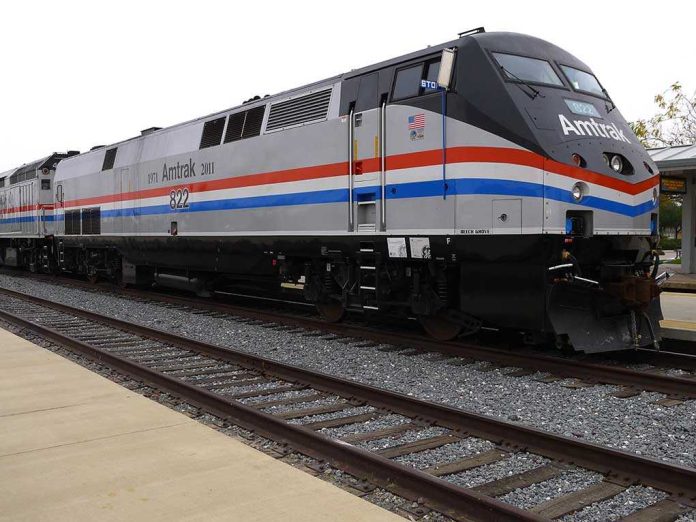
An Amtrak train carrying 129 passengers collides with a semi-truck near San Antonio, raising urgent questions about safety at rail crossings.
Story Snapshot
- Amtrak train collides with a semi-truck in Schertz, Texas, near San Antonio.
- The incident results in injuries and disrupts rail and road traffic.
- Emergency responders are on the scene; cause and extent of injuries under investigation.
- Limited information on casualties or fault attribution as of now.
Details of the Collision
On October 28, 2025, at approximately 12:11 PM, an Amtrak train carrying 129 passengers collided with a semi-truck at a rail crossing in Schertz, Texas. The collision resulted in injuries, though detailed reports on the number and severity of these injuries are still pending. The incident has caused significant disruption to both rail and road traffic in the area, with emergency services responding promptly to the scene.
The crash site, a suburban area near San Antonio, became a focal point for emergency responders, including police, fire departments, and medical teams. As of October 29, 2025, the investigation is ongoing, with authorities working to determine the cause of the crash and assess the damage.
Historical Context of Rail Safety
Amtrak, operating since 1971, has faced multiple challenges concerning rail safety, particularly at grade crossings. Despite efforts by the Federal Railroad Administration and initiatives like Operation Lifesaver, collisions at these crossings remain a persistent issue. Thousands of incidents occur annually, highlighting the need for improved safety measures.
Schertz, Texas, a growing suburb of San Antonio, sees significant rail traffic, both freight and passenger. The increase in development in such areas often leads to more interactions between road and rail traffic, making safety at these crossings a critical concern.
Key Stakeholders in the Aftermath
The collision involves several key stakeholders: Amtrak, the trucking company, local emergency services, and federal and state agencies like the National Transportation Safety Board (NTSB) and Texas Department of Transportation (TxDOT). Amtrak’s primary concern is passenger safety and service disruption, while the trucking company will be focusing on liability and public relations.
Emergency services are tasked with rescue operations and medical care, whereas regulators will be looking into the causes and potential preventive measures. Passengers and the local community, directly affected by the incident, will likely demand greater safety assurances and accountability.
Implications and Future Considerations
The collision’s immediate impact includes injuries to passengers and potential fatalities, alongside disruptions to local transportation. In the long term, the incident may prompt reviews of safety measures at grade crossings, possibly leading to new regulatory actions and infrastructure investments.
Legal and financial repercussions could follow, with lawsuits and insurance claims. The incident may also influence public perception of rail safety, particularly in rapidly developing suburban areas. It serves as a reminder of the need for ongoing investment in safety infrastructure and public education to prevent such tragedies.