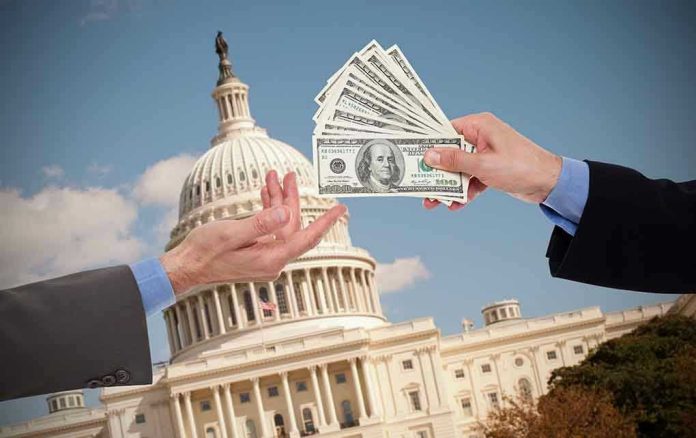
Federal law enforcement’s controversial probe into Trump’s Border Czar ended with no charges, fueling suspicions of politicized investigations and deepening frustration over what many conservatives see as ongoing attacks against officials defending the nation’s borders.
Story Snapshot
- The FBI and DOJ closed a bribery probe into Border Czar Tom Homan, calling it baseless and filing no charges.
- The case involved undercover agents and alleged payments, but federal authorities found insufficient evidence to proceed.
- Media coverage has amplified debate about accountability, politicization, and government overreach in high-stakes investigations.
- Conservatives argue such probes undermine dedicated officials and signal continued hostility toward strong border enforcement.
Federal Sting on Border Security Leadership Raises Serious Questions
The FBI recorded Tom Homan, serving as Border Czar under President Trump, accepting $50,000 in cash from undercover agents posing as business executives. Prosecutors alleged the funds were intended to secure favorable government contracts if Trump’s team returned to power. Despite the high-profile sting operation, the Department of Justice and the FBI ultimately closed the case, publicly labeling it baseless. The lack of evidence for prosecution did little to quell concerns among Trump supporters, who have long distrusted politicized federal probes targeting those who champion border security.
The incident unfolded as part of a broader climate of scrutiny, with federal agencies increasingly deploying undercover tactics to investigate possible corruption within the Trump administration. Homan, a hardline figure in immigration enforcement and now Border Czar, became a lightning rod for both critics and supporters. The closure of the bribery case reignited debate over whether federal law enforcement is being leveraged as a tool against those pursuing tough policies on illegal immigration, further fueling conservative skepticism about government overreach and the motives behind such probes.
Media and Political Fallout: Divided Interpretations of Accountability
After the DOJ and FBI closed the investigation, media outlets, particularly MSNBC, cast the episode as emblematic of alleged ethics lapses within the Trump administration. Analysts and former officials questioned whether true accountability was possible, given the pattern of investigations that end without charges. While some experts cited in the coverage argued the decision to drop the case showed insufficient oversight, others pointed to the absence of prosecutable evidence as vindication for Homan and the administration. Homan himself did not issue a public response, leaving room for ongoing speculation and debate.
Conservative commentators argue that these repeated investigations, even when dropped, are designed to erode public trust in officials who stand for enforcing immigration law and protecting national sovereignty. They also warn that using federal law enforcement as a political weapon threatens constitutional principles and undermines the morale of those tasked with defending the border. Conversely, critics of the Trump administration maintain that closing such cases without thorough public explanation leaves open questions about transparency and ethics in government contracting.
Impact on Public Trust, Policy, and Conservative Values
The high-profile nature of the case and its eventual dismissal have both immediate and longer-term implications for public trust and policy. In the short term, the episode adds to skepticism among conservatives about the impartiality of federal investigations and the motivations of the so-called “deep state.” For many, the case exemplifies an ongoing pattern of targeting officials—especially those enforcing tough border policies—in an attempt to delegitimize conservative governance. This perception only deepens partisan divides and reinforces demands for greater accountability from Washington’s bureaucracies.
Looking ahead, the controversy over Homan’s probe may set a precedent for how future claims of corruption are handled and reported. Increased scrutiny on government contractors and stricter compliance requirements are likely outcomes, but so is heightened resistance from officials wary of politically motivated investigations. The risk is that legitimate anti-corruption efforts become entangled in broader political battles, undermining both the fight against real abuses and the defense of conservative principles like limited government, due process, and the rule of law.
Expert Analysis and Constitutional Implications
Legal experts and former prosecutors cited in national reporting raised concerns about whether existing accountability measures are adequate, especially in politically charged cases. Some flagged unresolved issues, such as whether Homan reported the payment for tax purposes, noting this could become the subject of future inquiry. Others suggested that the rapid closure of such investigations, absent public comment from the accused, leaves lingering doubts and sows further distrust in government institutions. For conservatives, the key takeaway is the critical need to safeguard constitutional protections against politically motivated probes, defend the presumption of innocence, and maintain vigilance against any attempt to erode the rights and values foundational to America’s system of government.