A camera can’t record the truth if a soldier’s forearm cuts off the person holding it.
Quick Take
- Israeli soldiers detained a CNN crew for about two hours in Tayasir in the West Bank on March 27, 2026, while the team interviewed Palestinians after settler attacks and a new outpost.
- CNN photojournalist Cyril Theophilos was put in a chokehold from behind, forced to the ground, and his camera equipment was damaged, according to multiple reports.
- The IDF said the soldiers’ behavior was inappropriate and promised a review, but key questions about enforcement priorities and discipline remain open.
- The episode spotlights a hard reality for war reporting: the greatest risk isn’t always crossfire; it can be the authorities controlling the scene.
Tayasir, March 27: A Reporting Trip That Turned Into a Detention
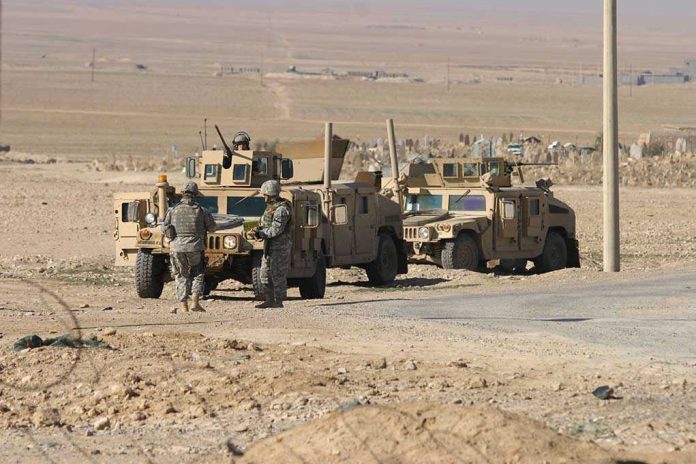
CNN’s crew arrived in Tayasir to do the unglamorous work that keeps the public informed: stand with ordinary people, ask what happened, and document it. The village had just endured an overnight shock—reports said Israeli settlers stormed the area, fired into the air, assaulted residents, and set up a new outpost. About 12 hours later, the journalists were interviewing Palestinians when armed IDF soldiers moved in and ordered the interviews to stop.
Accounts say soldiers aimed weapons, ordered the group to sit, and ultimately held both the CNN crew and Palestinian interviewees for roughly two hours. Within little more than a minute of the initial confrontation, a soldier approached CNN photojournalist Cyril Theophilos from behind, placed him in a chokehold, and drove him to the ground. Reports add that the force of the takedown damaged his camera gear, a detail that matters because it points to interference with newsgathering, not mere “crowd control.”
What Makes This Incident Different: The Mix of Force, Timing, and Message
Detentions in conflict zones often get defended as temporary security measures; the public rarely hears more than a line about “operational necessity.” This case cut through that fog for three reasons. First, the physical assault was specific and personal—a chokehold from behind—rather than an impersonal order to move along. Second, it happened while the crew interviewed residents about a freshly established outpost and the violence surrounding it, the kind of topic that routinely triggers political sensitivity. Third, the reported statements from soldiers during the detention carried ideological weight, not just tactical instruction.
According to CNN’s reporting as relayed in multiple outlets, one soldier identified as “Meir” acknowledged the outpost was illegal under Israeli law. Other comments attributed to soldiers included claims that all of the West Bank belongs to Israel and the Jewish people, broad labeling of Palestinians as terrorists, and talk of revenge tied to the killing of an 18-year-old Israeli settler, Yehuda Sherman, who reportedly died after being hit by a Palestinian driver. Those statements, if accurately captured, shift the episode from “a misunderstanding at a checkpoint” into something more alarming: enforcement colored by grievance and politics.
Press Freedom Meets Chain of Command: Why Conservatives Should Care
American conservatives have long defended two ideas that collide here: the need for order in dangerous places and the necessity of a free press to keep institutions honest. The instinct to side with uniformed personnel in a volatile zone is understandable; soldiers face real threats and make split-second decisions. Yet chokeholding a credentialed journalist during an interview—then holding the group for hours—doesn’t read like split-second self-defense. It reads like control of narrative. Common sense says a disciplined military protects professionalism precisely because it strengthens legitimacy.
That legitimacy matters for Israel, for allied democracies, and for the U.S. public that funds, arms, or politically supports partners abroad. When soldiers appear to prioritize shielding a disputed outpost over respecting a journalist’s right to observe, critics don’t need to invent propaganda; the images do the work. Conservatives should demand accountability not because they romanticize activists, but because institutions that cannot police themselves invite outside pressure, international legal jeopardy, and domestic cynicism. A strong military culture makes room for scrutiny; it doesn’t fear it.
The IDF Apology and the Real Test: Accountability With Teeth
The IDF acknowledged the conduct was inappropriate, calling the soldiers’ actions incompatible with expectations for forces operating in the West Bank and promising a thorough review. That public framing matters: it concedes the behavior failed the standard, not merely the optics. The unresolved question is what “review” produces—discipline, retraining, clearer rules of engagement around media, or a quiet filing cabinet outcome that satisfies nobody and changes nothing. The press will judge by consequences, not adjectives.
Two other gaps linger. The first involves priorities on the ground: the CNN crew said they were reporting on settler violence and a new outpost; the IDF reportedly did not answer CNN’s questions about the spike in settler violence or about the outpost itself. The second involves verification of soldier remarks. Outside of CNN’s account, the record in the provided reporting does not independently confirm each quote. That doesn’t erase the incident’s core facts—detention, chokehold, damaged equipment—but it cautions readers to separate confirmed actions from alleged dialogue until investigators publish findings.
The Bigger Consequence: A Chill Over Coverage Where Facts Already Struggle to Surface
Journalists in the West Bank navigate an information battlefield where each side believes the story determines legitimacy. The practical effect of detaining a crew and physically overpowering a photojournalist isn’t limited to one bruised shoulder or broken camera component; it broadcasts a warning. Other reporters will calculate risk differently, editors will pull back from certain locations, and local sources will think twice before speaking on camera. The end result can be less visibility into violence from any quarter—settler, militant, or state—and that vacuum rarely improves outcomes.
For readers trying to make sense of this conflict from thousands of miles away, the lesson feels almost mundane: keep your eye on process. Who gets detained, who gets protected, and who gets told to sit down at gunpoint reveals more than slogans ever will. If the IDF’s investigation delivers clear findings and real accountability, Israel strengthens its claim to democratic standards under stress. If it doesn’t, the chokehold becomes the symbol that outlives the news cycle.
Sources:
Jerusalem Post – IDF detains CNN crew in the West Bank; photojournalist placed in chokehold
Firstpost – IDF soldiers assault and detain journalists in West Bank; military apologises