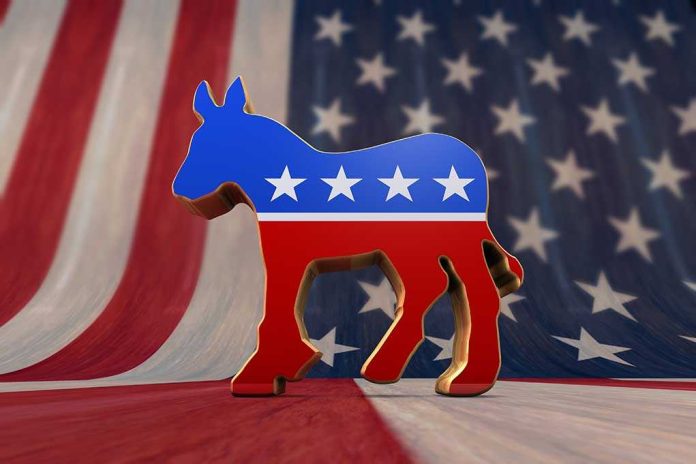
Washington’s latest budget standoff has escalated into a full-scale government shutdown, with Senate Democrats wielding procedural weapons to block Republican efforts at resolution while three-quarters of a million federal workers face daily furloughs in what amounts to the largest peacetime disruption of government services in recent memory.
Story Highlights
- Senate Democrats filibuster Republican continuing resolution, triggering partial government shutdown
- Federal agencies prepare to furlough 750,000 employees daily until funding dispute resolves
- Essential services continue operating while non-essential functions face immediate suspension
- Political brinkmanship centers on spending levels, policy riders, and emergency funding priorities
- Economic analysts warn of mounting costs as each week of shutdown reduces GDP growth
The Political Chess Match Behind Closed Doors
Senate Majority Leader Chuck Schumer and his Democratic caucus deployed the filibuster to halt Republican attempts at passing a clean continuing resolution, demanding concessions on climate initiatives and social programs. The 60-vote threshold requirement gives Democrats significant leverage despite being in the minority on this particular funding approach. Republican leadership countered by framing their proposal as essential governance, arguing that Democrats are holding federal workers hostage for political gain.
The procedural warfare reflects deeper ideological divisions over government spending priorities. Republicans pushed for streamlined funding without policy riders, while Democrats insisted on protections for programs they consider non-negotiable. Neither side has demonstrated willingness to compromise on core issues, creating the current impasse that threatens to extend well beyond the initial shutdown period.
Federal Workforce Faces Unprecedented Disruption
The scope of daily furloughs represents one of the largest peacetime disruptions of federal operations in decades. Agencies across the government activated contingency plans developed months in advance, identifying which employees perform essential functions and which face immediate furlough. The 750,000 daily figure encompasses workers from departments ranging from Interior to Commerce, excluding only those deemed critical for national security or public safety.
Federal employee unions immediately mobilized to protect worker interests, highlighting the financial hardship imposed on families already struggling with inflation and economic uncertainty. Unlike previous shutdowns where back pay was eventually guaranteed, current negotiations include no such assurances, adding another layer of anxiety for affected workers. The human cost extends beyond paychecks to include disrupted career development, delayed projects, and diminished morale across the federal workforce.
Economic Ripple Effects Begin to Materialize
Standard & Poor’s Global estimates each week of shutdown reduces GDP growth by 0.1%, a seemingly modest figure that compounds rapidly as the crisis extends. Government contractors face immediate revenue losses, while small businesses dependent on federal contracts confront cash flow problems that threaten their survival. The Committee for a Responsible Federal Budget warns that prolonged shutdowns create lasting damage to economic confidence beyond their immediate fiscal impact.
Tourism-dependent communities face particular hardship as national parks close and federal facilities suspend operations. Local businesses that rely on government workers and federal visitors experience immediate revenue drops that multiply throughout their communities. The economic disruption extends internationally as well, with foreign governments and businesses questioning America’s ability to maintain stable governance and honor commitments.
Path Forward Remains Murky
Congressional leadership continues behind-the-scenes negotiations, but public statements suggest both sides remain entrenched in their positions. The White House has urged passage of clean funding legislation while criticizing what it characterizes as Republican attempts to attach controversial policy riders. Senate Republican leadership maintains that their proposals represent reasonable compromises that Democrats reject for purely political reasons.
Historical precedent offers little comfort for quick resolution. The 2018-2019 shutdown lasted 35 days, while the 2013 standoff extended 16 days before political pressure forced compromise. Current polling suggests public blame falls roughly equally on both parties, removing electoral pressure that might otherwise force swift resolution. The longer the shutdown persists, the more difficult it becomes for either side to claim victory without appearing to capitulate on fundamental principles.
Sources:
Trump vows sweeping cuts, layoffs as government shutdown hits day 2