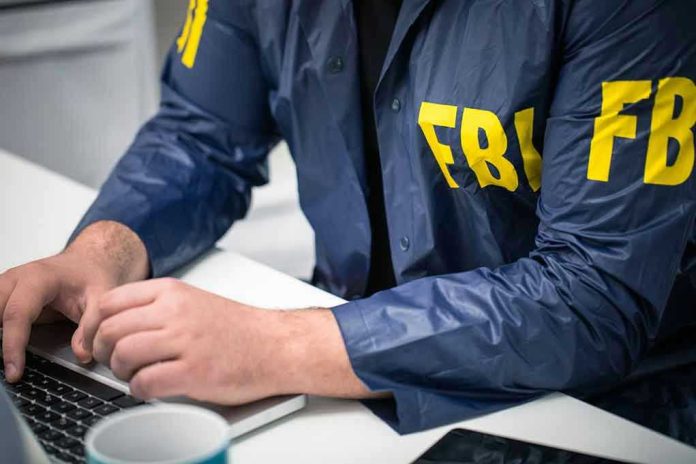
A surge of FBI agents is now patrolling the streets of Washington, D.C., at night—a move that signals just how seriously the Trump administration is taking the city’s crime crisis and the need to restore law and order after years of failed progressive leadership.
Story Snapshot
- 120 FBI agents from the Washington Field Office have been assigned overnight shifts to support D.C. police during a period of heightened security concerns.
- This federal deployment responds to rising crime rates and public frustration with previous “soft-on-crime” policies in the capital.
- The collaboration highlights renewed federal-local law enforcement partnerships under President Trump’s administration.
- Temporary but assertive, the measure underscores a shift away from leniency and toward decisive action to protect American communities.
Federal Law Enforcement Mobilizes to Combat D.C. Crime
President Trump’s administration has directed 120 FBI agents from the Washington Field Office to join the Metropolitan Police Department (MPD) for overnight shifts, reflecting a sweeping effort to restore public safety in the nation’s capital. This deployment, set for at least one week, marks a sharp shift from previous years when local law enforcement often faced surging violence and limited federal support. By targeting overnight hours, when crime rates tend to spike, federal agents aim to bolster local capacity and deter criminal activity. The urgency of this measure speaks to a broader national frustration with failed urban policies and the erosion of law and order witnessed under progressive leadership.
The Washington Field Office, one of the FBI’s largest and most active divisions, has a long history of collaborating with local agencies during high-risk periods. This latest operation builds directly on lessons learned from major security events, including the January 6 Capitol attack, which exposed gaps in interagency coordination and response. The current approach is far from business as usual: it is a targeted, temporary measure designed to address immediate threats while also reasserting the importance of constitutional policing and public safety. Notably, the MPD remains the primary authority, with the FBI acting in a supporting role—an arrangement governed by longstanding cooperative agreements that balance federal assistance with local control.
Restoring Accountability After Years of Lax Policy
For D.C. residents and business owners, the increased law enforcement presence is both a practical response and a powerful symbol of changing priorities in federal leadership. After years marked by rising crime, public disorder, and declining confidence in local government, many in the community see this deployment as a welcome return to accountability and common-sense policing. The Trump administration’s decision contrasts with the prior administration’s approach, which critics argue enabled a “revolving door” justice system and undermined police morale through endless bureaucracy and politicized oversight. This action demonstrates a renewed commitment to supporting law enforcement professionals and upholding the rule of law—core conservative values that resonate deeply with Americans who demand safer streets and respect for constitutional rights.
Although the operation is described as short-term, expert analysis points to potential long-term benefits. Beyond deterring crime during overnight hours, this heightened cooperation may set new standards for federal-local partnerships nationwide. Both the FBI and MPD have signaled their intent to strengthen operational protocols, ensuring that future responses to threats—whether protests, crime waves, or national security incidents—are swift, coordinated, and effective. Some civil liberties advocates have raised concerns about potential federal overreach, but law enforcement leaders emphasize that the arrangement preserves local authority while providing needed resources and expertise. This careful balance is essential to reassuring the public that constitutional checks remain intact even as security measures intensify.
Federal-Local Collaboration: Safeguarding Communities and the Constitution
The renewed partnership between the FBI and MPD is not merely a response to immediate threats; it is a statement about the kind of country Americans want to live in. After years of policies that, in the eyes of many, prioritized ideology over results, the Trump administration’s decisive action is restoring faith in the ability of government to protect its citizens. By deploying federal agents to support—not supplant—local police, the administration affirms its respect for the Constitution, local governance, and the unique needs of American communities. The results will be closely watched, not just in D.C. but across the country, as cities seek to reclaim safety and order from the chaos of recent years.
Trump sends 120 FBI agents to DC amid crime crackdown threat: Report https://t.co/opI52kHMAW
— nymails (@newyorkmails) August 10, 2025
While full operational details remain confidential for security reasons, what is clear is the administration’s willingness to act where others hesitated. The increased visibility of law enforcement is already sending a message: criminal activity will not be tolerated, and the days of unchecked chaos in America’s cities are over. For conservatives and common-sense Americans alike, this marks a long-overdue correction—a demonstration that, under the right leadership, government can once again be a force for safety, order, and the protection of liberty.
Sources:
Official FBI Field Offices Information
Cooperative Agreement: FBI Police and Metropolitan Police Department
FBI Washington Field Office Community Outreach