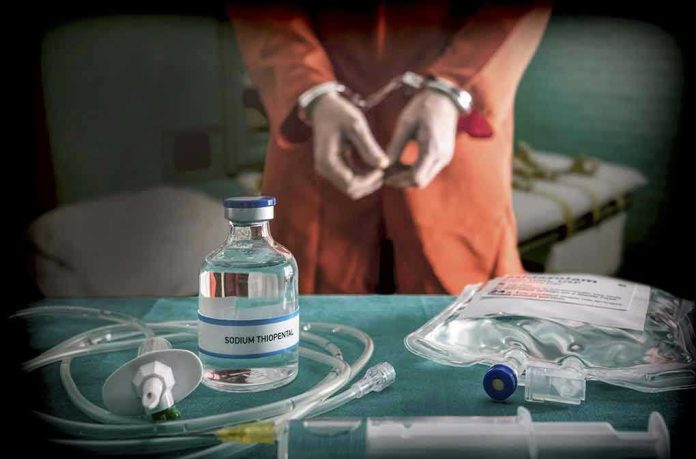
Florida’s record-setting tenth execution this year is fueling debate over the state’s justice system, with critics calling out alleged racial bias while others see decisive law enforcement finally prevailing after decades of inaction.
Story Snapshot
- Florida executed Kayle Bates for the 1982 abduction and murder of Janet White, marking the state’s tenth execution in 2025.
- The case drew national attention due to claims of racial bias and the use of non-unanimous jury sentencing.
- Governor DeSantis’ aggressive approach to law and order has sparked renewed debate over capital punishment, state authority, and due process.
- The victim’s family expressed relief at the long-delayed justice, while advocacy groups continue to press for reform.
Florida’s Record Execution Rate Signals Aggressive Law and Order
On August 19, 2025, Florida executed Kayle Bates, 67, for the 1982 kidnapping and fatal stabbing of Janet White, an insurance office worker in Bay County. This marked the state’s tenth execution this year—setting a new Florida record and putting the state at the forefront of capital punishment in America. Governor Ron DeSantis, who signed the death warrant, has made law enforcement and public safety top priorities, a stance that resonates with many Floridians who have grown frustrated with leniency and endless legal appeals for convicted murderers. For families like Janet White’s, the execution represents long-overdue closure and a government finally willing to act decisively on behalf of victims.
Bates’ conviction stemmed from a time when crime rates in Florida were at historic highs, and his case was marked by a confession given after a lengthy interrogation without counsel. While advocacy groups have focused on claims of racial bias—pointing to the all-white jury that convicted Bates and the non-unanimous recommendation for his death sentence—state officials say the process followed the law as it stood. The execution was carried out at Florida State Prison near Starke, a facility known for housing death row inmates. Despite heated protests and last-minute lawsuits from Bates’ defenders, the execution proceeded as scheduled, with the victim’s husband, Randy White, witnessing the state’s final act of justice after forty-three years.
Debate Over Racial Bias and Due Process in Florida’s Death Penalty
Legal challenges leading up to the execution centered on claims that Florida’s death penalty system is flawed—especially regarding racial fairness and the use of non-unanimous jury verdicts. Bates’ legal team filed a civil rights lawsuit in July 2025, alleging that the execution warrant process was racially biased and lacked transparency. Advocacy groups highlighted that Florida and Alabama are the only states allowing non-unanimous jury recommendations for death, a practice criticized by legal experts and cited as a risk for wrongful convictions, particularly in cases involving minority defendants. However, courts at every level denied Bates’ final appeals and dismissed claims of bias, reinforcing the state’s authority and the governor’s discretion in capital cases.
The impact of these legal battles extends beyond one case. Supporters of reform argue that the system needs more safeguards to prevent injustice, while others maintain that years of appeals and repeated challenges only delay justice for victims and their families. The debate has become a flashpoint for broader issues of state sovereignty, the role of governors in law enforcement, and the limits of federal intervention—issues that strike at the heart of conservative values regarding limited government and the rule of law.
Florida’s approach under Governor DeSantis has also reignited discussion about the power of elected officials in setting execution policy. The governor holds unilateral authority to sign death warrants, with little public input or transparency required. While critics decry this concentration of power, DeSantis and his supporters argue that strong executive leadership is necessary to ensure public safety and uphold the rule of law, especially in the face of activist litigation and federal overreach.
Justice for Victims or Political Flashpoint? The Broader Impact
For the family of Janet White, the execution brought long-awaited closure. Randy White, her husband, publicly thanked Governor DeSantis and the community for their support, expressing relief that justice was finally served after decades of waiting. For many Floridians, the state’s record pace of executions is seen as a necessary corrective after years of perceived leniency and bureaucratic delay. The execution has also become a rallying point for those who believe that justice should be swift, certain, and rooted in respect for victims—values that have been eroded by activist judges, endless appeals, and leftist advocacy groups.
Yet, the controversy is far from over. Advocacy organizations continue to challenge the fairness of Florida’s death penalty practices, warning of the risks posed by non-unanimous juries and the potential for racial bias. Legal experts note that Florida’s aggressive execution schedule sets it apart from national trends, as most states move away from capital punishment. The economic and social costs of lengthy appeals, combined with moral arguments about the risk of executing the innocent, ensure that the debate will persist. Nonetheless, for conservatives who value strong leadership, public safety, and justice for victims, Florida’s approach under Governor DeSantis stands as a model of decisive action in the face of chronic delay and legal obstruction.
Sources:
U.S. Supreme Court Decision Pending as Florida Prepares for 10th Execution of the Year
Florida executes man for 1982 murder of insurance office worker abducted from office
Kayle Bates: Florida execution for 1982 killing of Janet White
Stop the Execution of Kayle Bates in Florida
Florida Death Row Prisoners Challenge Governor DeSantis’ Secretive Execution Decision