
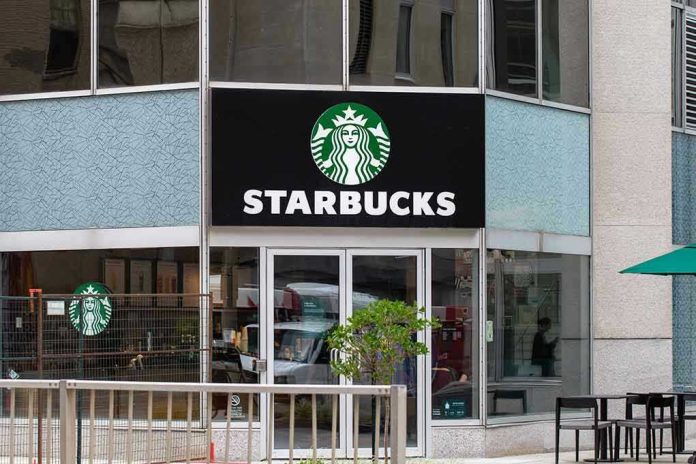
Starbucks’ decision to close hundreds of stores and cut 900 jobs is a bold response to mounting financial pressures and international boycotts.
Story Snapshot
- Starbucks announces a $1 billion restructuring, affecting 900 jobs and closing 200 stores.
- Persistent sales declines and global boycotts drive the need for drastic measures.
- CEO Brian Niccol aims to strengthen the company amid competitive pressures.
- The closures include iconic locations, highlighting the severity of the situation.
Starbucks’ Strategic Reset
In a bid to restore financial stability, Starbucks announced a $1 billion restructuring plan. This ambitious initiative involves eliminating 900 corporate positions and shuttering around 200 stores, representing about 1% of its North American presence. CEO Brian Niccol frames this decision as a necessary strategic reset following six consecutive quarters of declining same-store sales. The move underscores the company’s intent to streamline operations and refocus resources amidst growing competitive pressures.
The restructuring plan is not just about cutting costs but also about prioritizing what Starbucks sees as effective strategies. Niccol emphasizes investing in labor and hospitality, with a significant $500 million allocated to enhance the Green Apron service model. This focus on service aims to reverse the sales slump and improve customer experience, a critical area for Starbucks’ long-term success.
Impact of International Boycotts
While economic pressures are a significant factor in Starbucks’ restructuring, the role of global boycotts cannot be overlooked. Notably, a Palestine solidarity boycott has impacted Starbucks’ financial performance, particularly in Muslim-majority countries. The boycott, fueled by social activism, has led to severe revenue declines in international markets, such as Malaysia and Saudi Arabia. The Saudi Public Investment Fund even divested its shares in response to these pressures, highlighting the boycott’s tangible impact on the company’s bottom line.
This situation exemplifies the power of consumer activism in influencing corporate behavior. Analysts point to the effectiveness of such movements in driving change, especially when aligned with global social issues. For Starbucks, navigating these challenges requires a delicate balance between addressing economic realities and responding to political pressures.
Leadership and Workforce Implications
CEO Brian Niccol, still in his first year at the helm, faces significant challenges in executing this restructuring plan. This marks his second major layoff round, signaling a proactive approach to addressing the company’s financial woes. However, this strategy also raises questions about workforce morale and job security. With 900 corporate employees directly affected, and broader implications for the remaining workforce, Starbucks must carefully manage the human impact of these decisions.
The relationship between Starbucks and its employees is further complicated by ongoing tensions with Starbucks Workers United. The union, involved in labor disputes and public activism, plays a crucial role in shaping the company’s labor policies. As Starbucks navigates these challenges, maintaining a constructive dialogue with its workforce and addressing their concerns will be essential for long-term stability and growth.
Long-Term Industry Implications
Starbucks’ restructuring has broader implications for the retail and foodservice sectors. The company’s vulnerability to activist-driven boycotts serves as a cautionary tale for other multinational brands. Companies must increasingly consider the social and political dimensions of their business operations, as consumer activism becomes a powerful force in the global marketplace.
Additionally, Starbucks’ situation may accelerate unionization and labor organizing efforts within the industry. As workers seek greater influence over corporate policies, companies will need to engage with labor organizations and address employee concerns proactively. For Starbucks, successfully navigating these challenges could provide a blueprint for other companies facing similar pressures.