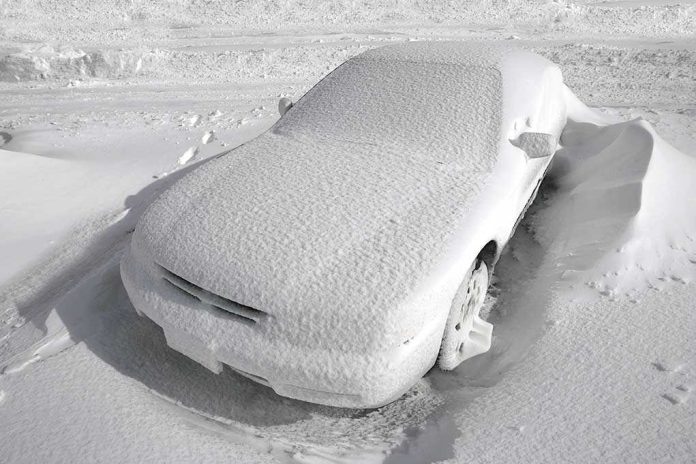
A Queens neighbor methodically buried his next-door family’s SUV under a massive snow mound in broad daylight—and the viral video reveals this wasn’t just winter frustration gone wrong, but the latest chapter in months of escalating harassment.
Story Snapshot
- Queens man shoveled blizzard snow onto neighbor’s SUV Monday afternoon, completely burying it after family politely asked him not to pile snow on their vehicle the night before
- The car owner, her husband, and three children spent two hours digging out while video captured tens of thousands of views, sparking the social media term “blizzard rage”
- The family reports ongoing harassment since summer 2025, including dog-related disputes, and plans to file criminal complaints and seek a protection order
- The man admitted to the act but called it a “petty dispute” with no wrongdoing, a claim neighbors flatly reject based on the video evidence
When Neighborly Tensions Freeze Over
The February 2026 blizzard dumped feet of snow across the Northeast, creating the perfect storm for neighborly cooperation or catastrophic conflict. In Queens, one man chose the latter. While shoveling an adjacent driveway Monday afternoon, he methodically redirected shovelful after shovelful onto his neighbor’s parked SUV until it disappeared beneath a towering white mound. The car owner’s family had made one simple request the night before: please don’t pile snow on our vehicle. That polite appeal apparently triggered something darker in a dispute brewing since last summer.
The Pattern Behind the Pile
This wasn’t spontaneous snow rage. The victim, identified as ACS, reports her family has endured repeated harassment from this neighbor for months, including issues involving his Belgian shepherd. The Sunday night request about snow placement came during the blizzard’s onset, a reasonable ask between neighbors facing a record-breaking storm together. His response the next day—burying their family vehicle while they watched—speaks to premeditation, not frustration. Spending two hours digging out a car with three children present isn’t inconvenience. It’s targeted disruption of daily life, and ACS rightly labels it harassment worth legal action.
The Defense That Melts Under Scrutiny
The perpetrator admitted his actions to PIX11 News but dismissed them as a “petty dispute” where he “did nothing wrong.” That defense collapses against the video evidence and timeline. He wasn’t clearing his own property or acting in self-defense. He actively diverted labor and snow from another driveway onto a family’s vehicle after being explicitly asked not to. Neighbors interviewed expressed disbelief at his justification, and rightfully so. This mirrors the broader erosion of personal responsibility where people commit deliberate acts, get caught on camera, then gaslight victims by minimizing their behavior as trivial misunderstandings.
Two Blizzards, Two Communities
The contrast with Newport, Rhode Island, couldn’t be sharper. While Queens witnessed this vindictive burial, Newport’s Curry Avenue residents rallied together, collectively shoveling their street clear within hours under the leadership of “Uncle Jimmy” Hatfield. Their response to the same record-breaking storm fostered community bonds and mutual aid. The difference isn’t geography or snow depth. It’s character. Urban density doesn’t excuse antisocial behavior, nor does weather stress justify retaliation against families. The Newport example proves extreme weather can reveal our better angels, not just our petty demons.
When Personal Disputes Become Public Spectacles
The viral spread of this incident, garnering tens of thousands of views, transforms a neighborhood conflict into a cultural moment. The term “blizzard rage” now joins “road rage” in our lexicon of modern incivility. Social media amplification serves dual purposes here: it exposes the perpetrator to deserved public scrutiny while potentially pressuring authorities to take the family’s harassment claims seriously. ACS plans to file criminal complaints and seek protective orders, appropriate steps when months of intimidation culminate in such a brazen, documented act. The court of public opinion has already rendered its verdict, but legal consequences matter more for a family seeking safety.
The broader implications extend beyond one buried car. Urban snow management tests community resilience and individual civility annually, but this incident highlights how pre-existing neighbor disputes poison even routine winter challenges. Protection orders and criminal complaints may provide short-term relief for ACS’s family, yet the long-term reality of living next door to someone capable of such pettiness remains unchanged. The video evidence strengthens her case considerably, but one wonders what months of unreported harassment looked like before cameras caught this escalation.