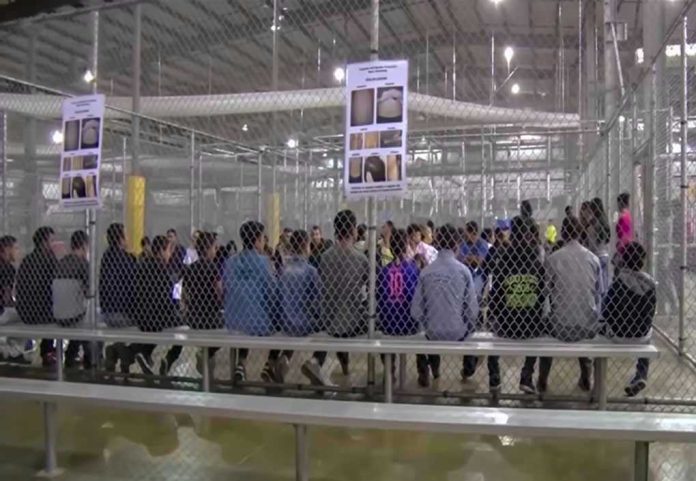
Evidence now suggests ICE detains individuals for days or weeks in hidden rooms—violating its own rules—while Congress and legal advocates scramble to expose a covert network of suffering, secrecy, and unchecked government power.
Story Snapshot
- ICE repeatedly violated its own policies by keeping detainees in secretive rooms for extended periods.
- Lawsuits and congressional investigations reveal lack of oversight and transparency in ICE detention operations.
- Private contractors with little experience are awarded lucrative contracts to manage secretive detention sites.
- Reports detail severe physical and psychological harm to detainees due to prolonged isolation and neglect.
ICE Detention: Secrecy Outpaces Oversight
U.S. Immigration and Customs Enforcement (ICE) has quietly expanded its use of secretive holding rooms where detainees languish for days or weeks, directly contravening both its own written policies and established federal standards. Lawsuits filed in recent months describe conditions reminiscent of solitary confinement, where basic needs—food, water, medical care—are routinely neglected. The secrecy surrounding these rooms means that legal counsel and family members often have no idea where their loved ones are, let alone their condition. This pattern of covert isolation is not only a bureaucratic failure but also a stark warning of unchecked government authority in the realm of immigration enforcement.
"Revealed: ICE violates its own policy by holding people in secretive rooms for days or weeks" – The Guardian #SmartNews https://t.co/9TJB8u3ymR
— Chris Silas (@Silas18Chris) October 31, 2025
Congressional leaders, alarmed by mounting evidence, have initiated inquiries and demanded a full-scale Government Accountability Office (GAO) investigation into ICE’s contracting and detention practices. Representative Pramila Jayapal and others cite whistleblower accounts and legal filings that detail a systemic pattern of abuse and neglect. These investigations have revealed that ICE’s rapid expansion of detention capacity relied heavily on private contractors, many of whom lacked relevant experience. The resulting lack of oversight created conditions ripe for abuse, with new facilities springing up on military bases and in repurposed buildings, often beyond the reach of standard inspections or accountability mechanisms.
Contractors Profit as Detainees Suffer
Private companies such as Acquisition Logistics LLC and Nana Regional Corp. have received multimillion-dollar contracts to manage ICE detention sites. These firms frequently operate with minimal transparency, and reports suggest that their inexperience contributed to deteriorating conditions within facilities. Congressional scrutiny has focused on whether these contracts prioritized profit over detainee welfare, as evidenced by the absence of adequate staffing, medical care, and legal access in many new sites. The intersection of government secrecy and private profit has bred a detention network where accountability is virtually nonexistent and abuses go unaddressed.
Advocacy groups and legal representatives have amassed a growing archive of first-hand accounts from detainees—stories of hunger, untreated illness, and extreme psychological distress. Lawsuits in October 2025 painted a chilling portrait: blood-smeared sinks, cockroach infestations, and nowhere to bathe. Families and communities are left in limbo, powerless to intervene or even locate their detained relatives. The ripple effects extend far beyond the walls of these facilities, undermining public trust in law enforcement and fueling political debate over the future of immigration policy.
Congressional Response and the Battle for Transparency
Congressional oversight faces steep obstacles as ICE and the Department of Homeland Security (DHS) maintain operational secrecy and refuse to release comprehensive data on detention practices. Lawmakers have called out ICE for stonewalling requests and denying abuses, but no substantive public response has been offered. Advocacy groups have responded with intensified efforts to document violations, leveraging lawsuits, media exposure, and whistleblower testimony to break the silence. The continued expansion of ICE’s detention infrastructure—often through questionable contracts—illustrates the urgent need for regulatory reform and real accountability.
Legal experts and human rights organizations universally condemn secretive, prolonged detention as a violation of both ICE policy and international norms. Academic research underscores the psychological toll of isolation, especially on vulnerable populations like asylum seekers and children. While some officials defend the necessity of secure detention, few address the mounting evidence of systemic abuse. The ongoing legal battles and congressional investigations may yet force a reckoning, but for now, the opaque machinery of ICE detention continues to operate in the shadows—its true costs measured in human suffering and public trust.