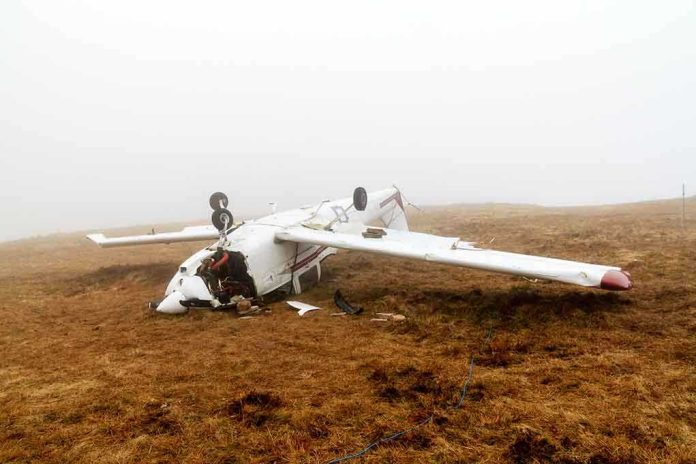
The tragedy in Youngstown, Ohio, unveils a shocking detail that could redefine aviation safety protocols.
Story Overview
- A fatal crash involving a Cessna 441 aircraft killed six people.
- The co-pilot was found to be intoxicated, sparking safety concerns.
- Uncertainty remains about who controlled the aircraft at the time of the crash.
- The investigation highlights the limitations of single-pilot aircraft regulations.
Details of the Crash
On the morning of August 28, 2025, a Cessna 441 carrying six individuals crashed in a wooded area near Howland Township, Ohio, shortly after departing the Youngstown-Warren Regional Airport. The flight was bound for Bozeman, Montana, on what was supposed to be a vacation. All occupants perished, resulting in a tragic loss that has since drawn significant attention due to the circumstances surrounding the crash.
The autopsy reports, released on the same day, revealed a critical detail: the individual seated in the co-pilot position was intoxicated. This finding has raised serious questions about the pre-flight procedures, crew coordination, and whether the intoxication contributed to the crash. The National Transportation Safety Board (NTSB) is leading the investigation, focusing on several factors that are common in small aircraft accidents.
Regulatory and Safety Concerns
The Cessna 441 involved in the crash is classified as a single-pilot aircraft, despite having a second seat available in the cockpit. This classification has become a focal point in the investigation, as the presence of an intoxicated individual in the co-pilot seat challenges the norms of single-pilot operations. Aviation experts like Chuck Johnson have highlighted the regulatory ambiguity this situation presents, emphasizing the need for clear guidelines when additional crew members are present.
The NTSB investigation is also examining potential issues with aircraft controllability, weight considerations, and possible engine malfunctions. With six occupants and a full fuel load, the aircraft may have exceeded its maximum gross weight, posing additional risks during flight. The absence of flight data recorders on the aircraft further complicates the investigation, as it remains unclear who was controlling the plane at the time of impact.
Impact on the Aviation Community
The crash has sent ripples through the local aviation community and beyond, sparking discussions about crew resource management and the effectiveness of current safety protocols. The loss of life is profound, affecting the families of those who perished and raising concerns about the safety of private aircraft operations. The incident also underscores the importance of rigorous pre-flight checks and the vigilance required to ensure all members of the flight crew are fit to fly.
Future Implications
As the NTSB continues its investigation, the findings could have significant implications for the aviation industry, particularly regarding the operation of single-pilot aircraft with additional crew members. The presence of an intoxicated individual in a critical position highlights the need for enhanced checks and balances in pre-flight procedures. This incident could lead to changes in regulations and the implementation of more stringent safety measures to prevent similar tragedies in the future.
While the investigation is ongoing, the aviation community is urged to learn from this incident and take proactive steps to address the safety concerns it has raised. The lessons gleaned from this tragedy could help prevent future accidents and ensure a higher standard of safety in the skies.
Sources: