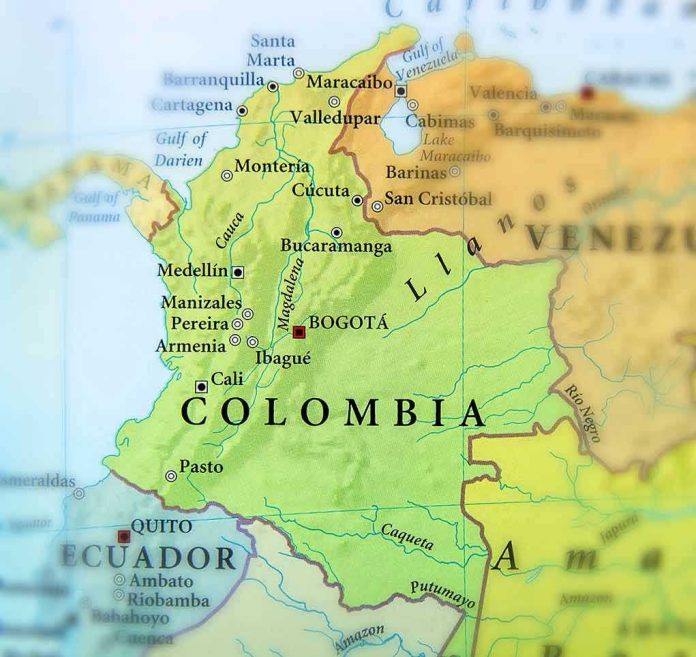
A stunning wave of outrage swept through Washington this week after a Colombian judge convicted former President Álvaro Uribe—an iron-fisted U.S. ally and enemy of leftist insurgents—of bribery, as American lawmakers called foul on what they’re calling a politically motivated show trial straight out of the radical left’s playbook.
At a Glance
- Colombia convicts former President Álvaro Uribe, the first ex-head of state to face criminal judgment in the nation’s history.
- U.S. lawmakers, especially conservatives, swiftly condemn the verdict, warning of judicial weaponization and the erosion of rule of law in Colombia.
- The case centers on allegations that Uribe tampered with witnesses tied to paramilitary groups, sparking intense debate on judicial independence.
- The conviction has ignited fierce political polarization in Colombia and strained U.S.-Colombia relations.
Colombian Judge’s Verdict Unleashes Firestorm in Washington
On July 28, Judge Sandra Heredia of Bogotá’s 44th Criminal Circuit convicted Álvaro Uribe, Colombia’s former president and a longtime U.S. partner, of bribery and procedural fraud after a labyrinthine decade-long legal saga. This ruling marks the first time in Colombia’s history that a former president has been found guilty of a felony, and it has set off a political earthquake on both sides of the hemisphere. Conservative lawmakers in the United States, many with long memories of Uribe’s U.S.-backed war on narco-terrorism, erupted on social media, calling the verdict “judicial overreach” and “the weaponization of Colombia’s judicial branch by radical judges.” Uribe’s conviction stems from claims he attempted to strong-arm witnesses in an effort to clear his name of alleged ties to Colombia’s brutal right-wing paramilitaries. His legal team announced plans to appeal immediately, and sentencing could see Uribe facing up to 12 years in prison, though house arrest remains possible.
The message from U.S. lawmakers was unmistakable: political trials masquerading as justice have no place in Colombia or anywhere else. Secretary of State Marco Rubio and others in Congress took to public forums, warning that the integrity of Colombia’s legal system is in jeopardy, and linking the episode to broader concerns about radical “lawfare”—the prosecution of political opponents through dubious court cases. The stakes go far beyond Uribe himself, touching on the future of U.S.-Colombian cooperation and the very definition of accountability in a country still haunted by decades of civil war. The sharp criticism from Washington is not just about Uribe’s legacy—it’s a warning shot to any activist judge or prosecutor tempted to pursue vendettas under the cover of legal procedure.
Legacy of a U.S. Ally and the Backlash Against “Politicized” Justice
Álvaro Uribe’s presidency from 2002 to 2010 defined a generation of U.S.-Colombia security policy. He led the fight against guerrilla groups and drug cartels, backed by billions in U.S. aid. For years, Uribe was the reliable conservative bulwark against Marxist insurgency and narco-state chaos, earning admiration from American policymakers and frustration from leftist critics. But Uribe’s hardline tactics—credited for turning the tide against the FARC and restoring order to major cities—came with persistent allegations of ties to paramilitary death squads. The latest conviction arises from accusations that Uribe and his associates tried to manipulate testimony, pressuring imprisoned paramilitaries to recant or alter statements tying him to right-wing militias. His defenders insist the charges are thin, the process politically rigged, and the timing—coming as Colombia’s leftist factions gain ground—more than coincidental.
Human Rights Watch and various Colombian civil society leaders have defended the conviction as a milestone for accountability, declaring that “no one is above the law.” But U.S. lawmakers—echoing frustration familiar to anyone watching the weaponization of law enforcement in recent years—see the case as a dangerous precedent. The use of the courts to settle political scores is the very thing conservatives have warned about in America, and now, it seems, in our closest regional allies as well. Uribe’s supporters, and a swath of the American public, are watching closely to see if this will be the new normal: conservative leaders targeted by left-wing prosecutors, cheered on by activist judges while the real criminals run free.
Political Fallout: U.S.-Colombia Ties and the Fight for Judicial Integrity
The shockwaves from Judge Heredia’s ruling have only begun to ripple through Colombia and Washington alike. The ruling has polarized an already divided nation, with protests erupting and social media ablaze. Uribe’s legal appeal promises to drag this saga out for years, leaving the fate of Colombia’s judiciary—and its relationship with the United States—hanging in the balance. American conservatives, weary of watching similar “lawfare” tactics erode trust at home, are sounding the alarm about the dangers of unchecked judicial activism abroad. The public intervention by U.S. lawmakers is not just about Uribe—it’s about defending the principle that justice should never be twisted into a weapon for political gain. As Colombia’s courts prepare for a likely marathon of appeals and counterappeals, many on Capitol Hill are pressing for a hard look at U.S. aid, warning that any country using its courts as a political bludgeon will face consequences.
The implications reach far beyond Colombia’s borders. Investors are jittery, civil society is on edge, and the entire framework of U.S.-Latin American relations stands to be reshaped. If this is what passes for justice in the new era—where enemies of the left get dragged before politicized tribunals while street violence, corruption, and actual crime explode—then the lesson for Americans is clear: the fight for the rule of law is global, and the threat from politicized prosecutions is real. Conservatives in the U.S. should watch closely, because what happens in Bogotá today could be the blueprint for tomorrow’s attacks on freedom and fairness right here at home.
Sources:
Jurist: Former Colombia President Convicted of Bribery and Witness Tampering
Crisis Group: Verdict in Landmark Case Finds Colombian Ex-President Guilty of Bribery
Justice for Colombia: Former President Álvaro Uribe Guilty of Witness Tampering and Procedural Fraud
National Security Archive: Colombia Former President Uribe Convicted in Paramilitary Bribery Case