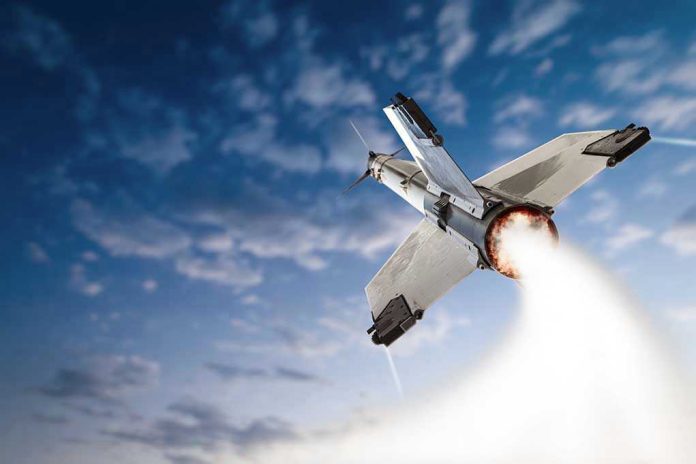
NASA’s mighty SLS moon rocket rolls back to the launch pad, poised to reclaim American lunar dominance just months into President Trump’s triumphant return to the White House.
Story Highlights
- Repaired SLS rocket rolled out live on March 19, 2026, from Kennedy Space Center’s VAB to Launch Complex 39B, targeting April 1 liftoff for historic Artemis II crewed flyby.
- First crewed Moon mission since Apollo 17 over 50 years ago, accelerating under new NASA Administrator Jared Isaacman to outpace China.
- Overcomes hydrogen leaks and helium issues through swift repairs, validating U.S. engineering prowess amid global space race.
- Program overhaul adds 2027 Earth-orbit test, shifts landing to 2028 for annual cadence, prioritizing American leadership.
- Acknowledges ~50% new-rocket success risks, yet hardware stands ready to inspire a new generation of patriots.
Technical Setbacks Conquered
NASA engineers fixed hydrogen fuel leaks at the pad in February 2026 after an earlier scrub. On February 25, the SLS rocket returned to the Vehicle Assembly Building for helium-flow repairs on the Interim Cryogenic Propulsion Stage, battery replacements in the flight termination system, and range safety testing. Repairs wrapped by March 13-19, followed by a flight readiness review that cleared the stack for rollout. Crawler-Transporter 2 carried the SLS-Orion to Launch Complex 39B on March 19 in a live public event. This marks recovery from delays since the uncrewed Artemis I in 2022.
New Leadership Drives Acceleration
Administrator Jared Isaacman overhauled Artemis for speed, adding an Earth-orbit practice flight as new Artemis III in 2027 with commercial lander docking and EVA tests. Moon landing now targets Artemis IV in 2028, aiming for annual missions. Isaacman emphasized moving faster and eliminating delays to rebuild NASA workforce oversight. This counters geopolitical rivals like China seeking south pole dominance for water ice resources. Lori Glaze, Acting Associate Administrator, confirmed team and hardware readiness despite elevated risks over routine flights.
Launch Timeline and Risks Assessed
Primary launch targets April 1, 2026, at 6:24 p.m. from Kennedy’s 39B, with April 2 backup in a six-day window aligned to Earth-Moon geometry. Delays push to April 30 or early May. Mission Management Chair John Honeycutt noted ~50% success odds for new rockets, complicated by the three-year gap since Artemis I. NASA Office of Inspector General audit highlights rescue gaps at 1-in-30/40 crew loss thresholds and unproven lander refueling. Boeing’s SLS core stage powers direct crewed lunar injection, unmatched globally.
Stakeholders include SpaceX accelerating Starship and Blue Origin’s Blue Moon landers for future landings. Four astronauts prepare for the 10-day flyby of the Moon’s south pole, validating human-rated hardware. Success enables rapid program cadence; failure risks delays but underscores bold American innovation.
Implications for American Supremacy
Short-term victory validates crewed SLS-Orion, paving 2027 tests. Long-term, annual landings from 2028 secure U.S. lunar foothold, boosting Boeing jobs at Michoud, commercial investments, and STEM inspiration. Politically, it aligns with President Trump’s space policy against China, sustaining taxpayer-funded leadership in exploration. Economic ripple effects strengthen supply chains at Kennedy. Despite OIG cautions on polar terrain and landers, officials project confidence in hardware post-repairs. This milestone rallies patriots behind restored U.S. greatness.
Sources:
NASA prepares April launch for first crewed Moon mission in more than 50 years.
NASA adds mission to Artemis lunar program, updates architecture.