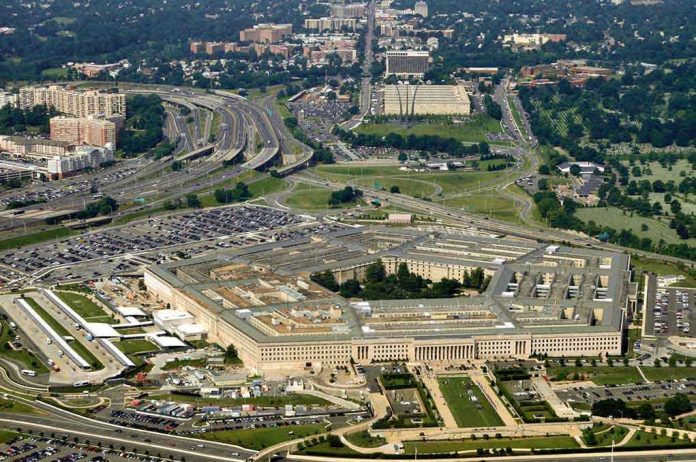
Pentagon officials severely downplayed the true extent of casualties from an Iranian drone strike that left dozens of American service members hospitalized with traumatic brain injuries, burns, and at least one amputation, raising serious questions about transparency with the American people during wartime.
Story Highlights
- Iranian drone strike on March 1, 2026, killed six US service members and injured over 30 at Kuwait’s Shuaiba port, with Pentagon initially reporting only five serious injuries
- Twenty service members evacuated to Germany’s Landstuhl Medical Center with traumatic brain injuries, burns, shrapnel wounds, and memory loss
- CBS investigation revealed Pentagon underreported casualties while actual hospitalization numbers far exceeded official statements
- Attack occurred amid broader US-Israeli conflict with Iran involving 394 drones and 212 ballistic missiles intercepted over Kuwait
- Total casualties across region now stand at seven American deaths and 140 injured, with families kept in the dark about true severity
Pentagon’s Pattern of Underreporting Emerges
The Department of Defense initially reported only four deaths and five serious injuries following the March 1, 2026 Iranian drone attack on a tactical operations center at Shuaiba port in Kuwait. Pentagon officials later revised the death toll to six after recovery teams discovered two additional service members under rubble. However, CBS reporting on March 11 exposed a disturbing pattern: military insiders confirmed over 30 service members remained hospitalized with severe injuries, contradicting the Pentagon’s public accounting of eight severely injured across all incidents. This represents a systematic effort to minimize the war’s human cost to the American public.
Catastrophic Injuries Hidden from Public View
Service members suffered devastating injuries that Pentagon briefings failed to disclose. Medical evacuees transported to Landstuhl Medical Center in Germany presented with traumatic brain injuries, severe burns, shrapnel wounds, concussions, and memory loss. At least one service member required amputation. Approximately 20 wounded warriors were classified in urgent condition requiring specialized treatment unavailable in theater. The attack struck a tactical operations center during active operations, maximizing casualties among personnel coordinating regional military activities. Chief Warrant Officer 3 Robert Marzan’s remains arrived at Dover Air Force Base on March 7, one of six confirmed fatalities whose families deserved full truth about the attack’s scope.
Strategic Consequences of Iranian Aggression
Iran launched a coordinated assault involving 394 drones and 212 ballistic missiles targeting American and allied infrastructure across Kuwait and Gulf states, beginning February 28, 2026. Kuwaiti defense forces intercepted 606 threats while reporting 67 of their own personnel injured. The assault targeted critical US facilities including Camp Buehring, Ali Al Salem Air Base, and the Shuaiba port operations center. Iranian forces claimed responsibility, framing attacks as retaliation for US-Israeli operations. This escalation demonstrates Iran’s willingness to directly engage American forces with advanced drone warfare, exploiting gaps in base defenses. An additional US service member died March 6 from a separate strike in Saudi Arabia, bringing total deaths to seven.
Trust Deficit Compounds National Security Crisis
The Pentagon’s credibility problem extends beyond statistical discrepancies to fundamental questions about transparency with American families and taxpayers. Military insiders who spoke to CBS characterized official casualty figures as deliberately misleading, designed to minimize political backlash and maintain operational security at the expense of honesty. When Department of Defense officials report eight severe injuries while 30 service members require hospitalization and 20 need urgent evacuation to Germany, the gap between official narrative and battlefield reality becomes indefensible. Americans supporting their troops deserve accurate information about risks and costs. This pattern of downplaying casualties undermines public trust precisely when national unity matters most during escalating Middle Eastern conflicts involving direct Iranian attacks on American personnel.
Sources:
Ahram Online – Kuwait MoD briefing on Iranian attack casualties and interceptions
Newser – Pentagon Isn’t Telling Full Story of Troop Injuries