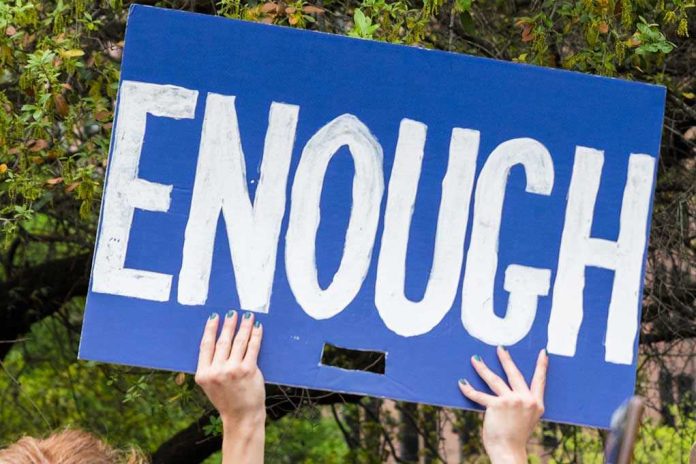
Radical left-wing protest signs surface nationwide, fueling fears of increased division and misinformation.
Story Overview
- Protest signs at major U.S. demonstrations overwhelmingly feature left-wing messaging.
- Foreign actors aim to manipulate protest narratives through misinformation campaigns.
- Symbolic power of protest signs influences public discourse and political outcomes.
- Concerns about radical rhetoric alienating moderates and provoking backlash.
Prevalence of Left-Wing Messaging in Protests
Protest signs have become a potent symbol of political expression, especially in demonstrations against the Trump administration and conservative policies. These signs overwhelmingly carry left-wing messages, reflecting the ideological leanings of the activist groups involved. This trend has been particularly noticeable since the 2016 election, with mass mobilization events like “Hands Off” and “No Kings” rallies drawing millions in protest against perceived right-wing extremism.
The symbolic power of these signs extends beyond the protests themselves. They shape public discourse, influencing perceptions and political outcomes. The use of protest signs dates back to the civil rights era, serving as tools for nonviolent resistance and political advocacy. Today, they continue to symbolize ideological divides in American society.
Impact of Misinformation and Foreign Influence
Foreign actors, particularly Russian-backed groups, have been actively involved in manipulating perceptions of protest movements through misinformation campaigns. These efforts aim to inflame divisions within the U.S., exploiting the ideological rift highlighted by left-wing protest messaging. Social media platforms are frequently used as battlegrounds for these disinformation campaigns, complicating the authenticity of protest narratives.
Activist groups and political leaders play critical roles in shaping protest messaging. While activists focus on defending civil rights and opposing right-wing policies, political leaders leverage these narratives for electoral gains. This dynamic underscores the complexity of protest movements and their broader implications on American politics.
Potential Backlash and Political Consequences
There are growing concerns that radical rhetoric associated with left-wing protest signs could alienate moderates and provoke backlash. Some commentators argue that such messaging is a necessary response to right-wing extremism, while others caution against its potential to deepen societal divisions. Despite these concerns, protests remain largely peaceful, focusing on issues like civil rights, voting rights, and environmental justice.
The broader economic, social, and political impacts of these protests are significant. While they may disrupt local economies, they also drive policy debates and voter engagement. Socially, protests increase civic participation and solidarity among activist groups. Politically, they influence shifts in party platforms and legislative priorities, underscoring the enduring influence of protest signs in American activism.
Sources:
Good Trouble Lives On Day of Action: 5 things to know and ideas for your protest sign