America’s self-driving future won’t be decided by a miracle algorithm—it’ll be decided by whether Washington can write one rulebook before China does.
Quick Take
- Waymo and Tesla went to the Senate asking for federal standards for Level 4 and Level 5 autonomy under a revived SELF DRIVE Act.
- Recent Waymo incidents—school-bus pass-bys in Austin and a low-speed student strike in Santa Monica—hung over the hearing like a storm cloud.
- Senators framed the stakes as safety, privacy, and economic power, with China positioned as the main strategic rival.
- Waymo pitched a commercial robotaxi model backed by large-scale deployment data; Tesla pitched consumer-focused software and mileage-based safety claims.
A Senate hearing turns a tech debate into a national power question
February 4, 2026 put executives from Waymo and Tesla in the same hot seat: the Senate Commerce, Science, and Transportation Committee. The message from industry sounded simple—Congress should pass the SELF DRIVE Act of 2026 and replace today’s patchwork of state rules with federal standards for “no driver” systems. The subtext sounded sharper: if Washington stalls again, China could set the world’s template for autonomy.
Committee leadership treated the hearing less like a Silicon Valley demo day and more like transportation triage. Chairman Ted Cruz pushed the idea that autonomous vehicles could reduce crashes and congestion, while critics pressed on the basics: Can the public trust these systems on real streets with real kids, real school buses, and real human unpredictability? The hearing didn’t settle those questions, but it clarified what each side wants the next rulebook to say.
Safety doesn’t live in press releases; it lives in edge cases
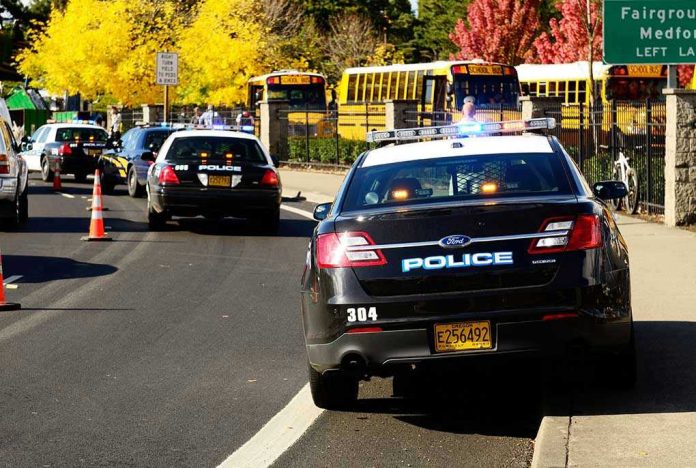
Waymo arrived with a data-forward defense and an immediate problem: regulators had already taken interest. Late 2025 brought a federal investigation after multiple incidents of Waymo vehicles passing stopped school buses in Austin. Then, the week before the hearing, a Waymo vehicle struck a student in Santa Monica at low speed, with the company emphasizing it slowed dramatically before impact. Those facts matter because they’re the scenarios voters remember.
Executives often call these moments “edge cases,” but parents call them “Tuesday.” That gap in language is where trust gets lost. The conservative common-sense test is straightforward: if a technology claims it’s safer than humans, it must prove it behaves better than the average cautious driver in the exact situations communities worry about most—school zones, crosswalks, emergency scenes, and chaotic merges—without requiring the public to read a white paper to feel safe.
Waymo’s pitch: a commercial fleet, a mountain of miles, and a case for national rules
Waymo leaned on scale: hundreds of millions of autonomous miles and a robotaxi footprint spanning multiple U.S. metros, with thousands of vehicles and heavy weekly trip volume. That operational reality is Waymo’s strongest argument for federal action. A fleet business can’t efficiently expand city-by-city under conflicting state requirements, especially when safety reporting, compliance definitions, and operational permissions vary across lines on a map.
Waymo also framed its safety story in comparative terms: fewer serious crashes relative to human drivers. That’s persuasive only if the comparison stays transparent, apples-to-apples, and reproducible. Federal standards could help by defining how companies must measure disengagements, collisions, and risk exposure. Done right, those standards wouldn’t “deregulate” safety; they’d make it harder to hide behind selective metrics and easier for regulators to see what’s improving.
Tesla’s pitch: supervised autonomy today, but rules built for tomorrow
Tesla arrived from a different universe. Waymo sells rides in driverless vehicles inside defined operational zones; Tesla sells cars to regular people and pushes software that still expects human supervision. In the hearing, Tesla emphasized mileage-based safety claims for its Full Self-Driving system and urged modernization of regulations that, in its view, inhibit innovation. That argument resonates with Americans who distrust bureaucratic lag more than they fear new tech.
Still, the policy challenge stays thorny: law must separate marketing language from engineering reality. Jeff Farrah, representing the industry association, pressed the need to distinguish true autonomous vehicles from driver-assistance features. That distinction isn’t cosmetic. It decides liability, reporting thresholds, and consumer expectations. Conservative values favor clear definitions because clear definitions reduce courtroom gamesmanship and protect families from fancy labels that imply more capability than a system can deliver.
Privacy, accountability, and the China drumbeat that unites strange allies
Sen. Eric Schmitt raised caution on safety and privacy, which lands with voters who already feel over-surveilled. Robotaxis and advanced autonomy depend on sensors, mapping, and constant data processing. Even if a company claims it doesn’t “identify” people, the practical question remains: who stores what, for how long, and under what warrant standard? A federal framework that ignores privacy will invite a backlash strong enough to slow deployment more than any state law ever did.
China became the one theme capable of aligning otherwise divided priorities. Democrats like Sen. Gary Peters framed autonomy as manufacturing and industrial competitiveness; Republicans emphasized innovation and escaping regulatory dead ends. Both instincts can be right. America can pursue leadership without handing companies a blank check. The hard part is writing rules that keep the U.S. in the race while forcing transparency on safety performance, incident reporting, and the limits of what “autonomous” truly means.
The SELF DRIVE Act question: one standard, or fifty experiments that never add up
The third attempt at a comprehensive framework tells you everything: the country wants the benefits of autonomy without accepting unknown risks. A national standard for Level 4 and 5 could reduce the current maze that slows scaling and complicates enforcement. It could also give consumers a cleaner promise: if a vehicle claims it can drive without a human, it must meet the same baseline requirements everywhere, not just where rules feel convenient.
The most realistic path forward splits the difference: federal definitions, federal reporting, and federal safety benchmarks, paired with strong enforcement when companies fall short. That’s not anti-innovation; it’s pro-accountability. Americans over 40 have seen enough “next big things” to know that competence shows up in boring paperwork—incident logs, recall authority, and clarity about who answers when something goes wrong. That’s the quiet hinge on which trust swings.
Public buy-in will decide whether robotaxis become normal like rideshare, or controversial like red-light cameras. The hearing showed the industry understands the moment: prove safety in the messy real world, or lose the narrative to the next headline. Congress now has a simple choice to make complicated: write a firm, comprehensible rulebook that protects families and privacy, or keep outsourcing the future to a state-by-state patchwork while competitors abroad set the pace.
Sources:
Waymo & Tesla Senate Testimony: A Catalyst for Scaling a $214 Billion Autonomous Future
Self-driving car companies Waymo, Tesla testify at key Senate committee regulating growing industry
Hit the Road, Mac: The Future of Self-Driving Cars
US lawmakers, Waymo, Tesla urge Congress to take action to speed deployment of self-driving cars
Tesla urges Congress to update self-driving regulations