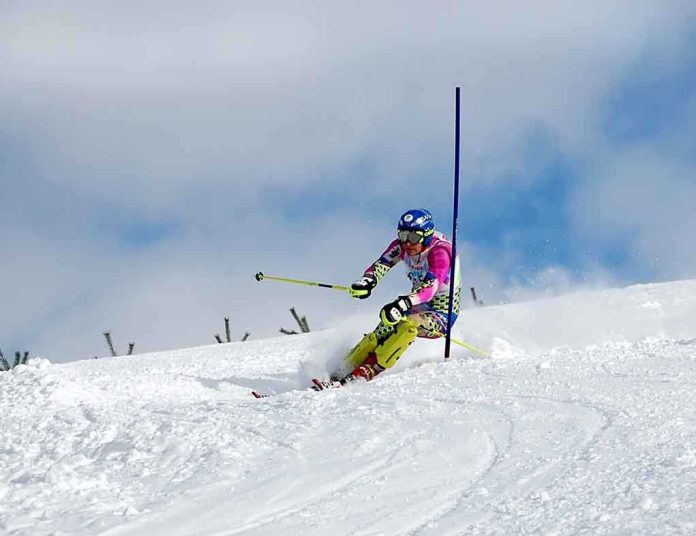
Winter Olympians now battle slushy slopes and brittle ice as artificial snow becomes the desperate norm, hinting at a thawed future for global winter sports.
Story Snapshot
- Beijing 2022 relied entirely on artificial snow, turning courses into uneven slush from warmer temperatures.
- Milan-Cortina 2026 prepares 56 million cubic feet of fake snow amid 50-60% chance of above-average February heat.
- Host cities since 1950 warmed by 4.8°F on average, slashing freezing days by 19% in places like Cortina d’Ampezzo.
- Artificial snow’s icier texture heightens injury risks; weaker “white ice” demands double thickness for safety.
- Experts warn of melting games, forcing massive water diversion in drought-prone areas.
Beijing 2022’s Artificial Snow Crisis
Beijing 2022 organizers deployed 100 snow generators and 300 cannons, consuming 343 million gallons of water in a water-scarce region. Warmer temperatures melted surfaces into stiff crusts over fluffy bases, creating irregular ski courses. Alpine skiers faced unpredictable slush that slowed early runners while later athletes gained speed on smoothed tracks. Rinks produced weaker white ice near 0°C, 50% less strong than black ice, raising fall risks in figure skating and speedskating. This marked peak dependency on man-made snow.
Historical Warming Reshapes Olympic Hosts
Cortina d’Ampezzo averaged 214 freezing days yearly from 1956-1965, but dropped 19% to 173 days by 2016-2025. Southern Alps snow depth fell over 25% since 1980; February levels in Cortina declined 15 cm from 1971-2019. All Winter Olympic hosts post-1950 warmed by 4.8°F. February temperatures rose from 19.3°F to 27.1°F in recent decades. These shifts force reliance on industrial snowmaking, diverging from natural powder’s fluffy texture to humid, dense artificial variants.
Milan-Cortina 2026 Prepares for Slush Risks
Organizers built high-elevation reservoirs like Livigno’s 200 million-liter basin and shipped 3 million cubic yards of artificial snow to Alps sites. Forecasts predict 50-60% chance of above-average February temperatures, with rain and ice warnings at Cortina. Only Valtellina cluster offers sub-freezing conditions initially. Daytime highs above freezing threaten slush; March Paralympics face 60-70% above-average heat odds. IOC oversees production despite energy and water costs.
Athletes adapt to icier snow that increases crashes; experts like Marcene Mitchell call it riskier. Organizers announced readiness days before February 6 start.
Stakeholders Clash Over Safety and Feasibility
IOC and Milan-Cortina teams prioritize events via snowmaking, leaning on Italian governments for infrastructure. Climate experts including Trevor Bell highlight artificial snow’s “humid, de-controlled” nature versus natural powder. Athletes demand consistent conditions; federations note unfair advantages from course evolution. WWF’s Mitchell warns of carbon footprints; Union of Concerned Scientists’ Carlos Martinez flags safety. Power tilts to organizers, but NGOs build public pressure through data from IPCC and Eurac Research.
Impacts Threaten Sports’ Core
Short-term delays hit from slush grooming; injuries rise on weaker ice and uneven snow. Long-term, warming limits venues—Utah 2034 eyes just 0.10 inches snowpack versus 33.4-inch norms. Water diversion strains regions like Beijing; Western U.S. faces drought amplified by low snow. Sports revenue may drop 18% by 2050. Ski resorts industrialize; ice sports thin out. Common sense demands IOC weigh sustainability against spectacle—endless engineering ignores nature’s retreat.
Sources:
LA Times: Climate change is threatening Winter Olympics games
Climate Central: 2026 Warming Winter Olympics
ABC News: Climate change make hosting winter Olympics challenging
Lowy Institute: Manufacturing Winter Olympic Games in a Warming World
Science News: Olympics winter ice sports tips snow
Earth.org: Sports industry faces revenue decline due to climate impacts report warns