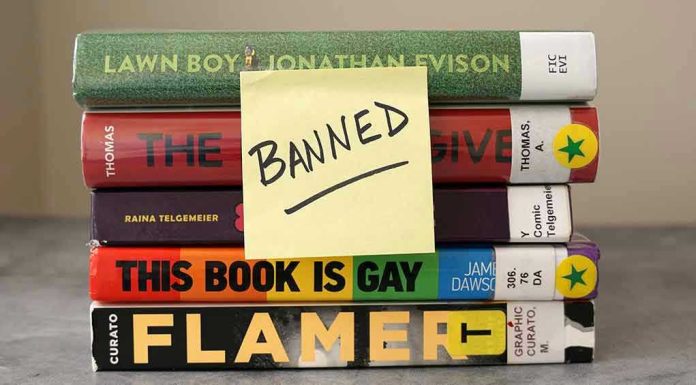
A Tennessee library director lost her job over 132 books, but the real fight was over who gets to define “appropriate” for children in a public building.
Quick Take
- Rutherford County’s library board fired director Luanne James 8–3 after she refused to move LGBTQ+-themed titles out of the children’s section.
- The board framed the move as child protection and age-appropriateness; James framed it as unlawful viewpoint discrimination and a First Amendment issue.
- The order focused on relocation to the adult section, not removing titles from the library entirely, which changed the politics but not the temperature.
- The dispute pulled in national narratives about “book bans,” professional library ethics, and who ultimately controls public institutions.
The Rutherford County flashpoint: one email, one vote, one firing
Rutherford County, southeast of Nashville, didn’t pick a quiet way to join America’s library wars. The library board voted March 16, 2026, to relocate 132 LGBTQ+-themed books from the children’s section to the adult section. Two days later, director Luanne James emailed her refusal. On March 30, the board fired her in an 8–3 vote, with the public reacting loudly in both directions.
The timeline matters because it shows how fast policy becomes punishment when a government body believes it’s cleaning up a problem and an employee believes she’s preventing censorship. James had only been in the job since July 2025 after decades in libraries in other states. Her opponents could call it an eight-month mismatch; her supporters could call it proof she wouldn’t bend when pressure arrived.
Relocation versus removal: why the “small difference” still detonated
The board’s demand focused on moving titles, not burning them, shredding them, or deleting them from the catalog. That distinction sounds reasonable to many parents: adults can still find the books, while kids browsing the children’s area won’t stumble onto content the board labeled inappropriate. The board also invoked worries about “gender confusion” and material they said wasn’t suitable for young readers, including children near puberty.
Relocation, though, doesn’t stay a simple shelving decision once you treat the children’s section as a civic boundary line. If a public library becomes a place where certain viewpoints must “age up” to adulthood even when the books are not obscene, critics see viewpoint discrimination by another name. James’s refusal leaned on that logic: she argued the order clashed with First Amendment principles and professional ethics, and she publicly stood by her decision.
The core conservative question: who holds the steering wheel in a public library?
American conservatives tend to trust parents, local control, and common sense lines around children and sexual content. Those instincts aren’t irrational; they’re the reason “age-appropriate” exists as a standard in schools, movies, and even video games. The board, as an elected or appointed overseer, also carries legitimate authority to set policy. A director is not a free agent; she’s an employee accountable to the body that funds and governs the system.
James’s counterargument also lands with a different kind of common sense: government shouldn’t sort ideas into “approved for kids” versus “too dangerous” simply because the viewpoint makes adults uncomfortable, especially when the library serves families with many moral frameworks. Conservatives who distrust bureaucratic overreach can recognize the risk: if a board can sideline one worldview today, a different board can sideline yours tomorrow, using the same logic and a different target.
The “book ban” label: a powerful slogan that can mislead
National coverage often frames these disputes as “book bans,” and advocacy groups treat James as an emblem of resistance. That label grabs attention, but it can also blur the actual policy on the table. A relocation order doesn’t equal a total ban, and pretending it does can harden sides instead of clarifying facts. At the same time, relocation can function like a ban for a child who can’t access the adult section without a parent.
The more precise way to understand Rutherford County is as a battle over access pathways: where a book lives, who can browse it casually, and whether public institutions should treat contested ideas as routine or restricted. Those are governance choices, not merely “librarian preferences.” James’s lawyer reportedly characterized the situation as political filtering; the board talked like it was risk management for minors. Both frames aim at legitimacy.
What happens next: lawsuits, leadership gaps, and a community stuck together
After the firing, the board planned to meet in early April to select an interim director, and the fate of the 132 titles remained the unresolved prize at the center of the fight. That uncertainty guarantees more friction. A new director inherits a poisoned inbox: parents demanding tougher rules, activists demanding reversal, staff wondering what “professional judgment” means when it conflicts with board policy, and taxpayers asking why libraries became the town’s loudest arena.
The lasting impact won’t hinge only on those specific titles. Rutherford County’s lesson is procedural: who sets standards, how transparent the process is, and whether the rules apply evenly across ideologies. If the policy reads like “we move what we dislike,” the county invites courtroom pain and public cynicism. If the policy reads like a consistent, content-neutral standard tied to age-level criteria, the county strengthens trust even among people who disagree.
James’s defiance line—she said she would do it again—turns this into a durable story because it’s about identity and authority, not just shelving. Parents will keep asking whether a public children’s section should mirror the most permissive household in the county. Free-speech advocates will keep asking whether the government just created an ideology gate. Rutherford County will keep living with the one fact neither side can relocate: it’s all still public.
Sources:
Fired for refusing to remove LGBTQ+ books, Tennessee librarian says she’d do it again
Librarian fired for refusing to move over 100 books from children’s to adult section