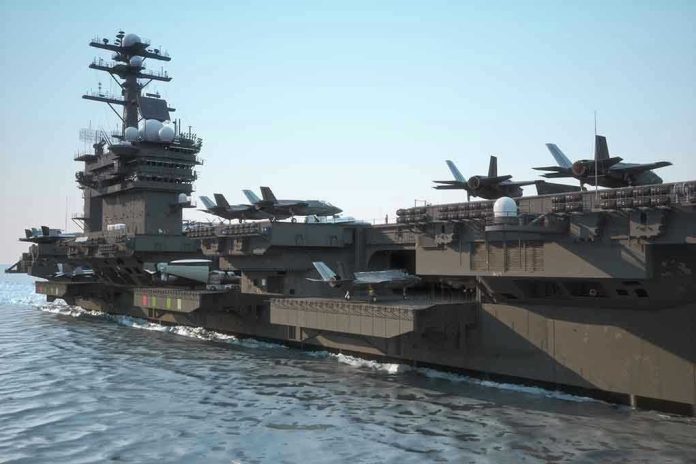
A U.S. military strike against a Venezuelan vessel raises legal and diplomatic questions, sparking debate among conservatives.
Story Highlights
- U.S. Navy sinks a suspected drug vessel in the Caribbean, escalating military actions.
- Senator Rand Paul criticizes the strike, questioning America’s military role abroad.
- President Trump supports the operation, emphasizing the fight against drug trafficking.
- The strike sparks a debate on international law and military intervention.
U.S. Navy’s Bold Move Against Drug Trafficking
On September 2, 2025, the U.S. Navy launched a precision strike against a vessel in the Caribbean, allegedly operated by the Venezuelan gang Tren de Aragua. This vessel was suspected of smuggling drugs toward the United States. The operation resulted in the deaths of all 11 people aboard, marking a significant escalation in America’s counter-narcotics efforts. The strike underscores the Trump administration’s commitment to combating drug trafficking, even as it raises complex questions about international law and military engagement.
Senator Rand Paul’s Concerns
Senator Rand Paul has publicly criticized the military strike, expressing concerns about America’s expanding military footprint. While Paul admitted having little sympathy for the suspected gang members, he questioned the broader implications of such military actions. His comments highlight a growing domestic debate over the legality and strategic wisdom of using military force in counter-narcotics operations. This debate is particularly resonant among conservatives who value limited government and caution against unnecessary foreign entanglements.
President Trump defended the strike, asserting that it was necessary to protect American interests and discourage drug trafficking. He emphasized that no Americans were injured during the operation, and the vessel was destroyed. Defense officials have warned of further strikes if narcotics trafficking continues, indicating a sustained military presence in the region.
Diplomatic and Legal Ramifications
The strike has intensified tensions between the United States and Venezuela, with Venezuelan officials condemning the attack as a violation of their sovereignty. This incident raises complex legal questions about the use of military force against non-state actors in international waters. Critics argue that the operation challenges international maritime norms and could set a dangerous precedent for future military actions against criminal groups.
The broader implications of this event are significant. Short-term, it disrupts a drug trafficking operation, but it also escalates U.S.-Venezuela tensions and fuels domestic debate on military policy. Long-term, it could lead to increased U.S. military involvement in counter-narcotics operations, potentially involving further lethal force against non-state actors. Such actions carry the risk of retaliatory measures and diplomatic fallout, affecting regional stability and international relations.
Sen. Paul to Newsmax: Drug Smugglers Deserve Trials, Not Strikes | https://t.co/jaeW72GOB3. The location of obliteration located in high seas international waters https://t.co/leg0OwVGEg
— reynaldo castro (@reynaldoca78639) September 4, 2025
Security analysts acknowledge the effectiveness of the strike in disrupting drug trafficking but warn of escalation risks. Legal scholars are divided on the operation’s compliance with international law, with concerns about sovereignty and proportionality. The debate continues to resonate across political and legal circles, reflecting diverse perspectives on America’s role in global military engagements.
Sources:
2025 United States strike on Tren de Aragua boat
Legal Issues in Military Attack in the Caribbean