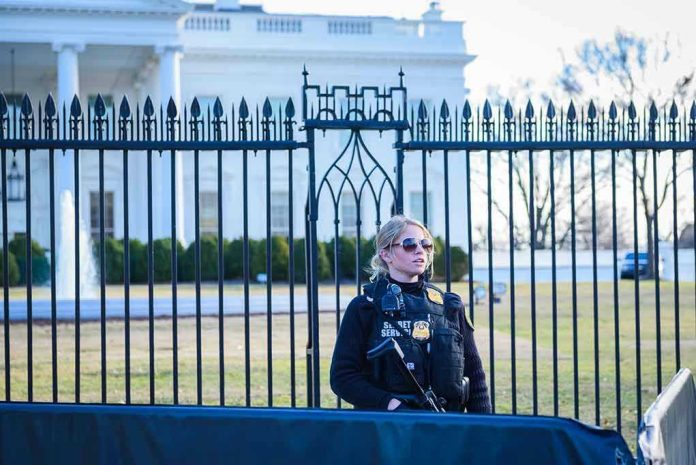
One reckless moment at the White House gate pulled back the curtain on the relentless, invisible chess game played every day to protect American power—and revealed how even the best-laid security plans can be tested in the blink of an eye.
Story Snapshot
- A car rammed a White House security gate on October 23, 2025, triggering a full lockdown
- Secret Service responded within minutes, arresting the driver and averting injuries
- The driver’s motives remain under investigation, with no evidence yet of terrorism
- The breach spotlights persistent security challenges and the need for constant vigilance at America’s most protected address
Security Breach Shatters the Routine at the White House
At 2:15 PM, as D.C. traffic pulsed with its usual weekday rhythm, a vehicle crashed into the White House’s north gate, instantly shattering the illusion of routine in one of the world’s most guarded compounds. Secret Service agents, trained to expect the unexpected, moved into action with clockwork efficiency. Within minutes, the White House went on lockdown, tourists were hustled away, and heavily armed officers descended on the scene. The driver, pulled from the car and arrested, became the latest in a line of individuals whose actions have tested the mettle of those sworn to protect the presidency.
While the incident created a brief sense of panic, authorities quickly confirmed that no one inside the White House—including staff, visitors, and the President—was ever in real danger. The press office issued a carefully crafted statement, balancing reassurance with an acknowledgment of the breach. As bomb squads examined the vehicle for threats, bystanders and cable news outlets speculated about motives, backgrounds, and possible conspiracies. The narrative, for a few tense hours, was up for grabs—a modern security drama unfolding on Pennsylvania Avenue.
Historical Context of White House Security Breaches
The White House has long attracted more than its share of would-be intruders, from fence-jumpers to determined drivers. Security measures have evolved after each breach—higher fences, reinforced barriers, more cameras, more boots on the ground. Previous incidents, like the 2014 fence-jumping episode and the 2017 barrier crash, prompted urgent reviews and upgrades. Yet, the October 2025 event underscores an uncomfortable truth: no system is impenetrable when random acts of desperation or protest collide with fortified perimeters. The Secret Service must outthink not just the masterminds but also the unpredictable lone actor whose motives may not fit any standard profile.
As the investigation into the driver’s past and motivations unfolds, agencies review every second of their response. The quick return to normal operations—lockdown lifted before sunset, tours resumed—shows the system’s resilience. But behind the scenes, questions linger about how far security must go without turning America’s executive mansion into an unapproachable fortress, and whether mental health, politics, or something else entirely drove a person to take such a reckless gamble.
The Ripple Effect: Security, Politics, and Public Perception
Security breaches at the White House ripple far beyond the gates. For staff and residents, there’s the immediate disruption and the nagging awareness that their workplace—and home—remains a target. For the public, each incident chips away at assumptions of invulnerability, fueling debates about government transparency, protest rights, and the delicate balance between openness and protection. In an era of heightened political polarization and constant scrutiny, even a failed breach becomes political fodder, invoked in calls for more funding, tighter laws, or greater public access.
Law enforcement agencies face renewed pressure to demonstrate both competence and restraint. Security industry vendors see opportunity in the drive for ever-stronger barriers and smarter detection. Civil liberties advocates warn against a fortress mentality that could erode the accessibility and symbolism of the People’s House. The Secret Service, meanwhile, conducts its after-action reviews—searching for missed signals, testing new approaches, and preparing for whatever challenge comes next.
Sources:
Car crashes into White House gate, driver arrested
Man arrested after crashing into White House security gate
Vehicle Crashes Into Security Gate Outside the White House