
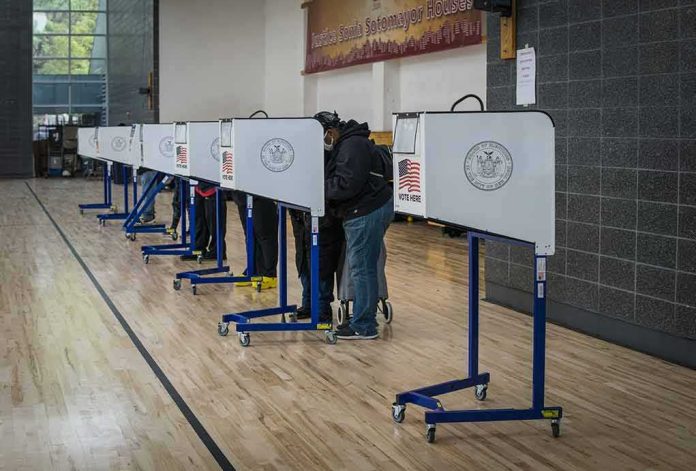
Voter ID debates are not about whether identity matters—they are about matching a specific control to a specific risk, at a scale that justifies the cost and the friction it introduces into the voting system.
The Short Version
- Proposition 39 is a detailed constitutional amendment: it mandates government-issued ID for in-person voting and identification digits for vote-by-mail, with a free state voter-ID card upon request.
- California currently relies primarily on signature verification; Prop 39 would add per-vote identifiers and change rejection/cure dynamics for mail ballots.
- Supporters’ rhetoric leans on an intuitive in-person impersonation scenario—popularized by a celebrity-parody ad—but the ad is illustrative, not evidence of a systemic problem.
- Opponents cite rare incidence of proven voter impersonation, potential disenfranchisement via new errors and paperwork, and substantial public cost.
What Proposition 39 Actually Does
Strip away the campaign theatrics and Proposition 39 is administrative plumbing written into law. The measure would require in-person voters to present government-issued identification and vote-by-mail voters to provide the last four digits of a designated government ID number, which election officials would match to the registration record. For voters who need it, the state must issue a no-cost voter-identification card on request. These requirements are not conceptual talking points; they are codified in the initiative’s constitutional and statutory language as summarized by the Legislative Analyst’s Office and the Secretary of State’s official guide.
Today, California verifies a voter’s identity primarily through signature matching against the registration file; a “No” vote under the official guide maintains that structure. A “Yes” vote adds a per-transaction identifier—physical ID at the polls, identification digits on mail envelopes—on top of existing list maintenance and signature checks. That shift is mechanical but consequential: it changes what can cause a ballot to be set aside and what kind of information a voter must present, and when, to have their vote counted.
The Ad That Lit the Match—and What It Proves (and Doesn’t)
Supporters have a tidy illustration of their case: a parody spot built around a “Sydney Sweeney” impersonation at a polling place. The scene is memorable because it taps an intuitive fear—someone voting as you because a poll worker cannot demand a driver’s license—then updates it with an AI-generated likeness to suggest the risk is growing. It is, however, theater. The scenario is fictional and does not present named cases, prosecutions, or California incidence data; it should be understood as messaging, not measurement.
That difference matters. In-person impersonation is precisely the kind of conduct a polling-place ID rule can deter. But the argument for a new, statewide control does not rest on whether we can imagine a clever cheat; it rests on whether the cheat is documented at a meaningful scale relative to the costs and rejection risks created by the new rule. That is where the real policy dispute lives.
Mechanics: How the Requirements Would Operate
For in-person voting, a voter without the required ID at the check-in station could not proceed in the ordinary line; the initiative contemplates an identification requirement that, if unmet, results in non-issuance of a regular ballot. For vote-by-mail, the envelope becomes the gatekeeper: the last four digits provided by the voter must match the number on file. If the digits are missing or mismatched, the ballot can be flagged for rejection unless cured within prescribed timelines. The state must also stand up a free voter-ID card program for those who request it, which partly addresses cost objections but leaves open practical questions of application, delivery time, documentation, language access, and disability accommodation—details not fully resolved in the high-level summaries.
Two operational pivots follow. First, California officials would need to verify and manage ID numbers across county systems consistently, including during same-address moves and name changes. Second, ballot-processing workflows would need to absorb a new failure mode (incorrect or omitted digits) at scale, with robust cure procedures to prevent valid votes from being lost for clerical errors. The official analyses acknowledge these dynamics in outlining both identification and ballot consequences.
Where Supporters and Opponents Genuinely Disagree
Supporters argue the measure modernizes identity verification with a safeguard that most non-election transactions already require, while offering a no-cost credential to cushion access concerns. They anchor their pitch in a straightforward contrast: an ID shown or digits matched are a cleaner signal than a signature that can vary with age, injury, or stress. The advocacy leans on the polling-place impersonation narrative, which, while vivid, is not presented with California incidence data in the cited campaign coverage.
Opponents challenge the necessity and proportionality of the fix. California already uses signature verification, list maintenance, and address checks; layered controls can reduce some risks without ID-at-the-polls. They point to research and expert commentary that find in-person impersonation to be exceedingly rare and warn that adding an identification field on mail envelopes introduces a new reason for ballot rejection—one that will fall unevenly on voters who move frequently, have name changes, speak limited English, or manage disabilities. They also frame the measure as a costly response to a lightly evidenced threat and, in public polling reported by mainstream outlets, cite more likely voters opposed than supportive at the time of those surveys.
Mail Voting Is the Quiet Center of the Fight
The campaign’s marquee example is an in-person cheat. The bigger administrative swing is mail. Under Prop 39, a voter who forgets to write the correct last four digits, transposes numbers, or uses a different credential than the one on file can see their ballot sidelined. County officials can and do run cure processes, but cure is a race against statutory clocks and requires successful contact. The Legislative Analyst’s Office and the statewide voter guide describe the possibility of rejection for non-matching information—an effect that is predictable even if its ultimate magnitude depends on implementation quality.
This is the hard trade: a clearer identity check against a risk that appears rare in California versus a predictable increase in clerical-error rejections unless design, instructions, and cure systems are exceptionally robust. Supporters answer with the free card and a promise of competent administration; opponents answer with historical rarity of impersonation and the outsized harm of small error rates in high-volume mail elections.
'Sydney Sweeney' Makes the Case for Voter ID in California in Brilliant Adhttps://t.co/QmB9Z3byqx
— RedState (@RedState) October 21, 2026
What Would Resolve the Debate Like Adults
The question voters care about is not whether ID “sounds reasonable.” It is whether this specific package reduces actual risk more than it reduces valid participation. Three data exercises would move the argument from vibes to verification. First, a statewide inventory—across recent cycles—of substantiated in-person impersonation and noncitizen-voting cases by county, disposition, and method would size the problem credibly. Second, a retrospective simulation: apply Prop 39’s rules to recent mail-ballot files, estimate how many envelopes would have failed the new digit-match, and model cure success. Third, a transparent readiness audit: can county systems capture, protect, and match identification numbers consistently, including for voters who move or legally change names, and with what measured error rates in pilots?
None of these require speculation or celebrity cameos. They require publishing data and letting the public weigh a concrete fraud baseline, a concrete rejection forecast, and concrete implementation risks against the intuitive appeal of showing an ID. Until then, the measure’s strength is its specificity—it is a real amendment with defined mechanisms and a no-cost card. Its vulnerability is also specific: the principal new failure mode sits in the mail, not at the polling place, and the magnitude of that tradeoff remains an empirical question, not a slogan.
Sources:
sos.ca.gov, lao.ca.gov, quickguidetoprops.sos.ca.gov, igs.berkeley.edu