Two bombs blew up near President Emmanuel Macron’s Damascus hotel, and he kept his schedule anyway.
Story Snapshot
- Macron was safe and already at the presidential palace during the blasts.
- Two devices detonated near the Four Seasons Hotel area, wounding 18.
- No group claimed responsibility, leaving motive and target unclear.
- Officials say the explosions were outside Macron’s security perimeter.
What happened and what did officials confirm
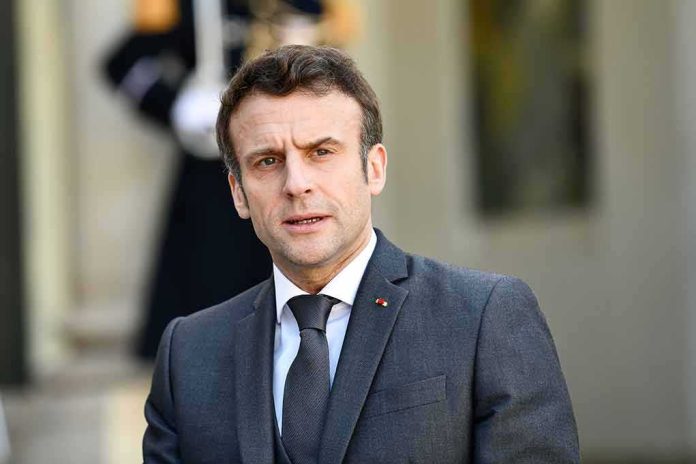
French and Syrian officials said two bombs exploded near the Four Seasons Hotel in Damascus while President Emmanuel Macron met Syria’s leader, Ahmed al-Sharaa, at the presidential palace. The French presidency said Macron was safe and continued his visit. Syrian authorities reported one device in a vehicle and another in a garbage container near the hotel. The Syrian Ministry of Interior said the blasts happened outside the French security perimeter. Eighteen people were hurt, including four police officers.
Macron’s office said he did not hear the blasts from his meeting location. Reporters tracked the timing and confirmed the detonations happened after he had left the hotel for official talks. No deaths were reported at press time. Local hospitals treated the injured. No group claimed responsibility, which blocks a firm answer on motive. The lack of a claim also matches the pattern seen in many attacks in the region, where ambiguity about targets is common and often deliberate.
Where the line sits between chaos and a targeted strike
The facts do not confirm an assassination attempt. The French side placed Macron at the palace during the blasts. Syrian officials marked the explosions outside the secure zone. That chain of detail fits a general attack more than a leader hunt. Some media and analysts hinted at a strike aimed at the French delegation. That leap outruns the record so far. Responsible reporting separates fear from proof. Without a claim or hard forensic links, the safer label is a public-area bombing, not a failed hit.
American conservative common sense calls for clear lines: name the target, show the chain of evidence, and back it with sources. Hype creates headlines but fogs judgment. In places like Damascus, violence can serve many goals at once—pressure the regime, rattle a foreign guest, or simply seed fear. No evidence yet shows that the attackers tracked Macron’s movements or breached his protection. Until investigators present device forensics or suspect ties, keep the scope narrow and the claims tight.
Security control, perception battles, and why the framing matters
Syrian officials have an incentive to say the perimeter held. That message projects control. Western outlets have an incentive to cast the blasts as a leader-level threat. That message heightens drama and risk. Both frames can be true to their aims and still miss the fuller picture. The data point that matters most today is modest but firm: Macron stayed safe, his program held, and the wounded were locals and police near the hotel zone. That is the real human cost so far.
A series of explosions rocked Damascus on Tuesday near a hotel where French President Emmanuel Macron had stayed. The blasts occurred shortly after the presidential motorcade departed for the palace, leaving 18 people wounded. Despite the attack, the French delegation continued…
— Global Arab Network (@Global_Arab_Net) July 7, 2026
The next useful facts will come from the basics: video from surrounding streets, hotel security logs, and a lab readout on device parts. If authorities release footage that tracks a delivery vehicle or a bag drop, motive may come into focus. If parts trace to a known cell, responsibility will harden. Until then, beware of the word “assassination.” It is a legal and moral live wire. It should not rest on gut feeling or the echo of a blast heard on a phone clip.
Sources:
townhall.com, cbsnews.com, cnn.com