
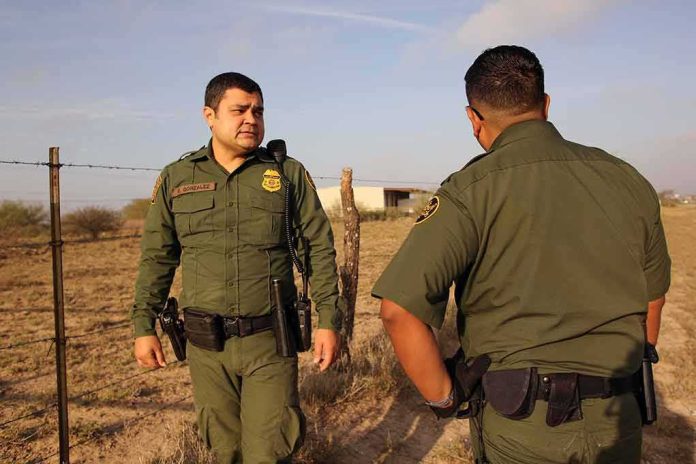
When Border Patrol gets the identity question wrong, the damage is not abstract; it is immediate, physical, and often humiliating. In North Carolina, Fernando Vazquez Orea says federal agents detained him despite his U.S. citizenship, handcuffed him during a warrantless workplace stop, and later left him on the roadside after confirming who he was.
Key Points
- The claim rests on a concrete allegation: Vazquez says Border Patrol arrested him at work, ignored his REAL ID, and then abandoned him by the side of the road once agents accepted he was a U.S. citizen.
- The filing is not a lawsuit in the ordinary sense yet; it is a Federal Tort Claims Act damages claim, the required administrative step before a civil suit if the government does not resolve it.
- The episode fits a broader pattern in North Carolina, where multiple residents have said immigration agents detained citizens or lawful residents during high-intensity enforcement operations.
- The deeper issue is not just mistaken identity, but the logic of dragnet enforcement: when officers act quickly, the burden of proof shifts onto the person being seized, and release conditions can become part of the harm.
What Vazquez Says Happened
According to the ACLU of North Carolina, Vazquez filed a damages claim on behalf of Fernando Vazquez Orea, saying he was “unlawfully arrested and detained while at work and then dumped on the side of a road” by federal immigration agents. Reason reports that the claim says Border Patrol officers detained and handcuffed him during a warrantless construction-site raid on November 18, 2025, even after he presented a REAL ID, then released him in a wooded area after confirming he was a citizen. The alleged sequence matters because it turns what might otherwise be defended as a mistaken stop into a more serious accusation: not only that the government detained the wrong man, but that it did so without legal basis and then left him to recover on his own.
The reporting also places the incident inside a viral-recorded moment, which is important because the public record in these cases often begins with citizen video rather than an official admission. WUNC and other North Carolina outlets have documented a wave of people filming immigration stops and asserting, sometimes repeatedly, that they are U.S. citizens while agents continue the detention. In practical terms, that changes the evidentiary landscape: the person stopped is no longer an anonymous complaint, but a named witness with a contemporaneous account, often backed by a cellphone recording that preserves the tone, location, and mechanics of the stop.
Why the Federal Tort Claims Act Matters
A Federal Tort Claims Act filing is the government-liability pathway that allows a person to seek money damages for injury caused by federal employees acting within the scope of their duties. That structure matters because it shows Vazquez is not merely venting on social media or asking for an apology; he is invoking the same administrative process used when a claimant says federal conduct caused concrete harm. The claim asks the government to investigate, accept liability, or face a later civil lawsuit. In other words, it is the legal form of an allegation that the state did not just err, but owed a remedy.
That procedural choice also tells you something about the seriousness of the underlying facts. These claims are designed for property loss, personal injury, and other harms tied to federal action, and the administrative record can become the backbone of later litigation. In a case like this, the alleged roadside abandonment is not a colorful detail; it is part of the damages theory. If an agent confirms a person is a citizen and still leaves him in an unfamiliar area, the wrong is no longer limited to the arrest itself. It extends to the manner of release, which can compound the injury and lengthen the consequences.
A Pattern, Not an Isolated Anecdote
The most important context is that Vazquez’s claim is not an isolated story floating in a vacuum. North Carolina media have reported multiple incidents during the Charlotte-area enforcement surge in which people said Border Patrol stopped or detained them despite citizenship or lawful status. WCNC described a man who “repeatedly shouted that he was a U.S. citizen” before being detained at Eastway Crossing Shopping Center. The Charlotte Observer and WCNC also reported a broader class-action challenge alleging that federal agents made warrantless arrests in North Carolina without probable cause.
That pattern matters because enforcement sweeps create their own incentives and mistakes. Agents move quickly, public spaces fill with fear, witnesses record video, and identity disputes become immediate confrontations rather than quiet administrative checks. Once an operation becomes large enough, the question is not whether errors are possible; it is whether the system has enough friction built into it to prevent them from hardening into constitutional violations. The North Carolina filings suggest that, at least from the plaintiffs’ perspective, the answer has been no.
The Real Harm Is Often the Release
The phrase “left him on the roadside” is vivid because it captures something often missed in immigration enforcement coverage: release can be its own form of harm. If the government detains someone wrongly, then deposits him in an unfamiliar or remote location, the seizure does not end at the moment of uncuffing. It continues as exposure, disorientation, and, potentially, danger. That is why the allegation has drawn attention well beyond one roadside in North Carolina. It speaks to a basic duty of custody: if the state has taken control of a person, it cannot casually shed that responsibility the instant the stop is over.
North Carolina’s recent immigration disputes show how quickly this issue escalates when citizenship is contested in real time. Willy Wender Aceituno, another North Carolina resident, filed a separate damages claim saying agents shattered his car window, detained him, and handcuffed him despite having already confirmed his citizenship. Together with Vazquez’s claim, that suggests a recurring legal theory: not merely that officers misread a situation, but that they persisted after the supposed mistake should have been obvious. That is the line separating a rough stop from a potentially unlawful one.
What This Means Going Forward
If Vazquez’s claim survives the administrative stage and becomes litigation, the government will have to answer two separate questions: whether the detention lacked lawful basis, and whether the manner of release caused additional compensable harm. Those are not the same issue, and plaintiffs in this kind of case often need both to show the full scope of damage. A citizen who is wrongfully seized and then abandoned has a stronger story than someone who was merely stopped, because the second act can sharpen the first into something reckless, punitive, or indifferent.
More broadly, the North Carolina cases show why civil-rights lawyers focus so intensely on probable cause, warrants, and post-detention handling during immigration operations. Once federal agents are operating in mass enforcement mode, the risk is not only that they target the wrong person; it is that the process itself becomes so hurried that no one meaningfully checks identity, legality, or human vulnerability before a person is taken, transported, and released. That is the pressure point in this story, and it is why it has become part of a larger legal campaign rather than a one-off grievance.
Sources:
reason.com, wunc.org, wral.com, charlotteobserver.com, youtube.com, wcnc.com, express.co.uk, nytimes.com, gettyimages.co.uk, yahoo.com