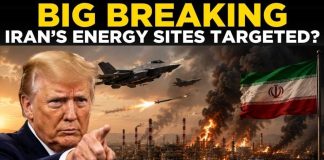
The through-line is simple and consequential: when U.S. forces preempt mine-laying at the Strait of Hormuz, they are not chasing symbolism—they are hardening the world’s oil and shipping aorta against one of the cheapest, most effective tools of coercion at sea.
The Short Version
- U.S. Central Command said American forces struck two Iranian launchers on Larak Island as Islamic Revolutionary Guard Corps personnel prepared to load sea mines into the Strait of Hormuz.
- The action followed weeks of mine-clearance that CENTCOM said reopened international shipping routes and aligned with a stated mission to protect commercial traffic.
- President Trump emphasized that the strait remains open and warned that further mine-laying would draw destructive consequences.
- Iranian forces fired in retaliation toward U.S. sites after the strike, underscoring the immediate operational stakes and cyclical nature of deterrence at Hormuz.
What Happened: A Preemptive Shot at Mine-Lay Capability
U.S. Central Command reported that American forces hit two Iranian launchers on Iran’s Larak Island after observing Islamic Revolutionary Guard Corps (IRGC) preparations to fire rockets equipped with sea mines into the Strait of Hormuz. The statement—released by a CENTCOM spokesperson and carried by major wire services—presented the strike as a discrete action to prevent the placement of mines in international shipping lanes. According to CENTCOM, the operation fit within a broader effort to keep commercial sea routes open and to shield civilian mariners, a mission set that includes mine countermeasures, presence operations, and, when required, kinetic interdiction.
Reuters characterized the Larak action as the first known American strike on Iranian territory since late July, a marker that places the event inside a pattern of episodic enforcement rather than an ongoing bombardment campaign. In the days around the strike, CENTCOM also said it had completed clearing mines from international routes in the Strait, an operational claim that suggests a layered approach: remove existing hazards, then deter or disrupt new attempts to reseed the waterway.
Why Mines Matter at Hormuz: Mechanism and Leverage
Naval mines are inexpensive, scalable, and insidious; laid covertly, they can raise risk premiums across a global market without firing a shot at a ship. Iran has long understood that dynamic. During the 1980s Tanker War, it seeded Gulf waters with mines—including roughly 150 in 1988—and achieved outsized strategic effects relative to the cost of the hardware. The strike on USS Samuel B. Roberts, and the subsequent U.S. response in Operation Praying Mantis, hardened a lesson that still holds: even a limited mine campaign can change the calculus of insurers, shippers, and states.
That history explains why CENTCOM treats “preparation to lay mines” as more than intent—it is a threshold that justifies interdiction when the risk to a chokepoint is acute. The Strait of Hormuz narrows to a channel where outbound and inbound traffic are confined; a handful of well-placed influence mines can close lanes, not by mass destruction but by catalyzing caution, convoying requirements, and surging war-risk insurance. In this environment, speed of response is a strategy, not an accessory.
The Policy Frame: Keeping Lanes Open Under Coercive Pressure
The administration’s public posture has been clear: keep the strait open, punish mine-laying, and treat maritime coercion as a threat to global commerce rather than a purely bilateral contest. President Trump stated that mines in international waters had been cleared and warned that any renewed emplacement would trigger their destruction—signaling a standing rule of behavior and consequence rather than a one-off reprisal. CENTCOM’s framing mirrored that line, emphasizing civilian shipping protection and continuity of trade in explaining the strike.
Iran, for its part, has periodically claimed control over the strait and disputed U.S. descriptions of traffic status. These contests over narrative are not cosmetic; they are instruments aimed at shippers, reinsurers, and energy markets that price risk daily. Precisely because mines are cheap and hard to attribute in real time, the contest often occurs in the realm of perceived safety—where an announced clearance or a visible interdiction can move behavior as much as a sonar sweep.
Escalation Dynamics: Action, Retaliation, Containment
The Larak strike did not occur in isolation. In its aftermath, multiple outlets reported Iranian launches toward U.S. sites in Jordan, with defensive systems intercepting incoming fire—a familiar retaliatory rhythm intended to reassert costs without triggering a spiral neither side wants. The exchange underscores how mine warfare in a chokepoint can radiate ashore, tying air defense, force protection, and coalition diplomacy to what begins as a maritime interdiction problem.
The United States has historically tried to keep this cycle bounded: hit enablers of maritime coercion quickly, absorb or intercept the expected reply, and return to route protection and presence. Whether that containment holds depends on two variables that cannot be outsourced: the credibility of the next U.S. interdiction and the perceived effectiveness of Iran’s retaliatory signaling. So far, the pattern remains episodic enforcement rather than escalation to general war.
How This Fits the Longer Arc of Hormuz Security
Hormuz is a physics problem—narrow waters and fixed geography—and a psychology problem—market and political actors constantly recalculating risk. The U.S. toolkit has evolved accordingly: mine countermeasure ships and helicopters, unmanned systems, maritime patrol aircraft, destroyers on air defense duty, and intelligence that hunts the enablers of mining before devices hit the water. The Larak strike is emblematic of that evolution: target the launcher and crew staging the mines rather than wait to sweep them later in a contested, cluttered channel.
That approach sits alongside financial and regulatory pressure intended to blunt Iran’s ability to monetize or institutionalize coercion, including U.S. designations of IRGC-linked entities offering “insurance” and services to ships transiting the strait—schemes Washington characterizes as extortion cloaked as maritime security. The mix is deliberate: operational interdiction reduces immediate hazard; sanctions and legal actions raise the long-term cost of the coercive enterprise.
U S and Iran trade fresh blows as tensions surge across the Middle East with Iran launching an overnight attack on American forces in Jordan that reportedly caused no significant damage after U S forces struck Iranian rocket launchers near the Strait of Hormuz#NYI pic.twitter.com/TW3PE0iqPb
— NewYork-Insight (@NewYork_Insight) August 31, 2026
What It Means Going Forward
Expect more of the same: interdictions when preparations cross observable thresholds, public assertions that the lanes are open, and adversary responses calibrated to impose cost without losing control of escalation. The measure of success is not dramatic battlefield footage; it is the mundane continuity of sailings, the flatness of insurance curves, and the absence of hull strikes despite repeated attempts to create them. That is what “keeping Hormuz open” looks like in practice.
Sources:
19fortyfive.com, cnbc.com, reuters.com, nypost.com, english.elpais.com, cnn.com, aljazeera.com