France’s recurring debate over “calling out the army” is not about a coup fantasy; it is about a well-defined, legally bounded tool the state has reached for since 2015 to harden targets against terrorism—an instrument often conflated with, but fundamentally distinct from, deploying troops to police civil unrest.
The Short Version
- France has a standing domestic military posture—Opération Sentinelle—built to protect sensitive sites from terrorism, not to govern neighborhoods or replace police.
- Retired officers have publicly warned of national “disintegration,” fueling a civil-war narrative—but these letters are advocacy, not institutional doctrine.
- Across major episodes of unrest since 2005, public order duties have remained with police and gendarmerie, whose mass mobilizations, not army patrols, have restored control.
- Claims that Islamists “control” neighborhoods or that the state has already used the army against protesters lack corroborating operational evidence; official accounts emphasize alternative causes and police-led responses.
What “calling out the army” actually means in France
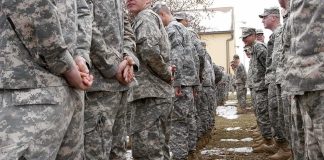
French law and practice draw a bright line between internal security and military functions. Since the 2015 Paris attacks, Opération Sentinelle has placed up to roughly 10,000 soldiers on domestic ground to patrol transport hubs, protect religious sites, and deter or respond to terrorist threats. The Ministry of Armed Forces’ own operational summaries describe this as protection of the national territory against the terrorist threat—a mission conceived and governed as counterterrorism support, not crowd control or neighborhood pacification. In regular “point de situation” reports, Sentinelle sits alongside overseas operations; its role at home is visible, uniformed, and constrained.
This distinction matters. When political actors or commentators invoke “the army” to quell riots, the image tends to be soldiers clearing streets and running checkpoints. That is not how France has used its armed forces domestically in the post-2015 era. Sentinelle augments, it does not substitute for, Interior Ministry forces. It hardens targets and raises deterrence around sites vulnerable to attacks; it does not manage demonstrations, make arrests for public-order offenses, or conduct judicial police work.
A decade of unrest shows a policing-led playbook
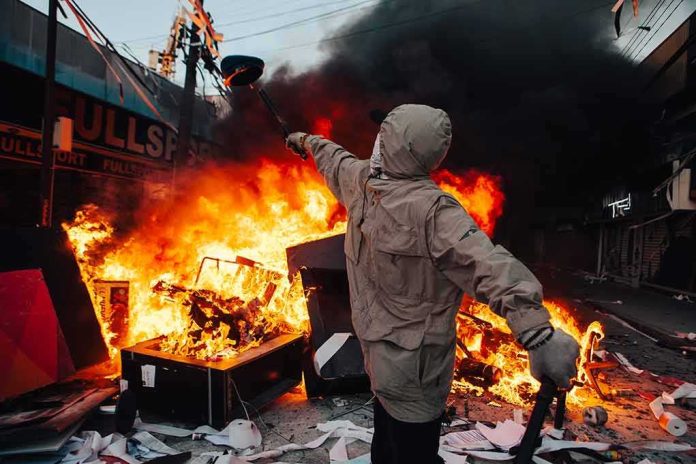
Look at the record. In 2005, the government declared a state of emergency and imposed curfews, but the operational core of the response remained police and gendarmerie. Academic accounts note that arrests and curfews helped quell unrest that had already begun to wane—again, through policing instruments rather than an army takeover. In 2023, authorities surged Interior Ministry personnel to an extraordinary 45,000 across the country, making nearly 4,000 arrests. Yet even in that severe mobilization, the mission profile remained squarely with police/gendarmerie; Sentinelle continued as a protective overlay at sensitive sites, not a force to govern affected neighborhoods.
That pattern persisted during the education-centered protests of recent years. Independent reporting and government guidance framed the state’s approach as twofold: protect the right to peaceful assembly while ordering police to quickly end blockades and violence. When rumors circulated that the army had deployed armored vehicles against students, official channels explicitly rebutted them. Counterterrorism patrolling continued; the riot response stayed with the police.
The civil-war narrative: what’s signal, what’s noise
The open letters by retired generals and groups of soldiers in 2021 gave the civil-war trope durable oxygen. They warned of “Islamism,” violence, and hatred of institutions, intimating that the armed forces might have to intervene to prevent national disintegration. Politico catalogued the episode; scholars at the LSE analyzed how it intersected with far-right politics and securitized discourse about Islam and immigration. Crucially, these texts were written by retirees or anonymously; they were political interventions, not command guidance. The LSE analysis emphasized the French military’s apolitical stance and loyalty to civilian authority; the letters documented anxieties, not an institutional plan. Some signatories faced sanctions—another signal that the state does not normalize such advocacy as doctrine.
Why does this matter? Because a rhetorical drift has fused three distinct claims: that Islamists drive unrest, that police can no longer cope, and that the state must therefore send the army into the streets. The evidence base only robustly supports the first step in moments of terrorism and the third step in the narrow, target-protection sense of Sentinelle. The leap to soldiers replacing police for domestic public order is precisely what both law and practice have resisted since the late 19th century professionalization of crowd control under the Interior Ministry.
Competing explanations for unrest—and the evidentiary bar for “barbarians at the gate”
Attribution in urban unrest is contested because multiple dynamics operate at once: violent opportunism, political agitation, and legitimate socioeconomic grievance can co-exist. Associated Press and the BBC traced the student-led protests to chronic education shortfalls—dilapidated facilities, staffing gaps, overcrowded classrooms—while documenting the government’s police-first response. Those accounts directly counter claims that the dominant driver was Islamist territorial control. The French interior minister’s earlier observation during the 2023 riots—calling out the presence of “Kevins and Mattéos,” not only minorities—pushes in the same direction.
For a thesis as strong as “barbarians” or Islamist commanders governing enclaves, the evidence would need to look different: named organizers with chains of command, financing, messaging directives, court-indicted conspiracies, precincts the police formally ceded, or taxation-like rackets. The record retrieved here does not produce those elements. Nor does it show that police capacity was structurally exhausted. On the contrary, the mass deployment figures and arrest totals indicate the state’s internal-security apparatus retained both scale and intent to reassert order without handing the streets to the army.
Where military support fits—and where it doesn’t
France’s domestic use of soldiers fits a specific lane: deter and disrupt terrorism, reassure the public, and free police to handle fluid, arrest-heavy missions. It does not mean troops adjudicate protests or pacify neighborhoods. The Ministry’s weekly operational notes continue to frame Sentinelle that way; it is an enduring mission woven into France’s security fabric after 2015, scaled up and down as threat levels shift, occasionally to several thousand personnel nationwide. Conflating that scaffolding with martial law breeds misunderstanding and, at worst, licenses overreach that French civil-military norms have historically resisted.
What to watch next: tests that separate seriousness from sloganeering
Two types of proof would change the analysis. First, declassified or judicially vetted evidence tracing violent coordination to identifiable Islamist or far-left command structures—indictments, wiretaps, financing trails—would transform claims from narrative to case file. Second, verifiable indicators of police overload—systematic response failures across jurisdictions, formal requests for military reinforcement in public-order roles, or declared loss of control zones—would signal a shift toward extraordinary measures. Barring that, France’s mature, if strained, security architecture points to a familiar division of labor: police and gendarmerie handle unrest; the army protects against terrorism.
Sources:
min.news, france24.com, organiser.org, blogs.lse.ac.uk, nypost.com, thetimes.com, meforum.org, apnews.com, idicenter.org