When a sitting U.S. ambassador frames modern borders in terms of biblical promises, theology stops being private belief and becomes a live variable in hard security policy.
Key Points
- Mike Huckabee has publicly affirmed a biblical vision of Israel’s land, saying “It would be fine if they took it all,” while insisting he is not calling for immediate territorial conquest.
- That statement sits inside a broader current of Christian Zionist theology, which increasingly bleeds into U.S. foreign policy discourse on Israel, Iran, and regional borders.
- Arab and Muslim governments condemned Huckabee’s remarks as a de facto endorsement of Israeli control over sovereign Arab territory, illustrating how religious language can inflame geopolitical tensions.
- Israel itself has never formally adopted biblical geography as state policy or legally fixed borders from the Nile to the Euphrates, underscoring the gap between theological maps and international law.
- Understanding Huckabee’s comments requires tracing how end-times narratives, settler-colonial logics, and U.S. domestic politics intersect around the idea of “Greater Israel.”
Huckabee’s “It Would Be Fine If They Took It All” Remark: What He Actually Said
In a widely circulated interview, U.S. Ambassador to Israel Mike Huckabee was pressed on whether Israel has a right to expand beyond its current borders to occupy territory stretching from the Nile to the Euphrates—an allusion to the land promise in Genesis 15. Huckabee responded, “It would be fine if they took it all,” explicitly tying that acceptance to what he described as Israel’s biblical right to the land. Multiple outlets and clips show him restating the premise: that God granted Abraham’s descendants a vast expanse of territory and that this promise remains morally relevant to assessing Israel’s claims today.
In subsequent clarifications, Huckabee has tended to frame this not as a concrete policy proposal for near-term annexation, but as a theological affirmation: in his view the biblical grant of land is legitimate, and Israel, not the United States, must decide what to do with it. Nonetheless, when the person endorsing that vision is not a televangelist but the accredited representative of the U.S. government in Jerusalem, the distinction between “theological affirmation” and “policy signal” narrows considerably.
Christian Zionist Theology and the Nile-to-Euphrates Map
Huckabee is not an incidental outlier; he explicitly identifies as a Christian Zionist and has long described his Christian faith as “rooted in the promises that God gave to the Jewish people.” Christian Zionism, in its contemporary American form, reads biblical covenants as granting the Jewish people an enduring, divinely mandated claim to specific territory and often folds those ancient promises into positions on modern state borders, settlement policy, and war with Israel’s enemies.
Genesis 15, the text Huckabee and others invoke, describes God promising Abraham land “from the river of Egypt to the great river, the Euphrates.” Within Christian Zionist circles, that phrase becomes a kind of cartographic charter: a scriptural justification for viewing much of the modern Middle East as properly within Israel’s divinely assigned domain, regardless of current borders or population. For many theologians outside that movement, however, the passage is interpreted in more complex ways—symbolically, covenantally, or as referring to ancient polities rather than modern nation-states—and they argue that it cannot be straightforwardly mapped onto contemporary international law.
Crucially, those biblical claims operate inside a political ecosystem. Organizations like Christians United for Israel explicitly celebrate a bond “from strategic strength to shared biblical values,” presenting U.S.–Israel alignment as both geopolitically useful and spiritually mandated. This fusion of strategy and prophecy primes political figures to speak of borders in terms of divine rights, and makes Huckabee’s remark a recognizable, rather than anomalous, statement within that constituency.
How Israel Defines Its Borders – and How It Doesn’t
Against that theological backdrop, the legal and diplomatic picture is much more constrained. Israel has never formally defined its borders in a single constitutional or treaty instrument, and its lines of control have shifted through war, armistice, and partial agreements since 1948. Although some Israeli settler leaders and ministers “flirt” with the idea of extending borders according to biblical geography, these notions remain aspirational and ideological, not codified state policy or accepted international boundaries.
International law and diplomatic practice hinge on very different principles from Genesis: continuity of prior recognized borders, self-determination of peoples, and negotiated adjustments, not religious texts. Advisory opinions and commentary on Israeli–Palestinian territorial disputes focus on armistice lines, occupation law, and security arrangements. They do not treat biblical promises as a legal source of title to land. Even many Jewish and Christian theologians who acknowledge a deep religious attachment to the land explicitly separate that attachment from an assertion of unilateral, divinely sanctioned sovereignty by the modern State of Israel.
This divergence matters because Huckabee speaks from an office whose power is grounded in international law, yet he justifies potential territorial expansion with a vocabulary drawn from scripture. That tension is precisely what alarms critics: it suggests that at least part of the U.S. diplomatic posture toward Israel is being narrated in terms foreign to the norms governing everyone else’s borders.
Regional Backlash: Why Arab and Muslim States Reacted So Strongly
Huckabee’s remark did not land in a vacuum. Arab governments and Muslim-majority states responded with sharp condemnations, describing his assertion as “dangerous and inflammatory” and accusing him of signaling support for Israeli control over territories belonging to sovereign Arab states. Statements cited by outlets such as NBC News and the BBC emphasized that the territory between the Nile and Euphrates includes parts of Egypt, Jordan, Syria, Iraq, and other countries—places whose governments see any endorsement of Israeli “biblical rights” there as a direct challenge to their sovereignty.
Many of those governments already view settlement expansion in the West Bank and talk of annexing areas like southern Lebanon as evidence of creeping “Greater Israel” ambitions. When a U.S. ambassador suggests it would be “fine” if Israel took all the land between two of the region’s major rivers, they interpret it as rhetorical cover for those ambitions, whether or not Huckabee insists it is merely theological. The outrage is therefore less about a single sentence than about a pattern: U.S. officials appearing to bless maximalist maps that erase Arab political claims to their own territory.
Critics outside the region echo that concern but frame it differently. Some analysts highlight parallels between American and Israeli histories of territorial expansion, arguing that biblical or manifest destiny narratives have repeatedly been used to morally launder settler-colonial projects. From this vantage point, Huckabee’s remark looks like a familiar script: sacred text deployed to legitimize expansion at the expense of populations already living on the land.
Religious War Rhetoric and the Iran Dimension
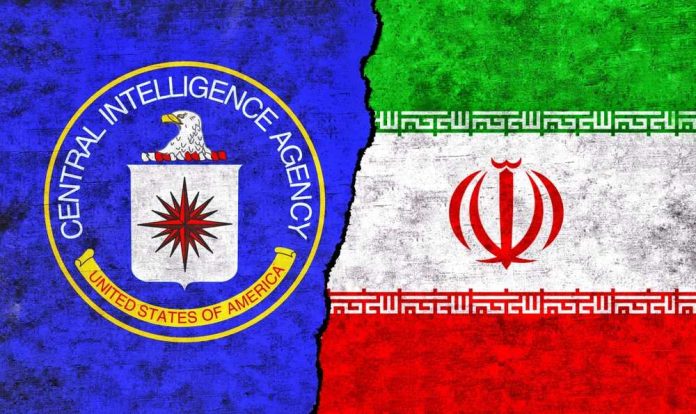
The controversy over borders intersects with another strand of religiously inflected rhetoric: the framing of conflict with Iran as part of a larger biblical drama. Reporting has described U.S. and Israeli officials amplifying language that casts military operations against Iran as steps toward “biblical end times” or Armageddon, particularly amid heightened tensions and open talk of war. Huckabee himself has warned that “Israel is only the appetizer,” portraying Iran’s ambitions as part of a larger, existential threat to the West.
This matters because it reframes tactical decisions—sanctions, strikes, assassination plots—within an eschatological story. If Iran is read not only as a geopolitical adversary but as a prophesied enemy of God’s plan for Israel, then policy arguments about deterrence, proportionality, and diplomacy are implicitly subordinated to a narrative in which confrontation is spiritually inevitable and perhaps desirable. For Christian Zionist audiences, such rhetoric can be galvanizing; for policymakers focused on risk and stability, it is deeply destabilizing.
The more U.S. envoys talk in these terms, the harder it becomes to reassure regional actors that Washington’s decisions are rooted in shared secular norms rather than in a reading of prophecy. That distrust in turn feeds cycles of confrontation, as governments hedge against what they perceive not just as strategic rivals but as religiously motivated ones.
Mike Huckabee (currently ambassador to Israel) is shitting on the will of the American people. https://t.co/Jod62Zo3Pt
— LFG! (@zcstocks) July 11, 2026
Competing Moral Frames: Divine Mandate, Legal Norms, and Human Consequences
At bottom, Huckabee’s “It would be fine if they took it all” comment crystallizes a clash of moral frameworks. In one frame, God’s promise of land to Abraham’s descendants is real, enduring, and normatively weighty; affirming it is a form of faithfulness, and resisting it is, at best, a misunderstanding of scripture and, at worst, opposition to God’s plan. Within that worldview, modern borders that constrain Israel’s reach can look temporary, contingent, and morally inferior to the biblical map.
In the opposing frame, moral legitimacy rests on contemporary realities: the rights of existing populations, the trauma of displacement, and international norms that seek to prevent conquest and ethnic cleansing. Commentators who reject biblical land claims as a basis for modern sovereignty point to Palestinian dispossession and ongoing occupation as evidence that appeals to ancient text are being used to justify present injustice. For them, the question is not whether Genesis mentions rivers but whether people living between those rivers today have any meaningful say over their political future.
Most serious theological and diplomatic analysis does not simply choose one frame and ignore the other; instead, it grapples with the undeniable weight of religious tradition while insisting that sacred stories cannot be implemented as unilateral state policy. The Catholic–Jewish dialogue on Israel, for instance, urges Christians to understand Jewish attachment to the land rooted in the Bible, “without however making that attachment an absolute that overrides other ethical considerations or political realities.” That kind of nuance is largely absent from Huckabee’s broadcast soundbite—but it is essential to any workable peace.
Why This Debate Will Not Go Away
The controversy around Huckabee’s remarks is unlikely to be a short-lived flare-up, because the forces that produced it run deep. A significant slice of the U.S. electorate is mobilized by Christian Zionist teaching, and politicians who speak its language gain access to funds, votes, and media platforms. Israeli politics, meanwhile, includes constituencies that are increasingly comfortable invoking biblical borders in official rhetoric, even if not in formal policy.
At the same time, the Middle East remains a region where borders are contested, populations are vulnerable, and wars are ongoing. In such an environment, language about “taking it all” is not merely symbolic; it can embolden hardliners, terrify neighbors, and complicate diplomacy. That is why the identity of the speaker matters. When the U.S. ambassador to Israel endorses a maximalist biblical map, even in the abstract, it signals to many that the world’s most powerful state is at least open to viewing the entire region through that theological lens.
For serious observers, the task is not to police religious belief but to insist on clear lines between personal theology and public policy. A durable peace in the region will have to be negotiated on the basis of international law, mutual security, and the rights of all who live there—not on competing interpretations of a Bronze Age covenant. Understanding how and why figures like Huckabee blur those lines is a necessary step toward preventing scripture from becoming, yet again, a warrant for endless war.
Sources:
pjmedia.com, facebook.com, nbcnews.com, bbc.com, youtube.com, instagram.com, ifcj.org, aljazeera.com, wamc.org, psephizo.com, jcrelations.net