When a union leader uses member dues to underwrite a personal book project while keeping a share of the royalties, the core issue is not just optics—it is fiduciary duty, and that is exactly what the Randi Weingarten investigation is designed to test.
Key Points
- House Republicans have opened a formal inquiry into whether the American Federation of Teachers (AFT) spent roughly $1.4 million of union funds to produce and promote President Randi Weingarten’s book, while she retained royalties.
- The probe rests heavily on a Freedom Foundation analysis of AFT’s federal labor filings, which identifies hundreds of thousands of dollars in payments for ghostwriting, legal review, photography, and publication tied to the book.
- Critics argue this spending violated Weingarten’s fiduciary obligation to use dues for members’ workplace representation, not personal branding, especially because the book’s royalties were partly routed to a new LLC that paid her $125,000.
- The case fits a long pattern of partisan fights over union political activity, but the underlying question is evergreen: how far union leaders can go in using collective resources to amplify their own voice while personally benefiting.
How the Weingarten Book Controversy Reached Congress
The controversy began not on Capitol Hill, but in the accounting lines of the AFT’s annual financial disclosure—Form LM‑2, which unions must file with the U.S. Department of Labor. A research report from the Freedom Foundation, a right‑leaning watchdog group, mined those filings and argued that member dues had “footed the entire bill” for Randi Weingarten’s book, Why Fascists Fear Teachers. The report tied specific vendors and dollar amounts to the book project: more than $400,000 to commentator Sally Kohn, acknowledged as a “day‑to‑day thought partner and collaborator”; thousands for fact‑checking and author photography; tens of thousands in publication‑related payments; and nearly $1 million to a New York law firm whose attorney is credited for legal review of the manuscript.
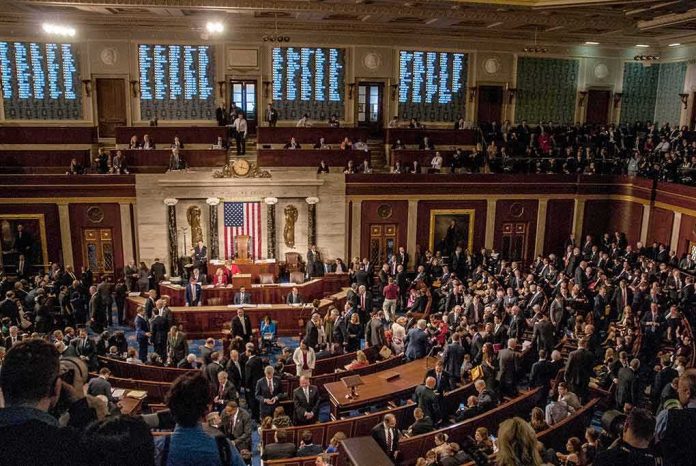
The New York Post and other outlets amplified those findings, framing the effort as a “vanity book project” financed by teachers’ dues. From there, the matter escalated. On July 7, 2026, the House Committee on Education and the Workforce, chaired by Rep. Tim Walberg with Subcommittee Chair Rick Allen, sent Weingarten a formal letter demanding documents. Citing the Freedom Foundation’s analysis and subsequent media reporting, the committee asked for all contracts, invoices, internal communications, and staff time records related to drafting, publishing, promoting, and touring for the book. The letter cast the issue in stark terms: if rank‑and‑file educators’ dues financed a project that generated private gain for their president, Congress wanted to know how that squared with basic transparency and fiduciary responsibility.
What the Financial Records Suggest About Union Spending
At the heart of this inquiry is the question of mechanism: how, in practice, union resources were used to bring Why Fascists Fear Teachers into the world. The Freedom Foundation’s reconstruction from LM‑2 filings portrays the book not as a side project, but as a union‑backed enterprise. Beyond the large payments to Kohn and the law firm, the report highlights line‑item spending for professional photography and external fact‑checking—services common to commercial publishing, but unusual for an organization whose core mission is workplace representation and education policy. The Washington Examiner’s summary of the same data drives the point home: from ghostwriting to legal vetting to marketing, “all of it was appropriated from the union’s coffers,” suggesting AFT members “paid for everything.”
None of this is illegal on its face; unions can pay consultants, lawyers, and media professionals. The question is whether these particular expenditures primarily advanced the institutional interests of AFT members or primarily advanced the personal and political profile of their president. Why Fascists Fear Teachers is presented by AFT as a book about public education, democracy, and the political attacks on schools. That subject matter is squarely within the union’s policy agenda. Yet the funding pattern described by the LM‑2 analysis looks less like a policy white paper commissioned by a membership organization and more like a commercially packaged memoir‑manifesto, branded around a single leader. That tension is what has made the spending so combustible.
Royalties, the Delaware LLC, and Fiduciary Duty
The controversy intensifies when the story moves from costs to revenues. Weingarten publicly pledged that a substantial portion of the book’s proceeds would be donated to the AFT Disaster Relief Fund and related union charities, framing the project as mission‑aligned rather than personally lucrative. According to the Freedom Foundation report and commentary that followed, early royalty flows did send money to those purposes—but only part of it. Approximately one‑third of initial royalties reportedly went to AFT‑affiliated charities, while $125,000 was paid to “Teachers Want What Kids Need, LLC,” a newly formed Delaware company with no prior presence in AFT’s disclosures.
In itself, using an LLC to receive royalties is not unusual; authors often manage intellectual property income through corporate entities. What raised eyebrows was the opacity. The Examiner notes that the LLC had “no website, no public presence, and no history in any AFT financial disclosure before 2025,” and that routing personal royalties through such a vehicle sits uneasily with Weingarten’s claim to be “transparent and clear” about finances. When the same membership dues that underwrote the book’s production are coupled with a structure that quietly channels part of the upside to the union president, critics see a potential breach of fiduciary duty: union leaders are expected to act in the best interests of the membership, not to monetize union‑backed projects for themselves.
Congressional Framing and the Transparency Campaign
House Republicans have framed their inquiry as a straightforward oversight exercise. The committee’s letter emphasizes its “responsibility to ensure that organizations representing American workers operate transparently and that union members receive a full accounting of how their dues are utilized.” The question they have put on the record is narrow but consequential: Did teachers’ dues fund the book while Weingarten retained a portion of the royalties, and were union governance rules followed in authorizing those expenditures?
Outside Congress, advocacy groups have seized the moment to press a broader transparency agenda. Americans for Fair Treatment—a group that campaigns for public‑sector employees skeptical of union leadership—has used the Weingarten case to argue that union members need clearer reporting and stronger say over how dues are spent. Their statement stresses that the dispute is not purely ideological; it is about whether workers can easily see when large sums are being directed to projects that do not improve their working conditions but do enhance the profile of their leaders. For critics of teacher unions more generally, the investigation slots neatly into a long‑running narrative about politicized union leadership and weak accountability.
House Republicans have launched an investigation into allegations that the American Federation of Teachers used union dues to help Randi Weingarten write and promote her book, Why Fascists Fear Teachers.
According to a previous New York Post report citing a Freedom Foundation… pic.twitter.com/zeiVcNiiHg
— Gina Milan (@ginamilan_) July 7, 2026
Why This Fight Fits a Longer Pattern in U.S. Labor Politics
To understand why this relatively technical question about book financing has drawn so much heat, it helps to zoom out. Since the 1980s, Republican‑led House committees have repeatedly launched investigations into union spending on books, documentaries, and media campaigns, especially when those projects align with progressive politics or feature union executives as authors and narrators. The base pattern is familiar: watchdog groups surface spending details, conservative media elevate them, congressional Republicans open inquiries stressing fiduciary concerns, and unions respond by denouncing the probes as partisan attacks on their right to engage in public advocacy. Historically, most such investigations have not ended in formal charges or legislation, but they do generate pressure and reputational risk for union leaders.
In that broader context, Why Fascists Fear Teachers is a particularly sharp flashpoint. The book’s title, its analysis of “long‑planned” efforts to undermine public education, and its defense of educators as bulwarks of democracy place it squarely in the culture‑war crossfire. Weingarten herself is already a lightning rod for critics of teacher unions, in part because of her prominence in debates over school closures during the COVID‑19 pandemic and her prior involvement with Democratic Party structures. For those critics, union‑funded book projects appear not as neutral educational efforts, but as vehicles for partisan messaging—especially when tied to large leadership salaries and opaque financial arrangements.
What Remains Unresolved—and Why It Matters Beyond One Book
It is important to be clear about the evidentiary status of this dispute. The LM‑2 filings and the Freedom Foundation analysis provide documentary support for the claim that AFT spent hundreds of thousands of dollars on services directly associated with Why Fascists Fear Teachers, and that a newly created LLC received $125,000 in royalties while union charities received the rest. The House committee’s letter further confirms that Congress takes those claims seriously enough to demand detailed records. At the same time, the investigation is ongoing; Weingarten’s legal team has described the inquiry as a “fishing expedition” and disputes that union funds were misused. No formal finding has yet determined whether AFT’s internal approval processes were followed, whether members were adequately informed, or whether any law or union bylaw was violated.
Regardless of the ultimate outcome, the episode crystallizes a durable tension in modern union leadership: the boundary between collective resources and personal platforms. In an era when labor leaders are expected to be public intellectuals, media figures, and policy advocates, books and other high‑visibility projects are almost inevitable. The hard question is how to structure those projects so that members can see, and consent to, the trade‑offs: when dues fund the work, who owns the product, who earns the royalties, and how do those decisions serve the people who pay the bills. For AFT and other unions, the lesson is straightforward. Even if a book is substantively aligned with the union’s mission, opaque financing combined with personal profit is a recipe for backlash. Transparent governance is not just a legal safeguard; it is the currency of trust.
Sources:
twitchy.com, nypost.com, instagram.com, edworkforce.house.gov, youtube.com, facebook.com, aol.com, whorulesamerica.ucsc.edu, en.wikipedia.org