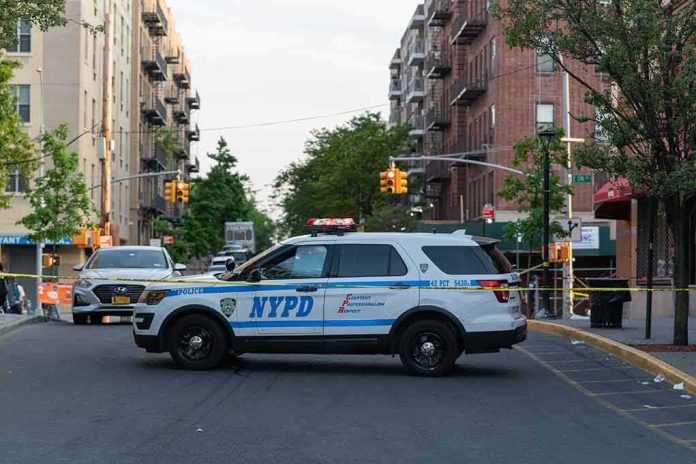
The first hours after a suspected homicide are often defined by two truths at once: police can see enough at the scene to know a serious crime occurred, and the medical and investigative facts that will settle the case are still forming. Getting those two realities in balance is the difference between clarity and confusion in cases like a 27-year-old woman found beaten to death inside a Brooklyn home while a young child was nearby.
The Short Version
- Police reported finding a 27-year-old woman with severe trauma inside a Kensington, Brooklyn residence; she was pronounced dead at the scene.
- A young child was present or nearby, a detail that heightens urgency and shapes investigative protocols.
- Early facts typically come from responding officers; cause and manner of death are finalized by the Medical Examiner after scene work and autopsy.
- Domestic-violence fatality data show children are frequently adjacent to lethal incidents, which guides how city systems respond.
What’s known from the scene and why it matters
Responding NYPD officers were called to a residence on Minna Street near Martense Lane in Kensington around daybreak and found a 27-year-old woman on the kitchen floor with trauma to her body. Medics pronounced her dead at the scene, and detectives opened a homicide investigation focused on blunt-force assault. The apartment’s condition, time-of-day response, and early description of injuries are the kind of concrete, observable facts that reliably anchor the first wave of reporting; they tell you where, when, and the apparent mechanism of harm. That a young child was in proximity is not a mere color detail. It triggers a cascade of parallel actions: immediate child-safety checks, mandated notifications to child-welfare authorities, and specialized victim services engagement. These protocols exist because children are frequently present at lethal interpersonal violence; systems are built to move fast around them.
In practice, that means two investigative clocks start at once. The first is the scene clock: detectives secure the space, canvas neighbors, log physical evidence, and confirm who had access. The second is the forensic clock: the Office of Chief Medical Examiner assumes responsibility for cause and manner of death determinations, which can validate or refine the initial “beaten to death” descriptor depending on autopsy findings. The scene picture is often vivid but incomplete; the forensic picture is definitive but slower. Bridging the two is the work of the next several days.
How early homicide narratives are built — and corrected
Early homicide narratives typically rest on what police can see, hear, and reasonably infer at the address, plus what dispatch, 911 audio, and immediate witnesses provide. That yields strong location, timing, and visible-injury facts quickly. But visible trauma is not the same as a completed cause-of-death ruling. Autopsies may identify internal injuries, timing of blows, defensive wounds, or underlying medical conditions that either corroborate or nuance what responders first suspected. New York City’s own fatality-review and homicide reporting frameworks make this division of labor explicit: location and relationship data live with the NYPD and are available early; medical determinations come from the Medical Examiner and can lag initial accounts that use shorthand like “severely beaten.” The point isn’t to second-guess the first account; it’s to understand where each piece of certainty originates and when it firms up.
Why that sequencing matters is straightforward. Charging decisions, bail arguments, and risk assessments depend on causation, not just observation. A photograph of a ransacked kitchen or a neighbor’s recollection of a 3 a.m. argument is probative; an autopsy that reconstructs the timing and severity of injuries is dispositive. The mature view is to take both seriously on their timelines.
Child proximity in lethal violence: what the data say
New York City’s Domestic Violence Fatality Review Committee has repeatedly documented a sobering reality: a meaningful share of family-related homicides involve children — either as victims themselves or as bystanders who are present in the household. Across recent annual reports, roughly one-fifth of domestic-violence homicides involved a child age 10 or younger. That prevalence is why child-adjacent details surface early in police briefings and why responders reflexively loop in child-safety systems; it is not sensationalism so much as statistical realism built into the city’s protocols.
Statewide analyses echo the pattern. New York’s Division of Criminal Justice Services tallies domestic homicides using standardized police submissions and consistently finds child victims and child presence in the incident mix, with New York City contributing a significant share of cases given its population. For practitioners, this means two operational imperatives during any lethal incident where a child is nearby: stabilize safety immediately and preserve the child’s account, if any, through trauma-informed interviewing that does not contaminate testimony or compound harm.
From scene to charges: how cases like this proceed
When a victim is found with signs of blunt-force trauma in a residence, investigators start with concentric circles of proximity. They confirm who lives there, who had keys or routine access, who was last to see the victim alive, and whether domestic-incident histories exist at the address. They pull 911 logs and any prior calls for service, canvass for cameras on the block, and triage electronic evidence (phones, app messages, door locks). Simultaneously, the Medical Examiner conducts an autopsy to fix the cause and manner of death and the estimated time window. Those findings often become the spine of an arrest affidavit or grand jury presentation: they can establish pattern injuries, defensive wounds, and force that is inconsistent with accidental mechanisms. If a child was present, investigators coordinate with child-welfare specialists to ensure any interview follows evidentiary best practices, recognizing that children can be both crucial witnesses and highly vulnerable participants in the process.
Prosecutors then convert evidence into a charging narrative that aligns medical conclusions with witness statements, scene reconstruction, and any admissions. In New York City, this frequently happens within days if a suspect is identified and in custody; otherwise, detectives may work the case quietly while waiting for lab results or additional corroboration. During that interval, the initial characterization — “beaten to death,” young child nearby — remains the plain-language description of what was found until the autopsy either ratifies it verbatim or tightens it into formal terms.
Why careful language early on serves public understanding
There is an understandable public appetite for immediate answers. But in violent-death investigations inside a home, precision is earned step by step. The facts that warrant confidence on day one are the facts that are directly observed: the location, the condition of the victim as seen, the presence of a child, the absence or presence of forced entry, the time the call was received. The facts that demand restraint are those the autopsy will settle: exact cause, injury sequencing, contributory conditions. This division is not bureaucratic hair-splitting; it’s how investigators protect both accountability and due process. Done well, it ensures that urgent safety steps — especially for nearby children — are taken immediately, while the medical and legal conclusions that define the case’s future are grounded in the most reliable science and evidence available.
For readers trying to make sense of early reports, a simple rubric helps. Give weight to specific, observable details tied to a time and place. Expect the language around cause of death to firm up after the Medical Examiner weighs in. And understand why references to child proximity appear early and emphatically: city data and experience say it’s common enough to reshape protocols — and that protecting those children can’t wait for the final report.
What this means going forward
In the Brooklyn case at issue, the core contours are established: a young woman is dead, reportedly from severe beating injuries, and a child was nearby. That is enough to set in motion the city’s most practiced systems — homicide investigation, forensic review, and child-safety intervention. The next milestones are predictable: autopsy findings from the Medical Examiner; any identification or apprehension of a suspect; and, if warranted, charges that align the medical record with the investigative file. For the public, the wisest posture is attentive patience — insisting on speed where safety demands it and on rigor where the final account of what happened, and why, must stand up in court and in memory.
Sources:
nypost.com, abc7ny.com, nydailynews.com, people.com, gothamist.com, nbcnewyork.com, en.wikipedia.org