On a quiet Long Island block, a fight over a former Catholic seminary becoming an Islamic boys’ boarding school has turned into a test of how much power ordinary neighbors still have over what happens on their own street.
Story Snapshot
- A Muslim nonprofit bought a 13–15 acre former Catholic seminary in Bay Shore for a boys’ Islamic boarding school and mosque.
- Neighbors say the plan will overload a quiet residential area with traffic, noise, and 120 teenage boarders, and insist their fight is about zoning, not religion.
- The group “Saxon Says No” has packed town hearings, posted “No Boarding School” signs, and argues the dorm use is illegal under local codes.
- The school’s backers and their lawyer say the project is “perfectly legal” and note the site has been a religious boarding campus for nearly a century.
How a Catholic Seminary Became the Center of a New Zoning War
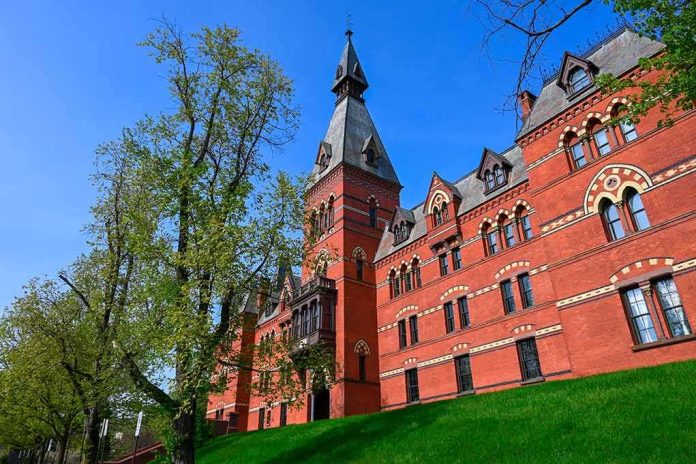
The property at 26 South Saxon Avenue in Bay Shore once housed a Catholic boarding school for boys thinking about the priesthood and later served as a retreat house for priests. The Montfort Missionaries sold the roughly 14.6–15 acre waterfront campus, including a three-story building of about 70,000 square feet, to the United American Muslim Association for $5.2 million. The Muslim nonprofit now wants to reopen it as Bayshore Academy, an all-boys Islamic boarding school and mosque with space for 120 middle and high school students.
United American Muslim Association leaders describe the plan as reviving a similar religious and educational use on land that has been institutional for nearly a century. Their vision includes full-time Islamic-centered schooling, early childhood education, and community programs for local families. Supporters say the project will give Muslim boys a structured, faith-based education in a stable campus setting, and argue that, in land-use terms, this is closer to a school and retreat center than to a commercial business or apartment complex.
Why Neighbors Are Angry: Traffic, Dorms, and the “Zoning, Not Religion” Argument
People who live along South Saxon Avenue see something very different when they look at the plans. Many describe their area as a quiet street of single-family homes and say bringing in 120 teenage boarders plus staff will change the neighborhood’s character. Residents have planted “No Boarding School” signs in their yards and formed a group called “Saxon Says No,” which now organizes online and at town meetings. They worry about noise, student supervision, event traffic, and the effect on property values and daily life.
At packed hearings before the Town of Islip’s zoning board, several neighbors said they do not want 120 high school boys “roaming the area” and warned of traffic jams during school and worship times. The group’s public statement stresses that their fight is “strictly a zoning issue” and not about the religion of the school’s backers or students. Their core claim is that using the site as an overnight dormitory campus, with school, mosque, daycare, and community events, is a far more intensive use than the prior retreat operations and should require special permits or different zoning.
The Legal Fight: Is a 120-Student Boarding School Allowed Here?
The dispute now turns on how town code treats boarding as part of a religious school in a residential zone. Residents argue the overnight dorm is simply illegal under the rules for this stretch of South Saxon Avenue and say any school of this scale belongs in a different district, not in the middle of a low-density block. They also warn that if this project is treated as “as-of-right,” it could set a precedent for other large religious campuses in similar neighborhoods across the Town of Islip.
The town’s zoning board held a public hearing on a variance request to decide whether boarding can count as a permitted accessory use to a parochial school on this residentially zoned site. Supporters and the association’s attorney, Samuel L. Bifulco, have said on the record that the plan is “perfectly legal” under existing town code and that strict student rules will prevent any nuisance. A Newsday editorial noted that town officials have not presented hard evidence that a religious boarding school housing about 12 students and staff per acre would overwhelm traffic, the environment, or emergency services.
Faith, Fairness, and a Shared Distrust of the “System”
This Long Island fight has struck a nerve far beyond Bay Shore because it taps into bigger questions many Americans now ask about who really gets heard in local government. Neighbors see a large institution moving in with lawyers and money, while ordinary homeowners must scramble to learn zoning language and show up at hearings just to protect the peace on their own block. Many fear that, once again, regular people will be labeled bigots or ignored while decision makers bend rules for powerful groups and well-connected nonprofits.
🏛️ After nearly a century of Catholic presence, the Montfort Spiritual Center in Bay Shore, New York, has been sold to the United American Muslim Association for $5.2 million. Founded in 1926 by the Montfortian Missionaries of Saint Louis-Marie Grignion de Montfort, the former… pic.twitter.com/oHkM5dt41N
— SG News (@SGNews123) July 25, 2026
At the same time, Muslim families and civil-liberties advocates worry that a project similar to the old Catholic boarding school is now facing extra hurdles mainly because the faith has changed. Editorial writers have urged the town to apply the rules fairly and warned against letting fear drive land-use decisions. Both sides claim they want the law enforced the same way for everyone, but the missing piece is transparency: the public record still lacks the full zoning text, detailed impact studies, and a clear explanation from officials of what is and is not allowed on this land.
Sources:
thegatewaypundit.com, libn.com, catholicculture.org, newsday.com, longisland.news12.com, spzh.eu, rairfoundation.substack.com