As Hezbollah rockets keep flying out of Lebanon, Israel’s interceptions and counterstrikes are exposing how fragile every “ceasefire” really is — and why appeasing Iran’s terror proxies never brings peace.
Story Snapshot
- Israel says it intercepted rockets and missiles fired from Hezbollah positions in Lebanon as sirens sent civilians running for shelter.
- The Israel Defense Forces (IDF) then hit Hezbollah targets in southern Lebanon and Beirut’s Dahiyeh district, calling them command centers and launch sites.
- Hezbollah sometimes denies specific rocket launches even as it has fired thousands of projectiles at Israel in recent years.
- The pattern looks familiar: terrorists test the ceasefire, Israel responds, and global pressure lands mostly on the side trying to defend its people.
Rockets in the Air, Sirens on the Ground
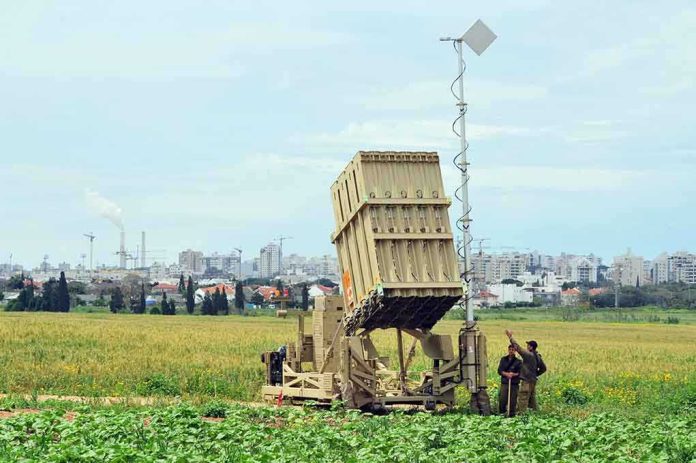
Reports from Israel and Lebanon describe yet another round of rockets launched from Lebanese soil toward northern Israel. Israeli officials say air raid sirens sounded in border communities such as Metula as incoming fire was detected, sending families racing to safe rooms and bomb shelters once again. In several recent incidents, Israel’s Iron Dome air defense and related systems intercepted rockets and missiles crossing from Lebanon, preventing casualties and damage on the Israeli side.[2] These interceptions show both the constant threat and the importance of missile defense.
In some cases, Israel says the rockets were clearly launched by Hezbollah. In other cases, including one set of strikes after three rockets crossed over Metula, Hezbollah publicly denied any role and claimed it had “no link” to the launches.[5] Lebanese media and the Lebanese Army reported finding and dismantling the launchers, but admitted there were no clear signs of who actually carried out the attack.[5] This fog of war is not new along the Israel–Lebanon border, where different militant groups sometimes operate from the same areas.
Israel’s Response: Hitting Launchers and Command Centers
After these rocket attacks, Israeli leaders did what most Americans would expect any serious government to do: they struck back at the launchers and the networks behind them. One detailed report says the IDF hit dozens of rocket launchers and what it called a Hezbollah command center that terrorists were using in southern Lebanon.[5] In another episode, Israel said it intercepted rockets aimed at civilians and then carried out precise airstrikes on Hezbollah positions in south Lebanon, describing the targets as part of the group’s terror infrastructure.[1]
The pattern has now expanded beyond rural launch sites. In separate strikes, Israel hit apartments in Beirut’s southern Dahiyeh suburb, which Israeli officials identified as Hezbollah command centers built into residential neighborhoods.[5][6] Lebanese authorities reported deaths and injuries, including women and children, and state media said more than twenty locations in the south were also hit.[6] Israel says it warned civilians and tried to reduce harm while still degrading Hezbollah’s ability to rain rockets on Israeli towns.[5] This is the same ugly playbook we have seen with Hamas in Gaza: terrorists hide behind civilians and then blame Israel when war comes back to their doorstep.
Hezbollah’s Denials and Long Rocket History
Hezbollah’s public line switches back and forth. The group has proudly claimed major rocket and drone attacks on Israel at times, while denying other launches that risk wider war or international backlash. One summary of the conflict notes that since October 2023, Hezbollah and allied factions have launched at least 12,400 rockets at Israel, along with about 1,300 drones. Israeli analysts believe their forces have destroyed about 80 percent of Hezbollah’s rocket and missile stockpile, plus thousands of launchers and most of its drones, yet the group still has enough weapons to keep up heavy fire for months.
This current flare-up fits a pattern that goes back decades. A study of the 2006 Lebanon War found that Hezbollah fired nearly 4,000 rockets into Israel in just 31 days, an average of about 130 per day. Many launches came from mobile rocket platforms hidden in dense residential zones around cities like Tyre. That tactic makes it hard to prove exactly who fired each rocket without detailed forensic work on the ground. It also guarantees that any Israeli response, even with precision weapons, risks hitting nearby homes and infrastructure. Terror groups rely on that tragic tradeoff to win propaganda points.
Ceasefires on Paper, War on the Border
These rocket exchanges and retaliatory strikes are happening under supposed ceasefires that were meant to calm the front. Under one deal described in recent coverage, Hezbollah was expected to move its weapons out of southern Lebanon, while Israel was supposed to pull back its ground forces and let the Lebanese Army deploy and dismantle illegal militias in the area.[3] Instead, both sides now accuse each other of breaking the terms: Israel says Hezbollah still has military positions in the south, while Lebanese officials complain that Israel continues airstrikes and keeps troops on key hilltops near the border.[3]
Weekly Report – Hezbollah Attacks Against Israel (8–14 June)
Key Trends This Week
During the past week (8–14 June), Hezbollah carried out 134 attack waves against Israel and IDF forces, a decrease compared to the previous week (1–7 June), during which 198 attack waves were… pic.twitter.com/UlayOgDENT— Israel-Alma (@Israel_Alma_org) June 15, 2026
While diplomats and foreign ministries issue statements, people on the ground keep paying the price. Lebanese reports speak of civilians killed and wounded in Israeli strikes.[5][6] On the Israeli side, advanced defenses like Iron Dome keep most rockets from landing, but sirens, shrapnel, and trauma have become part of daily life in the north. This is what happens when the world tolerates Iranian-backed terror armies sitting on Israel’s borders. For American conservatives who care about strong borders and the right of self-defense, the lesson is clear: when you let extremists test “red lines” without real consequences, they do not back off — they push harder.
Sources:
[1] Web – Israel says intercepts Hezbollah rockets, conducts strikes in south …
[2] Web – Israel pounds south Lebanon after intercepting rockets, Hezbollah …
[3] Web – Israel hits Hezbollah targets after intercepting rockets from Lebanon
[5] Web – Israel intercepts rockets from Lebanon, retaliates with strikes – The …
[6] Web – IDF strikes Hezbollah sites after rockets intercepted, Lebanon warns …