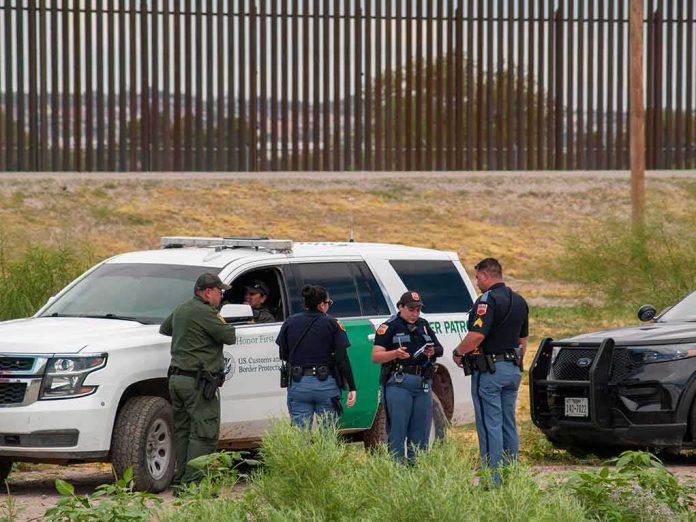
An internal Department of Homeland Security alert has identified a specific cartel-linked plot to kidnap U.S. Customs and Border Protection personnel operating in the Presidio and El Paso sectors of the Texas border, and the agency’s public response confirms it is treating the threat as operationally live rather than theoretical.
Key Points
- A DHS alert obtained by NewsNation warns a cartel-connected operation “may include attempts to target and kidnap CBP law enforcement personnel” in the Presidio and El Paso areas.
- The suspected cover for the plot is a known alien smuggler’s plan to move migrants from Colombia and Venezuela across the border.
- CBP says it maintains “proactive intelligence on all foreign actors that are a threat to the homeland” and that its mitigation methods are “robust”.
- Multiple outlets published the same core allegation within hours of one another, indicating the alert was circulating through more than one channel.
- The threat fits a documented pattern of cartel escalation against federal agents, including bounty claims and intelligence-sharing operations already underway along the same corridor.
What the Alert Says, and Where
The document at the center of this story is an internal DHS bulletin, obtained through agency sources and first reported by NewsNation’s Ali Bradley on October 6. Its language is precise about geography and ambiguous about everything else: the threat is located specifically in the Presidio and El Paso areas of operation, two sectors that sit along one of the most heavily trafficked smuggling corridors on the southern border. The alert frames the kidnapping threat as embedded within a smuggling operation — a known alien smuggler allegedly planning to bring multiple migrants from Colombia and Venezuela into the United States, with the abduction plot described as a secondary or parallel objective of that same operation.
That structure matters. Cartels rarely run kidnapping campaigns as standalone operations against federal officers; when they do strike at law enforcement, it is typically to protect a revenue stream — in this case, a smuggling pipeline — by deterring interdiction or retaliating against agents perceived as disrupting it. The alert’s own language, “may include attempts to target and kidnap,” reflects an assessed risk tied to an active human-smuggling plan already under watch, rather than a freestanding assassination or abduction scheme unconnected to border traffic.
How CBP Is Responding
CBP’s public statement, issued in response to press inquiries, did two things simultaneously: it confirmed the threat environment without confirming operational specifics, and it signaled an active defensive posture. The agency said it maintains “proactive intelligence on all foreign actors that are a threat to the homeland” and that it vets incoming information to “determine validity” before acting on it. It further described its threat-mitigation methods as “robust” — language that, in CBP’s own institutional vocabulary, typically denotes adjusted patrol patterns, intelligence-sharing with partner agencies, and heightened protective posture for agents in the named sectors, even when the agency declines to spell out the mechanics publicly.
That reticence is standard practice, not evasion. CBP’s own 2024–2028 strategic plan describes its intelligence directorate’s core function as building a picture sufficient “to identify and reduce the impact of the highest” priority threats — a mission that depends on withholding operational detail from public view precisely so that cartel actors cannot adjust their plans in response. Agencies that telegraph their countermeasures lose the advantage those countermeasures are designed to provide. The silence surrounding specifics, in other words, is the system functioning as intended, not a gap in the agency’s credibility.
Context: A Documented Pattern of Threats Against Agents
This alert does not arrive in a vacuum. Cartel threats against U.S. immigration and border officers have escalated in parallel with enforcement pressure along the Texas corridor. Chief Patrol Agent Jared Ashby has publicly warned that threats against agents will be met with overwhelming force, and separate reporting has documented bounty-style threats against ICE and CBP personnel reaching tens of thousands of dollars per target. DHS’s own institutional history supports the plausibility of this escalation pattern: homeland security’s founding strategy in 2002 made “intelligence and warning” one of its core missions precisely because threats against federal personnel and infrastructure tend to surface first as internal bulletins long before they become public knowledge or prosecutable cases.
The same corridor has also seen a marked escalation in joint enforcement. In the El Paso sector, U.S. and Mexican authorities have coordinated “mirror patrols” and secured a foreign terrorist organization designation against a cartel operating across that same stretch of border, a legal tool that now allows prosecutors to charge facilitators, financiers, and smugglers under material-support statutes carrying life sentences in cases involving deaths. Acting U.S. Attorney Justin Simmons has credited that framework with giving prosecutors new leverage against exactly the kind of smuggling-and-violence nexus described in the DHS alert. Illegal crossings in El Paso have fallen sharply as enforcement intensified — a dynamic that, counterintuitively, tends to raise the stakes for cartel operators whose revenue depends on volume, and can sharpen incentives toward confrontation with the agents enforcing that drop.
Why the Threat Is Credible Even Without Public Specifics
Skeptics of border-security alerts sometimes point to the absence of a named cartel, a named target, or a disclosed timeline as reason for caution. In this case, that absence reflects standard operational security rather than a weak evidentiary base. DHS’s intelligence enterprise exists specifically to give field agents situational awareness while protecting sourcing and methods from public exposure. Naming the organization or the collection method behind an active threat assessment would compromise the very capability that allowed DHS to detect the plot in the first place. The appropriate reading of this alert is that CBP identified a credible, specific, geographically bounded threat tied to an active smuggling operation, and responded by elevating its protective posture for agents in Presidio and El Paso — exactly the response the agency’s own strategic doctrine calls for when such intelligence surfaces.
Sources:
townhall.com, diario.mx, newsnationnow.com, nampa.org, dhs.gov, x.com