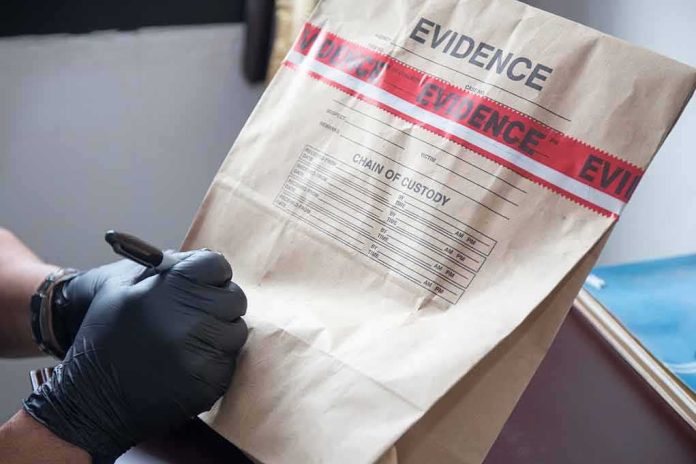
The most credible through-line in the Epstein record is not a single missed call but a decade-spanning pattern: federal authorities received specific, actionable warnings long before the first serious investigation, yet meaningful follow-up lagged for years—delay that translated into more victims and harder cases.
The Short Version
- Public records show the FBI logged an Epstein-related complaint in 1996; a formal federal investigation did not open until 2006, nearly a decade later.
- A new lawsuit account says Hugh Hefner called the FBI in 2005 after Playmate Audra Christiansen alleged Epstein abused and trafficked her; the bureau allegedly took no action for roughly 15 years.
- This lag mirrors a broader, documented problem: child-exploitation tips mishandled or deprioritized inside the FBI well into recent years, despite reform pledges.
- The question that matters now is systemic: how early tips get triaged, escalated, or buried—and what durable fixes prevent repetition when power and proximity distort the process.
What the record establishes: early federal notice, late federal action
Start with the incontestable. Epstein-related material reached federal hands in 1996, when Maria Farmer—an artist who worked for Epstein—reported conduct that FBI records later described under a child-pornography rubric. That early intake has been corroborated in multiple public venues, including a House Oversight letter that quotes the FBI’s own documentation and states plainly that Epstein’s crimes were first reported to the Bureau in 1996; the federal investigation did not open until May 23, 2006. The PBS chronology aligns on the crucial hinge: Palm Beach police began their local case in March 2005, nearly nine years after the first federal tip. The 10-year gap between initial notice and formal federal casework is not a footnote—it is the spine of this story.
That timeline does not prove intent; it does demonstrate institutional failure. The most generous explanation—fragmented intake, misclassification, or low-urgency triage—still leaves a decade in which a prolific predator operated with fewer constraints than the facts warranted. The less generous reading points to how wealth, social insulation, and legal muscle can exploit procedural seams. Both readings end at the same place: the system’s time value of harm was catastrophically mispriced.
The 2005 Hefner calls allegation: a new piece that fits the older pattern
Into that established arc comes a newer claim: that Hugh Hefner phoned the FBI multiple times in 2005 after Playmate Audra Christiansen told him Epstein had raped and trafficked her; Christiansen says she asked Hefner to call because she expected the Bureau would take him more seriously. According to lawsuit filings and contemporaneous coverage, no meaningful action reached her until October 2020—roughly 15 years on. One report cites internal FBI communications indicating her complaint fell into a “zero file,” a term associated with tips that see no follow-up. On its face, the allegation is tight in chronology and mechanism: named parties, a defined year, and a claimed paper (or non-paper) trail. And it is not an outlier narrative imposed on an otherwise diligent record; it conforms to the already-documented pattern of early federal notice and late mobilization.
What should a skeptical reader ask? Whether the lawsuit’s description is corroborated beyond pleadings; whether call logs, agent notes, or intake audits confirm Hefner’s outreach; whether the “zero file” notation is as described. Those are answerable questions in discovery or oversight. But the allegation’s plausibility does not rest on novelty or celebrity—it rests on fit. It fits the decade delay visible elsewhere in the record.
Mechanism of failure: how tips die inside large systems
Large investigative agencies drown in signals; the craft is triage. Child-exploitation leads typically enter through multiple doors—local police referrals, hotline tips, field-office walk-ins, and attorney-referred victims. Each entry point risks misclassification. If a case is coded narrowly (say, as a stolen-photograph complaint) rather than as a predicate for minor sexual exploitation with identified offenders and locations, the path to subpoena power, victim protection, and coordinated task-force action can stall. Analysts call this the “narrow door” problem: when an intake frame is too small, the system mistakes a constellation for a star and routes it to a file queue rather than a case squad. That is a process failure, not a moral one—but in sex-trafficking matters, process failures are moral failures by another name.
The Department of Justice’s own watchdogs have documented the Bureau’s difficulty handling child-sex-abuse tips in recent years—even after public vows of reform following high-profile failures—flagging timeliness, follow-through, and inter-office coordination as recurrent weak points. The Epstein timeline shows those weaknesses in an earlier decade; the oversight and audit work shows they persisted. The conclusion is structural, not episodic: the Bureau has struggled to convert tips about sexual predation into prompt, sustained, and victim-centered investigations when the target is shielded by money and status.
Context and comparison: Palm Beach moved before Washington
Palm Beach police initiated their investigation in March 2005 after a family reported the molestation of a 14-year-old. That local move did what good local police work often does: built victim lists, mapped locations, and generated affidavits that forced alignment by larger institutions downstream. The formal federal opening followed in 2006, nearly a year later—and a decade after the first federal contact. The contrast is instructive. Local departments live closer to victims and have fewer political or reputational variables to weigh; they are less likely to be paralyzed by the aura of a well-connected suspect, and they often act on narrower probable cause without awaiting a sweeping conspiracy case. Federal cases, built for interstate or international predicates, sometimes stall while searching for the perfect architecture. Perfect was the enemy of good enough.
This is not an argument for parochialism. It is a case for protocol: when local agencies surface a credible pattern, federal task forces should default to joint operations that privilege victim safety and corroboration over theory-building. Had that happened in the mid-2000s with full vigor—and a decade earlier with basic follow-up—fewer young women would have been harmed.
Where the evidence is strongest—and where it is thinner
Stronger: the 1996-to-2006 gap is supported by primary documentation and reputable timelines. The House Oversight letter draws directly on FBI records to date the first federal notice to 1996 and the formal opening to 2006. PBS’s chronology anchors the 2005 local trigger. These are load-bearing facts, not conjecture.
Thinner but plausible: the specific 2005 Hefner calls on behalf of Audra Christiansen live mainly in lawsuit filings and secondary reporting; their strength will turn on production of intake records, phone logs, or internal annotations such as the alleged “zero file” designation. In assessing the totality, it matters that this claim does not have to carry the entire argument. The established record already shows that early warnings—including from Maria Farmer—failed to produce timely federal action. The Hefner-Christiansen account, if further corroborated, would be a particularly stark instance of the same systemic breakdown.
Accountability that matters: fix the intake, align incentives, audit the gaps
It is tempting to reduce institutional failure to the decisions of a few named people. But durable fixes start upstream. Three reforms stand out. First, recode intake: any allegation naming a specific adult offender, a minor victim, and a location should be presumptively routed to a child-exploitation squad with a 72-hour action clock—victim contact, basic corroboration, and conflict check. No more “narrow door” filings that strand a trafficking lead as property-theft or miscellaneous tips. Second, joint-task-force presumptions: when local investigators initiate on credible abuse involving multistate travel or organized facilitation, federal participation should begin by default, not discretion, with shared case leadership and clear victim-services protocols. Third, retrospective audits with consequences: create an automatic ten-year look-back on high-harm categories—child exploitation, serial sexual assault—where every intake tagged to a later-convicted offender is reviewed for response time, supervisory sign-off, and victim contact. Findings should be briefed to Congress in anonymized form annually to harden norms and expose drift.
What this means for the public’s trust
Trust is not a sentiment; it is a ledger of performance against duty. On Epstein, the ledger shows this: federal authorities had meaningful warnings long before they acted at scale; local police were faster to mobilize; victims bore the cost of delay. New litigation about a 2005 warning call by Hugh Hefner on behalf of Audra Christiansen does not change that baseline—it fits it. The right response is not to relitigate settled delay but to prevent the next decade-long gap between first alarm and first warrant. Bureaucracies do not become brave on their own; they become brave when procedures make courage the path of least resistance.
Sources:
washingtontimes.com, palmbeachpost.com, thedeepdive.ca, indiatoday.in, justice.gov, oversightdemocrats.house.gov, abc7ny.com, justsecurity.org, congress.gov