
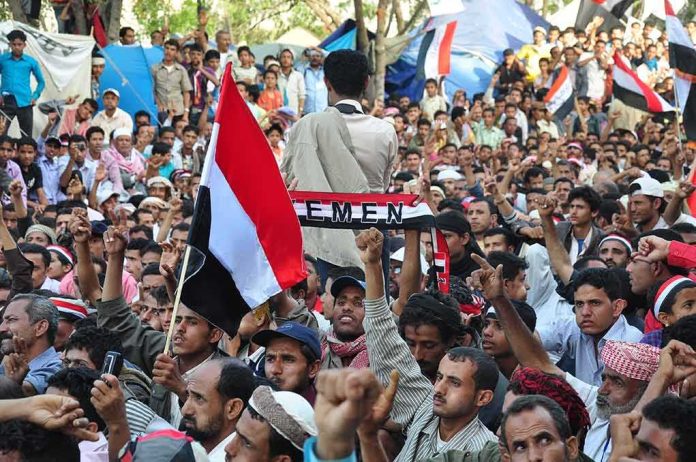
Treating every attack on a cleric or minority as religious persecution blurs, not clarifies, the real map of risk: Yemen’s Houthi-controlled areas show a documented pattern of coercion against religious minorities, while the killing of a Maronite priest in Lebanon, though brutal and tragic, remains—on the public record—an unsolved homicide with no established sectarian motive.
The Short Version
- Lebanon: Father Samir Daou’s killing is a confirmed homicide with an arrest; authorities have not established a motive.
- Media reports describe violence and possible robbery in the Daou case; none document an Islamist or anti-Christian motive.
- Yemen: Multiple U.S. government sources document the prolonged detention of Jew Levi Salem Musa Marhabi by Houthi authorities despite a court order for release, with allegations of religiously selective abuse.
- The correct asymmetric reading: Yemen shows an entrenched pattern of religious repression; Lebanon’s case is unresolved on motive.
Two stories, two evidentiary paths
Serious analysis begins with how strong the facts are, not how alarming a headline sounds. In Lebanon, the death of Father Samir Mikhael Daou—a Syriac Maronite priest serving parishes in the Jbeil district—was officially treated as a homicide. The Internal Security Forces (ISF) announced an arrest and said the inquiry was ongoing under judicial supervision, a statement that grounds the case in a tangible criminal process rather than rumor or polemic. Contemporaneous accounts place Daou’s body in his residence after he went missing, establishing victim identity and basic timeline without controversy. That is the firm part of the record.
Yemen tells a different story because the documentation runs deeper and longer. U.S. government reporting describes the continued Houthi detention of Levi Salem Musa Marhabi despite a 2019 court order for his release; he is widely reported as the last remaining Jew in the country. The same sources relay allegations—some attributed to NGOs—of torture, selective punishment on account of his Jewish identity, and placement with violent extremists who threatened and assaulted him. Where Lebanon has an unresolved motive in a single homicide, Yemen shows institutionalized repression aimed at religious minorities over years.
What the Lebanese homicide establishes—and what it does not
The ISF’s public statement matters for one reason: it anchors the narrative in a formal criminal probe. Authorities arrested a suspect; Lebanese outlets identified him as a young Syrian national, with some variation (Aleppo or Idlib) in origin details that will have to be reconciled as the judicial record matures. Reports describe signs of violence, even allegations of multiple stab wounds, and missing property or a stolen vehicle—facts that sit comfortably within a robbery or personal-crime hypothesis and do not, by themselves, prove sectarian intent.
Equally important is what the record does not yet show. No official statement attributes an anti-Christian, Islamist, or sectarian motive to the killing. The ISF noted only that the investigation continues; L’Orient Today echoed that no motive was announced. Those who would leap from the suspect’s nationality or religion to a presumption of jihadist animus are making an argument without evidence. If prosecutors later file charges reflecting a hate or terror element, that changes the analysis; at present, it would be overreach to claim persecution when the investigative posture remains open-ended.
How Yemen’s pattern crosses the threshold from allegation to structure
By contrast, the Yemen record has accumulated a critical mass of mutually reinforcing accounts over time, including official U.S. sources. The U.S. Commission on International Religious Freedom reports that Marhabi remained in Houthi detention years after a court ordered him released, with allegations that he faced deliberately harsher treatment because he is Jewish, including housing alongside al-Qaeda and ISIS inmates who threatened and assaulted him. The U.S. State Department reports the same prolonged detention despite the release order and cites a civil society allegation that he was tortured and left partially paralyzed; it also documents the Houthis’ expulsion of members of three Jewish families in 2021. Whether every detail can be independently re-verified inside Houthi prisons, the consistent throughline—detention beyond a court order, discriminatory treatment, and a vanishing Jewish presence—fits a pattern rather than an isolated case.
Patterns matter because they indicate mechanism. Arbitrary detention, intimidation, forced departure, and discriminatory practices are the levers authoritarian actors use to erase religious minorities without the spectacle of mass violence. When multiple reporting streams converge on the same mechanism across years, the evidentiary burden for calling it persecution is met in a way a single Lebanese homicide has not yet met.
Why conflation is dangerous—for truth and for policy
Conflating an unresolved homicide with a confirmed pattern of religious repression invites two errors. First, it dulls public sensitivity to real persecution by crying wolf when the motive is unknown. Second, it fuels collective blame—in Lebanon’s case, against refugees or Syrian workers—before courts have established intent. Early coverage documented precisely that political reflex, with calls for deportation surfacing even as investigators kept motive open. Responsible analysis quarantines those impulses and lets evidence dictate conclusions.
This is not an argument for naïveté. Lebanon’s confessional system is historically prone to sectarian mobilization, and minority communities are not imagining their vulnerability. But the right standard is evidentiary: motive is proved, not inferred from identity. The Daou case will either advance to charges that establish intent or it won’t. Until then, the correct frame is homicide under investigation, not confirmed anti-Christian attack.
How to read the next tranche of facts
In Lebanon, watch for three documents: the charging instrument (to see what prosecutors believe they can prove), the forensic report (to clarify sequence and nature of wounds, theft, and struggle), and any confession or communications evidence that indicates planning or motive. An eventual court ruling will be dispositive. If none of those demonstrate sectarian intent, the case will belong in the category of lethal but non-ideological crime—tragic, destabilizing, but not persecution.
In Yemen, the monitoring questions are different because the pattern is already established. The key indicators are whether Marhabi is released or transferred, whether independent actors gain access to verify his condition, and whether expulsions or discriminatory prosecutions of remaining minorities continue. Each of those would either reinforce or ease the pattern that U.S. reporting has already described.
The asymmetric conclusion that respects both facts and fear
The evidence compels an asymmetric judgment. Yemen’s Houthi-controlled areas present a documented, ongoing regime of religious repression that has reduced an indigenous Jewish community to a single detainee whose freedom a court already ordered years ago, with credible allegations of discriminatory abuse. Lebanon presents a gruesome killing of a priest, a named suspect, and an active investigation with no established sectarian motive. Treating these cases as equivalent is analytically wrong and ethically hazardous. Precision is not just pedantry here; it is the discipline that keeps advocacy honest and policy sane.
Sources:
pjmedia.com, persecution.org, en.abouna.org, mtv.com.lb, today.lorientlejour.com, en.kataeb.org, ground.news