
A family inheritance fight ending with a woman shot dead on a Bronx street is the kind of avoidable tragedy that convinces many Americans the system is failing them, not protecting them.
Story Snapshot
- Police say 58-year-old Michael Foster shot and killed his niece Julia Anderson after a dispute over their family home.
- Foster is charged with murder, manslaughter, and 10 counts of criminal possession of a weapon and is being held without bail.
- Anderson, an aspiring rapper and nonprofit worker, died after being shot while getting into her car near her Bronx workplace.
- The case highlights how poor estate planning and deep family tensions can escalate into deadly violence in already stressed communities.
What Police Say Happened On That Bronx Street
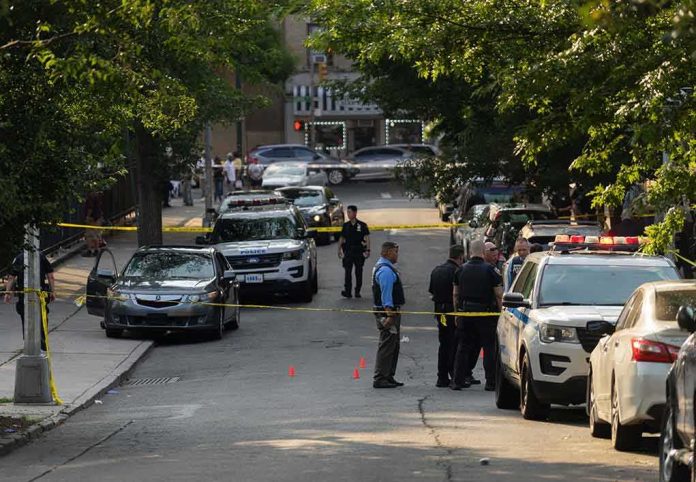
On a Monday night in the Wakefield section of the Bronx, 39-year-old Julia Anderson walked toward her black Jeep Cherokee after finishing work, only to be met by gunfire. Law enforcement sources say her uncle, 58-year-old Michael Foster from Mount Vernon, shot her multiple times in the stomach during an argument tied to a dispute over who owned their shared home. Anderson was rushed to Jacobi Medical Center, where doctors could not save her, and she was pronounced dead from her wounds.
New York Police Department officers launched a manhunt that ended more than a day later, when they arrested Foster in the Bronx. He is accused of approaching as Anderson was getting into her vehicle and firing through the passenger side window, hitting her in the abdomen and leaving the Jeep riddled with bullet holes. The scene, captured only in partial surveillance and by shaken witnesses, adds to a troubling pattern of drive-up or drive-by shootings that leave families destroyed and communities feeling unprotected.
The Charges, The Weapons, And Foster’s Violent Past
After his arrest, Foster was charged with murder, manslaughter, and 10 counts of criminal possession of a weapon. A judge ordered him held with no bail, signaling concern that he could be a danger to the public or might not return to court if released. Court records and news reports note that police searching his Mount Vernon home recovered multiple firearms, including a Bushmaster AR-15 rifle and semiautomatic pistols, the kind of firepower everyday Americans wonder why a convicted felon could still access.
Foster’s past looms large over this case. He previously served time for a 1991 manslaughter conviction tied to a shooting in Mount Vernon, a record that legally bars him from owning guns but did not stop him from allegedly having several in his home. In court, a Bronx assistant district attorney stressed that this is the second person Foster is accused of killing, using that history to argue successfully that he should remain behind bars while the case moves forward. That emphasis feeds a wider public fear that dangerous people cycle through the system and return to neighborhoods still armed and still angry.
Aspiring Rapper, Caregiver, And The Human Cost Of A Feud
Friends and coworkers describe Julia Anderson as a hardworking caregiver and aspiring rapper who had once performed with a well-known New York City rap artist. She held a job with a nonprofit group and was known for supporting people in need, with one leader saying there was “not one bad word” to be spoken about her. On the night she was killed, she was reportedly driving home to Mount Vernon after an overnight shift, trying to balance her art, her work, and family duties like many Americans who feel they are always one crisis away from disaster.
Police and family members say the shooting grew out of an inheritance dispute involving the two-family Mount Vernon home where both Anderson and Foster lived. Investigators believe a feud over the deed and control of the property had simmered, with emotions rising around money, housing security, and respect. National research shows about 35 percent of adults have lived through family conflict caused by poor or nonexistent estate planning, especially when a parent dies without a clear will, leaving siblings or relatives to fight over homes tied to deep memories.
Why Inheritance Fights Keep Turning Into Violence
Legal experts on New York inheritance disputes explain that when a parent dies without a valid will, state intestacy laws decide who gets what, often giving children equal shares but leaving plenty of room for anger if one person feels shut out or unfairly treated. Emotional assets like a long-time family house can be even more explosive than cash, because they are tied to identity, childhood, and the idea of “home.” Without clear documents and honest talks, pride, grief, and fear of losing a roof over one’s head can twist into bitter accusations and, in rare but tragic cases, deadly outcomes.
City data on family violence reports show tens of thousands of incidents each year, many sparked by day-to-day conflict that slowly erodes trust inside households. Researchers who study families at risk for violence note that long periods of tension and unresolved disputes can damage people’s mental health and raise the chance that arguments turn physical. In that larger pattern, the Foster-Anderson case looks less like a shocking one-off and more like a warning sign of how legal confusion, economic stress, and broken communication can weaponize family ties in already fragile communities.
Media Narratives, Systemic Frustration, And What We Still Do Not Know
Coverage of this case has leaned hard on Foster’s past, with some outlets calling him a “maniac” and highlighting that he once killed the father of a professional football player. That framing speaks to a deep concern on both the right and the left that dangerous people get second chances the rest of us never see, but it can also risk turning a legal process into a public verdict before the trial even starts. So far, there is no public defense statement or detailed court filing from Foster’s lawyers, leaving only the prosecution’s version of events in the spotlight.
Important questions remain unanswered. Authorities have not publicly released a full motive statement, ballistic tests linking a specific gun to the fatal shots, or a complete interrogation transcript. Early reports mention a shooter on a moped, and limited video has been shown, but none clearly identifies Foster as the person on that vehicle. These gaps feed a familiar anger for many Americans who feel elites and institutions hide key facts while asking people to trust them anyway. At the same time, the basic reality is clear: a woman is dead, a family is shattered, and an inheritance fight that should have been handled with paperwork and patience is now another grim lesson in how badly our systems handle family conflict before it explodes.
Sources:
nypost.com, public.courts.in.gov, cleveland.com, law.justia.com, katv.com, facebook.com, maricopacountyattorney.org, fox5ny.com, casetext.com, govinfo.gov