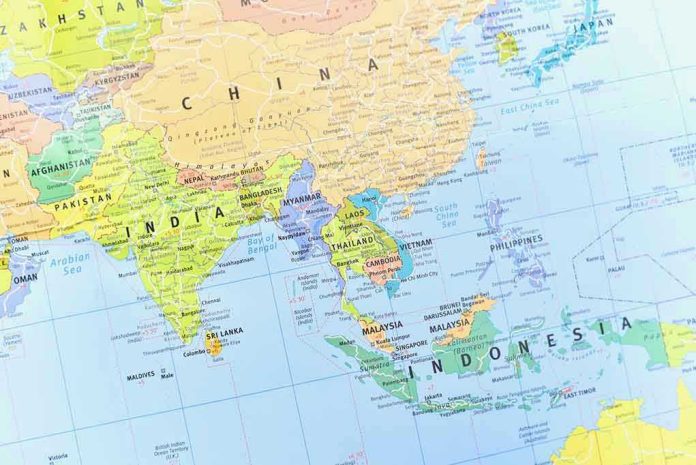
The Iran war has turned Asia’s fuel bill into a roulette wheel, and that chaos is quietly shoving ethanol and other biofuels from niche experiment to survival strategy.
Story Snapshot
- Iran war supply shocks and $100-plus oil have driven a sharp jump in Asian biofuel prices and interest.
- Governments from Vietnam to India are racing to expand ethanol blending and other biofuel mandates.
- Critics warn that policy dependence, food-price risks, and infrastructure limits could stall the biofuel pivot.
- How Asia handles this moment will decide whether biofuels become real energy security or just another crisis-era fad.
Iran war shock hits Asia where it hurts most: fuel dependence
Asia buys most of the oil that normally sails through the Strait of Hormuz, and the Iran conflict has turned that chokepoint into the world’s most expensive bottleneck. Analysts estimate that millions of barrels per day of refined products from the Gulf are disrupted, forcing Asian buyers to scramble for alternative suppliers and pay higher freight costs to pull fuel from farther away. The result is not just higher pump prices, but rolling anxiety in finance ministries built on the assumption of cheap, reliable imported oil.
United Nations estimates suggest that the broader war-driven energy shock could push nearly nine million people in Asia-Pacific back into poverty, while erasing hundreds of billions of dollars in economic output as airfares, shipping costs, and electricity tariffs climb. Elevated Brent crude near or above one hundred dollars a barrel turns every shipment of gasoline and diesel into a political event. Leaders who once saw fuel policy as technocratic bookkeeping now see it as the difference between social stability and street protests.
Biofuels move from talking point to trading-floor reality
Market data shows that traders did not wait for speeches. On March 2, price reporting from a major energy information firm recorded Asian biofuel prices jumping on fears that Middle East tensions would further disrupt supply.[1] Ethanol values and marine “biobunker” fuels both climbed as buyers hunted for anything that could substitute for oil-based products. Rising prices are not always welcome, but they send a blunt message: biofuels are no longer just climate-policy ornaments; they now carry direct security and hedging value in a disrupted market.
That shift echoes a familiar pattern. International reviews of past oil shocks show governments repeatedly turning to biofuels whenever disruption hits, then backpedaling once crude prices ease. The Iran war creates fresh pressure not just because of price, but because logistics routes are unstable. Shipping insurance premiums, re-routed tankers, and port delays all erode confidence in imported hydrocarbons. Domestically produced biofuels, even at a premium, offer something politicians value more than a perfect spreadsheet: control over supply chains inside their own borders.
Vietnam’s ethanol sprint shows both promise and strain
Vietnam provides one of the clearest case studies of how the Iran war shock is reshaping policy. Reports from the region say Hanoi accelerated its rollout of E10 gasoline, a blend containing ten percent ethanol, explicitly to cut exposure to disrupted oil and gas imports linked to the conflict.[2] The country has enough installed capacity to produce roughly four hundred thousand to five hundred thousand cubic meters of ethanol a year if all six plants operate at full tilt, a volume that can meaningfully displace imported fuel when supply lines are fragile.[2]
Yet official comments and industry analysis acknowledge serious growing pains. Several ethanol plants have run below capacity because of feedstock shortages, financial stress, or earlier policy uncertainty, and fuel distributors complain about the cost of adapting storage and blending infrastructure nationwide.[2] That tension captures the core dilemma: ethanol can improve resilience, but only if governments provide predictable rules and resist the temptation to micromanage every price move. From a conservative, common-sense perspective, the lesson is that markets can deliver energy security if regulation provides a clear lane and then gets out of the way.
From Asian pain to Western grain: who really wins?
The Iran war’s biofuel boom does not stop at Asia’s shoreline. Agricultural processors in the United States and other exporting countries are enjoying a surge in demand for oilseeds and plant oils that can be converted into biodiesel, renewable diesel, and related fuels. Oilseed crushing has turned into a lucrative business, helped both by higher volumes and by policy-driven demand for low-carbon fuels in several regions. That profit stream highlights a geopolitical irony: while Asian consumers are squeezed, Western farm and processing interests often bank the upside.
Iran war energy shock drives India's interest in ethanol and other biofuelshttps://t.co/QwIRNzMkrF
— Economic Times (@EconomicTimes) May 15, 2026
This imbalance raises hard questions for Asian policymakers. Expanding biofuel mandates without building domestic feedstock supply risks swapping dependence on Gulf tankers for dependence on imported soy oil or corn. That trade may still make sense temporarily if it stabilizes fuel availability, but a long-term strategy demands a broader agricultural and industrial plan. Conservative economic logic would favor policies that invite private investment into local feedstocks, including sugarcane, cassava, or agricultural residues, while guarding against heavy-handed subsidies that outlast their usefulness.
Limits, backlash risks, and the line between hedge and illusion
Supporters of the new biofuel push argue that any tool which dilutes the leverage of an unstable Middle East deserves rapid deployment. Critics counter that the sector still leans heavily on mandates, tax preferences, and other government incentives, particularly for advanced products like sustainable aviation fuel. That dependence justifies skepticism about proclamations that biofuels alone will “solve” the Iran war energy shock. No prudent household would bet its retirement on a stock that only rises when Congress props it up; nations should be no less cautious.
Food security adds another layer of risk. Asia is already absorbing energy, labor, and food price shocks tied to the war. Poorly designed biofuel programs that divert too much land or sugar into fuel rather than food could amplify hardship, especially for lower-income populations. The sensible approach is not to abandon biofuels, but to treat them as one piece of a diversified resilience strategy that also includes efficiency improvements, broader supplier diversification, nuclear power, and renewables like solar. Ethanol can be a sturdy sandbag against the current flood, but it is no substitute for building a higher levee.
Sources:
[1] Web – Asian biofuels prices rise as Middle East tensions stoke supply …
[2] Web – Vietnam rushes biofuel rollout as Iran war prompts energy pivot