
The core fight over birthright citizenship now turns on a single hinge: whether labeling mass unlawful migration an “invasion” can move the Citizenship Clause out of ordinary constitutional law and into the President’s unilateral war-and-emergency powers. That is not a dispute about immigration policy at the margins; it is a bid to relocate who decides a child’s citizenship—from text and precedent to executive say-so.
The Short Version
- Judge James Ho has articulated a deference theory: a presidential determination of “invasion” is executive, not judicial, and courts should not review it.
- The countercase is anchored in United States v. Wong Kim Ark and a century of practice: birth on U.S. soil confers citizenship except in narrow, historically defined categories.
- The hostile-occupation exception Ho references addresses children born under a foreign army’s control, not ordinary immigration enforcement contexts.
- The real question is institutional: can an executive label change the legal source and reviewability of citizenship rules that the Constitution and Congress have long treated as stable and judicially enforceable?
What Judge Ho is arguing, and why it matters
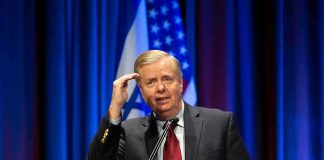
In recent Fifth Circuit writings, Judge James Ho advances a framework that treats the determination of an “invasion” as a quintessential executive prerogative. In that frame, courts may not second-guess the President’s predicate finding of invasion, and downstream legal consequences—here, narrowing birthright citizenship—would flow from the Commander in Chief’s determination rather than from ordinary statutory or constitutional interpretation. That posture collapses a threshold fact (are we “actually invaded”?) into a separation-of-powers argument: once the President says “invasion,” judges stand down. The approach is not an aside; it is a theory of judicial deference with direct implications for the Citizenship Clause and the people—newborns—whose legal status it secures.
To support the idea that “invasion” could carve out exceptions from birthright citizenship, proponents invoke a historically narrow category recognized in the case law: children born on U.S. soil during hostile occupation. In that extreme, those born are not truly “subject to the jurisdiction” of the United States because an enemy sovereign’s force displaces U.S. protection and control—jurisdiction in the literal sense of sovereign authority. An amicus brief in current litigation collects that thread and ties it to Judge Ho’s discussion: a war or occupation scenario can operate as an exception to jus soli because the United States is not exercising its own sovereign law in the place of birth.
What the governing baseline actually says
Set against that deference theory is the sturdy edifice of United States v. Wong Kim Ark (1898) and a century-plus of consistent executive and judicial practice reading the Citizenship Clause to confer citizenship by birth on U.S. soil irrespective of parental status, with narrow exceptions (principally children of foreign diplomats). Wong Kim Ark rejected the argument that a child’s citizenship turned on the parents’ nationality or eligibility for naturalization; it rooted constitutional citizenship in birth within the sovereign’s protection and the person’s subjection to U.S. law. That logic—presence on U.S. soil plus obligation to obey U.S. law—has been the working rule of American citizenship for more than 125 years.
The “hostile occupation” passage that deference advocates spotlight is not a free-floating exception for disfavored migration. It is a recognition of a situation in which the United States is not the effective sovereign in the territory of birth. Immigration—lawful or unlawful—does not fit that description: the United States enforces its laws against undocumented noncitizens every day, a fact that underscores, rather than negates, jurisdiction. That is why legal analysts who support the traditional reading of the Clause distinguish hostile occupation from ordinary immigration enforcement; in the former, U.S. authority is displaced, in the latter, it is actively applied.
Can a presidential “invasion” label change citizenship law?
The live doctrinal question is not semantic—what the term “invasion” meant in an 18th- or 19th-century clause—but institutional: does the President’s invocation of an invasion determination shift the legal source, scope, and reviewability of the Citizenship Clause? The ACLU-aligned litigation posture answers no, pointing to Wong Kim Ark and longstanding federal interpretation of the citizenship statute that tracks only its narrow, historical exceptions; in that view, an executive order cannot rewrite a constitutional guarantee, and certainly not by importing a war-footing category into peacetime immigration administration.
Judge Ho’s account pushes hard in the other direction: he argues that the invasion determination is for the executive, not the judiciary, and that courts should defer rather than test the factual or legal sufficiency of the label. That is a high-stakes reallocation. Citizenship status has long been treated as a rule-governed determination, keyed to objective facts (place of birth) and limited, judicially reviewable exceptions. Converting it into a derivative of presidential emergency findings would upend that settlement and invite cyclical swings with electoral transitions—a poor fit for a legal status designed to be permanent and predictable.
The strength of the counter-evidence
The counter-evidence to the deference theory is not merely policy disagreement; it is precedent and practice. Wong Kim Ark’s logic—birth within the territory plus subjection to U.S. law—squarely answers the core of the dispute, and it has been read to include children of noncitizens regardless of their parents’ legal status. Contemporary advocacy and litigation have hammered that point and added the separation-of-powers overlay: presidents do not amend the Constitution by executive order or by invoking an emergency label. The lawsuits challenging efforts to narrow birthright citizenship embed that argument and cite the government’s own historical interpretations consistent with Wong Kim Ark.
The occupation exception does not do the work the deference theory needs it to do. Hostile military control negates U.S. protection and authority; migration—even in large, unlawful flows—does not. As analysts have put it succinctly, undocumented immigrants are subject to U.S. jurisdiction precisely because U.S. law binds and punishes them; that is the opposite of the jurisdictional vacuum imagined by the occupation example.
Where the real disagreement lies
Strip away the rhetoric and you find two crisp questions. First, can “invasion” under Article I or broader executive war powers be stretched to cover cross-border migration flows by private actors without state command, such that it imports wartime exceptions into the Citizenship Clause? Second, even if an invasion finding were sustainable in some factual sense, does that determination operate as an unreviewable trigger for altering constitutional birthright rules? The defenders of the traditional Clause answer both in the negative, grounded in text, structure, and history. Judge Ho’s approach answers the second in the affirmative—defer to the President—and treats the first as elastic enough to include migration contexts.
On the record assembled to date, the weight of specific, named, and historically authoritative sources supports the continuity position: birthright citizenship attaches at birth on U.S. soil except for narrow, fixed categories, and the President cannot unilaterally add a new exception by proclamation or executive order. Courts may and do review such executive measures, especially where individual legal status is at stake and the Constitution supplies the rule of decision.
5th Circuit Judge James Ho says a presidentially declared "invasion" overrides birthright citizenship, which he has long said is guaranteed by the 14th Amendment. https://t.co/DPw3BIYGaF
— reason (@reason) October 30, 2026
Implications if the deference theory prevailed
If courts embraced the view that a presidential invasion declaration is unreviewable and overrides birthright citizenship for certain births, the practical consequences would be profound. Citizenship adjudication would hinge on variable executive determinations linked to geopolitical or domestic enforcement narratives. Families would face unstable status tied to shifting emergency findings. States and agencies would be pressed to implement a dual-track registry of the native-born—some “citizens,” others not—based on parents’ presence and a standing executive label. That is administratively fraught, legally brittle, and invites inconsistent application across jurisdictions—precisely the instability the Fourteenth Amendment’s Citizenship Clause was designed to foreclose.
Bottom line
The best reading of the Constitution, sustained by precedent and practice, is that the Citizenship Clause is a rule, not an executive contingency. The hostile-occupation exception is not a template for reclassifying migration as war. Whatever one’s view of border policy, the legal status of a child born here has never turned on a president’s emergency incantation. It turns on birth within U.S. sovereignty and the nation’s continuing power to govern those within it—a power that, in immigration contexts, is not in doubt.
Sources:
reason.com, ca5.uscourts.gov, supremecourt.gov, justsecurity.org, judicialactiongroup.com