When a medical jet goes missing over cold Atlantic water, the response is a race measured in square miles, fuel states, and nightfall; in the Nantucket case, Coast Guard confirmation of aircraft debris and a continuing search for six people crystallized the stakes of medevac flying and the first critical day of maritime search-and-rescue.
The Short Version
- Coast Guard crews located debris confirmed to be from a missing Gulfstream G100 medical transport off Nantucket and continued searching for survivors.
- The flight originated in Bermuda bound for Boston with six aboard; next of kin were notified and nationalities released.
- Search operations spanned roughly 1,644 square miles over about 27 hours during the initial push.
- The FAA and Coast Guard coordinated from the first loss-of-contact alert through sustained air and surface searches.
What happened: confirmation of debris and an all-hands search
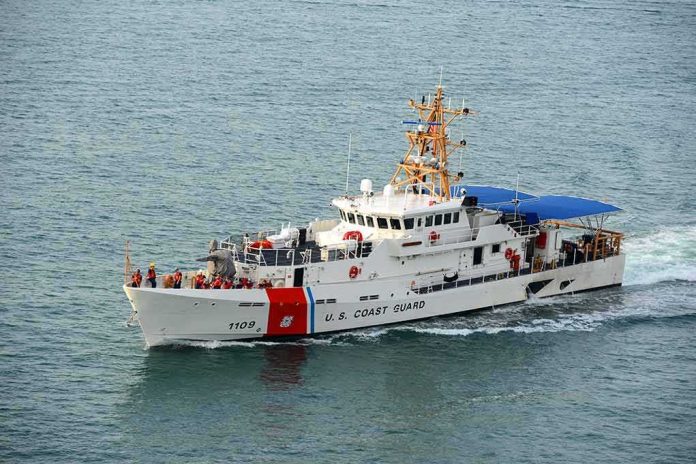
The U.S. Coast Guard reported that search crews found a debris field confirmed to be from a missing Gulfstream G100 air ambulance south of Nantucket, Massachusetts, and that the search for survivors continued into the night. The aircraft was on a medical transport from Bermuda to Boston with six people aboard when contact was lost, prompting coordinated air and surface searches supported by Coast Guard aircraft, cutters, and shore-based units. The FAA issued a search-and-rescue notice and worked with the Coast Guard and the Rescue Coordination Center as the case transitioned from an air traffic anomaly to a full maritime SAR operation.
Over approximately 27 hours, crews canvassed about 1,644 square miles, a footprint consistent with drift modeling, last known position uncertainty, and on-scene conditions. As the mission shifted from initial localization to survivor search, Coast Guard units concentrated around the confirmed debris, extending the search grid to account for currents and wind that disperse floating material and potential life rafts in different vectors.
The flight profile: medevac over open water
Authorities and contemporaneous reporting identified the aircraft as a Gulfstream G100 medical transport operated on a Bermuda-to-Boston leg. Four of those aboard were Canadian and two Bermudian; families were notified by officials. Air ambulance flights often operate under time pressure and at odd hours to meet patient transfer windows, which puts them on long, overwater routes where diversion fields are scarce and systems redundancy becomes mission-critical. The G100 is a midsize business jet adapted for medevac roles; operators typically outfit it with medical equipment, an accompanying clinician team, and power provisions for patient care—capabilities that add electrical load and configuration complexity, though the platform is widely used in the role.
While some outlets cited pilot reports of electrical issues before contact was lost, definitive causal findings require formal investigation. In the immediate term, responders focused on locating survivors and stabilizing the scene, while the FAA and, ultimately, the NTSB handle accident investigation once SAR concludes and wreckage recovery becomes feasible.
How maritime search-and-rescue works in the first 24–48 hours
When an aircraft goes missing near the coastline, authority flows quickly: the FAA flags an overdue or distress situation, initiates communication checks, and relays last known coordinates; the Coast Guard assumes on-scene search responsibility, tasking aircraft and cutters and requesting assistance from nearby mariners. Rescue planners seed the search area using a last known position, groundspeed, and heading, then expand based on probable error and environmental data. As debris or signals are found, the plan shifts from expansive sector patterns to datum-centered searches that model drift over time to predict where survivors or additional wreckage may surface.
The Nantucket response reflected this playbook. Aircrews flew creeping-line and expanding-square patterns to maximize probability of detection across a wide, uncertain box; cutters and small boats pushed into tighter areas as debris was localized. The square-mile count can sound abstract, but it represents a calculus of altitude, visibility, sea state, and daylight—each a multiplier on detection odds. Confirmation that debris belonged to the aircraft narrowed the uncertainty and justified the intensive, overnight effort.
Why medevac missions carry distinct risk profiles
Air ambulance flying is both routine and unforgiving. The crews are trained to a high standard, yet they accept mission constraints commercial schedules can often avoid: departures pegged to patient readiness, direct routings over water to save time, and cabin electrical loads to power clinical equipment. Overwater legs limit diversion choices; an electrical or pressurization anomaly that is manageable near land becomes acute when the nearest runway is across a dark ocean. Weather minima, crew duty time, and equipment redundancies mitigate these exposures, but the risk gradient is real and well documented in medevac operations globally.
That context helps explain the urgency after a loss-of-contact report. Without the luxury of assuming a benign avionics fault that will resolve at the gate, SAR planners treat such events as potential ditchings until proven otherwise, bringing every relevant asset to bear along the probable track and drift corridors.
Timelines, numbers, and the limits of early details
Breaking operations generate minor discrepancies—precise loss-of-contact minute, departure timestamp variances—because multiple agencies update on different clocks and reporters file as facts emerge. The reliable spine here is strong: a Gulfstream G100 medevac, six people aboard, contact lost en route from Bermuda to Boston, debris confirmed off Nantucket, and a sustained Coast Guard search measured in the thousands of square miles across roughly a day of operations.
The FAA’s role was immediate and direct, issuing a search-and-rescue notice and coordinating with the Coast Guard and the Rescue Coordination Center, which is standard for a serious loss-of-contact over water near U.S. shores. That interagency handoff—rapid, practiced, and largely invisible to the public—explains how aircraft and cutters were on scene quickly, and why confirmation of debris could be followed by an overnight push rather than a pause.
Coast Guard Rear Adm. Matt Lake briefs media on the search for 6 missing after a medical plane vanished off Nantucket. Debris field confirmed; ~2,840 sq mi searched over 53+ hours; search continues. Video: U.S. Coast Guard https://t.co/Q2xcA8q6Nf
— Zark News (@ZarkNewsHQ) October 4, 2026
What happens next: investigation and families
Once search-and-rescue objectives are met or suspended, the locus shifts to investigation and, if feasible, recovery. The NTSB’s preliminary report typically arrives within weeks, capturing the who-what-where of the event; the analytical work—systems examination, maintenance and operational records review, and, where available, flight data and cockpit voice recorders—takes months. In parallel, operators review training, dispatch, and equipment histories; regulators examine oversight touchpoints. In the interim, officials balance two imperatives: timely, factual updates to families and the public, and protection of an evidence chain that enables a credible safety outcome.
Sources:
facebook.com, abcnews.com, people.com, cbsnews.com, boston25news.com, timesnownews.com, cfpublic.org