Celebrity politics matters less for persuasion than for agenda-setting, and Nicki Minaj’s trip to Michigan with President Trump illustrates the point: the headline is a star on Air Force One; the substance is how campaigns use cultural reach to shape attention, turnout, and media bandwidth around a midterm push.
The Short Version
- Minaj traveled with President Trump to Michigan as he rallied in Port Huron for Republican Senate candidate Mike Rogers; local and national outlets documented the trip and event details.
- Video and posts from political media and officials showed Minaj aboard Air Force One en route to the rally.
- The campaign objective was straightforward: concentrate news attention, drive rally energy, and reinforce down-ballot support in a high-stakes state.
- Research on celebrity endorsements shows mixed electoral effects; they reliably boost attention and crowds, but vote persuasion is inconsistent and often minimal.
What happened: a celebrity fly-in linked to a targeted midterm stop
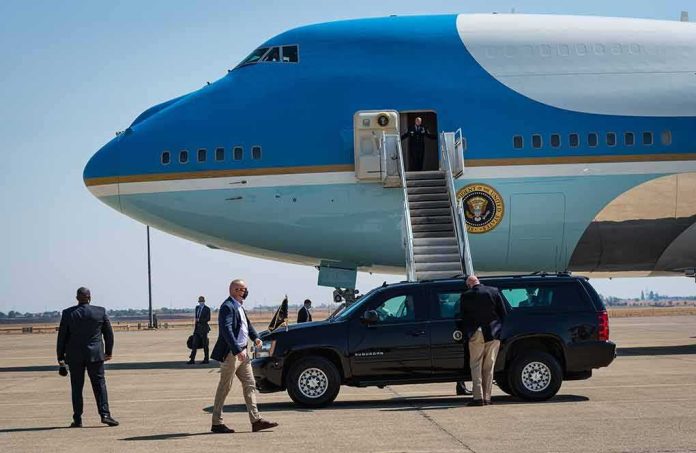
President Trump staged a rally at McMorran Place in Port Huron as part of a late-cycle effort to boost Republican candidates, including Senate hopeful Mike Rogers; schedules and coverage pegged the event to midafternoon, with the usual security and queueing rituals that now define modern campaign theater. Minaj’s travel with the president to Michigan — captured in video and posts from political communicators and journalists — became the marquee pre-rally storyline, ensuring the stop drew not just political reporters but entertainment media as well. That is the operational value of a celebrity co-pilot on campaign day: it multiplies outlets, audiences, and algorithms.
Contemporaneous reporting tied Minaj’s presence directly to the Port Huron event. The Washington Examiner previewed her joining Trump in metro Detroit; MLive noted her social posts, including a thumbs-up to an appearance report and a photograph taken aboard Air Force One; the Times Herald’s local live coverage flagged video of her on a plane discussing Trump. A separate item highlighted White House Communications Director Steven Cheung’s video with Minaj on Air Force One headed to Michigan, which further cemented the narrative that she was part of the traveling party.
How campaigns use celebrity capital: attention, not alchemy
Campaigns pursue celebrity moments for three concrete reasons. First, they manufacture news pegs that travel beyond politics desks; music, entertainment, and lifestyle outlets extend the reach of what would otherwise be a routine rally. Second, they energize the venue — queues grow longer, camera risers fill earlier, and the visual demonstrates momentum to activists and donors alike. Third, they can reframe which issues get airtime; even a brief on-camera exchange can redirect coverage from policy minutiae to cultural identity, which is often where electoral coalitions are won or lost.
The political science on whether this translates into votes is clear-eyed and sober. Meta-analyses and experimental work generally find that celebrity endorsements have limited direct effects on candidate evaluations or vote intention; they are more reliable at raising awareness and attendance than converting undecided voters. The Oprah Winfrey–Barack Obama exception in 2008 demonstrates that unique, broad-based cultural authority can be consequential, with credible estimates attributing meaningful gains in votes, contributions, and turnout to her endorsement — but that case proves the rule: most endorsements are not Oprah-level in breadth or trust.
Michigan as the stage: why this battleground invites spectacle
Michigan has been a perennial tipping-point state; modest changes in base turnout or suburban engagement can swing statewide margins. A Sunday rally framed around supporting Mike Rogers gave Republicans a focal point to consolidate attention in the final stretch, while also testing messages against a live audience in a media market that bleeds into Canada and multiple in-state metros. In this environment, Minaj’s presence served three overlapping aims: validate the campaign’s claim to cross-cultural appeal, refresh social feeds that might otherwise be saturated with conventional stump content, and crowd in reporters who would amplify the event’s visuals well beyond political diehards.
Local outlets described the venue setup, timing, and program cadence; national political sites and social clips elevated the Minaj angle, including footage aboard Air Force One. That choreography — a local backbone with national spectacle — is now standard practice for high-salience stops, because it maximizes both market penetration and narrative control.
Where the evidence is strong — and what matters most about it
The strongest points in the record are the logistics and media artifacts: the rally’s location and timing; Michigan as the target of a late-cycle push; and video and posts indicating Minaj’s travel with the president on Air Force One. Local live reporting cited campaign-aligned accounts circulating clips of Minaj on a plane en route to Michigan, which, together with national items previewing her appearance, established the trip’s core facts. The practical upshot isn’t whether a celebrity delivers a crafted stump speech; it’s the compound effect of their presence on coverage, crowd energy, and the sense of movement that drives volunteers to spend one more weekend knocking doors.
One caveat belongs here and no more: while outlets widely reported Minaj traveling with Trump and expected to join him at the rally, the pre-event framing in several pieces used prospective language about an onstage role. The political significance, however, flows from her high-visibility association with the stop and its pro-Rogers message, not the precise stage choreography.
President Trump is boarding Air Force One, heading to a rally in MICHIGAN
NICKI MINAJ will be joining him at the rally as well 👀
Abdul El-Sayed and Obama were definitely NOT expecting @NICKIMINAJ to attend a competing rally 🤣 pic.twitter.com/Nwo5F9DMFS
— Tinman (@TinmanQu) October 25, 2026
What it means going forward: measuring impact without overclaiming
Campaigns that treat celebrity participation as persuasion are chasing ghosts; campaigns that treat it as a multiplier — of attention, volunteer enthusiasm, small-dollar fundraising, and earned media minutes — are reading the literature correctly. The Minaj–Trump Michigan trip fits the latter pattern. Expect to see the clip looped in fundraising emails, the photos reused in digital ads targeting younger and pop-culture–attuned audiences, and the moment repackaged for voter-contact scripts that emphasize coalition breadth. Those are rational uses of a scarce asset: sustained public attention.
For observers assessing impact, the right metrics are not post-hoc stories about “game changers,” but tractable indicators: rally attendance versus baseline, local news share-of-voice on the rally day, small-dollar receipts in the 72 hours after the event, and volunteer sign-ups in Michigan counties that fed the venue. Celebrity moments rarely flip voters at the doorstep; they reshape who pays attention, when, and with how much energy. That is the currency of modern campaigns — and why a star on Air Force One can be politically useful even when the ballot is still weeks away.
Sources:
youtube.com, thetimesherald.com, thegatewaypundit.com, ground.news, mlive.com, washingtonexaminer.com, allhiphop.com, news.ncsu.edu, cambridge.org, ijoc.org